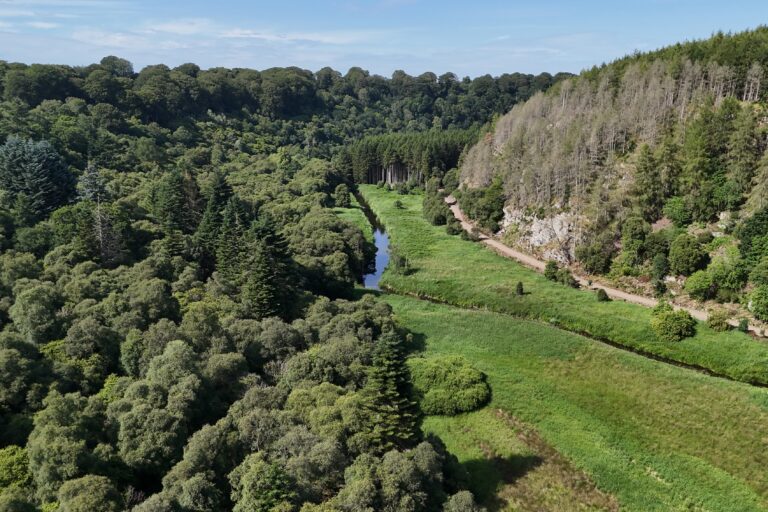
In April 2026 the Scottish Invasive Species Initiative expanded south to cover the Earn and Eden rivers – here’s what we’ve been up to so far!
We’re four and a half months into our exciting project expansion to the Earn and Eden Rivers in Perthshire and northern Fife. Control work in this new area – “South Tayside” – is being led and co-ordinated by Project Officer Douglas Traynor, who is off to a flying start thanks to the work undertaken in recent years by the River Eden Sustainability Partnership (RESP), the Fife Coastal and Countryside Trust (FCCT) and the River Earn Improvement Association (REIA) to prepare for this expansion.
So – what have we been up to so far?
Giant hogweed control
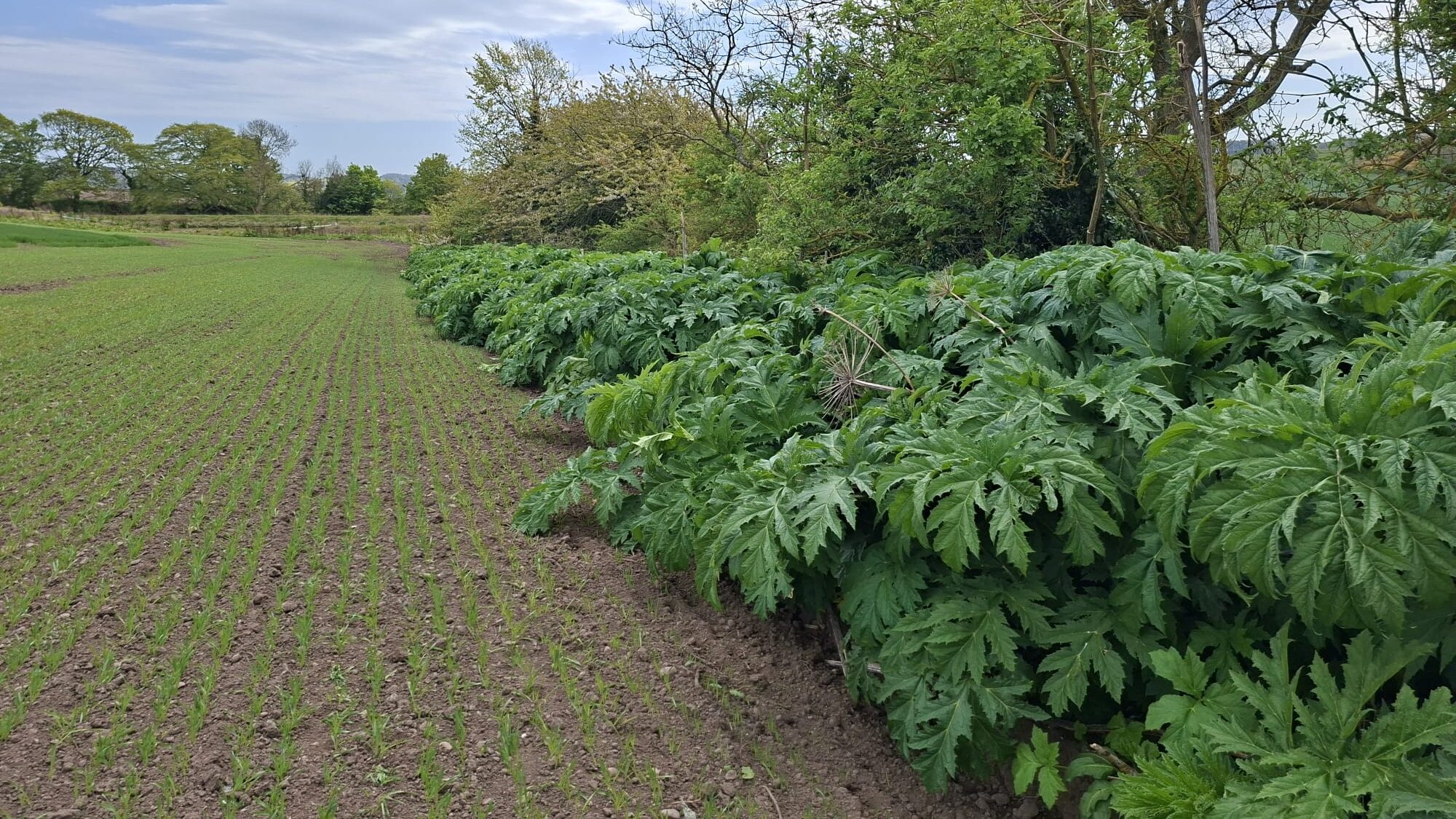
Our first season of giant hogweed control went very well in South Tayside – though we had some truly monstrous plants to contend with in Fife!
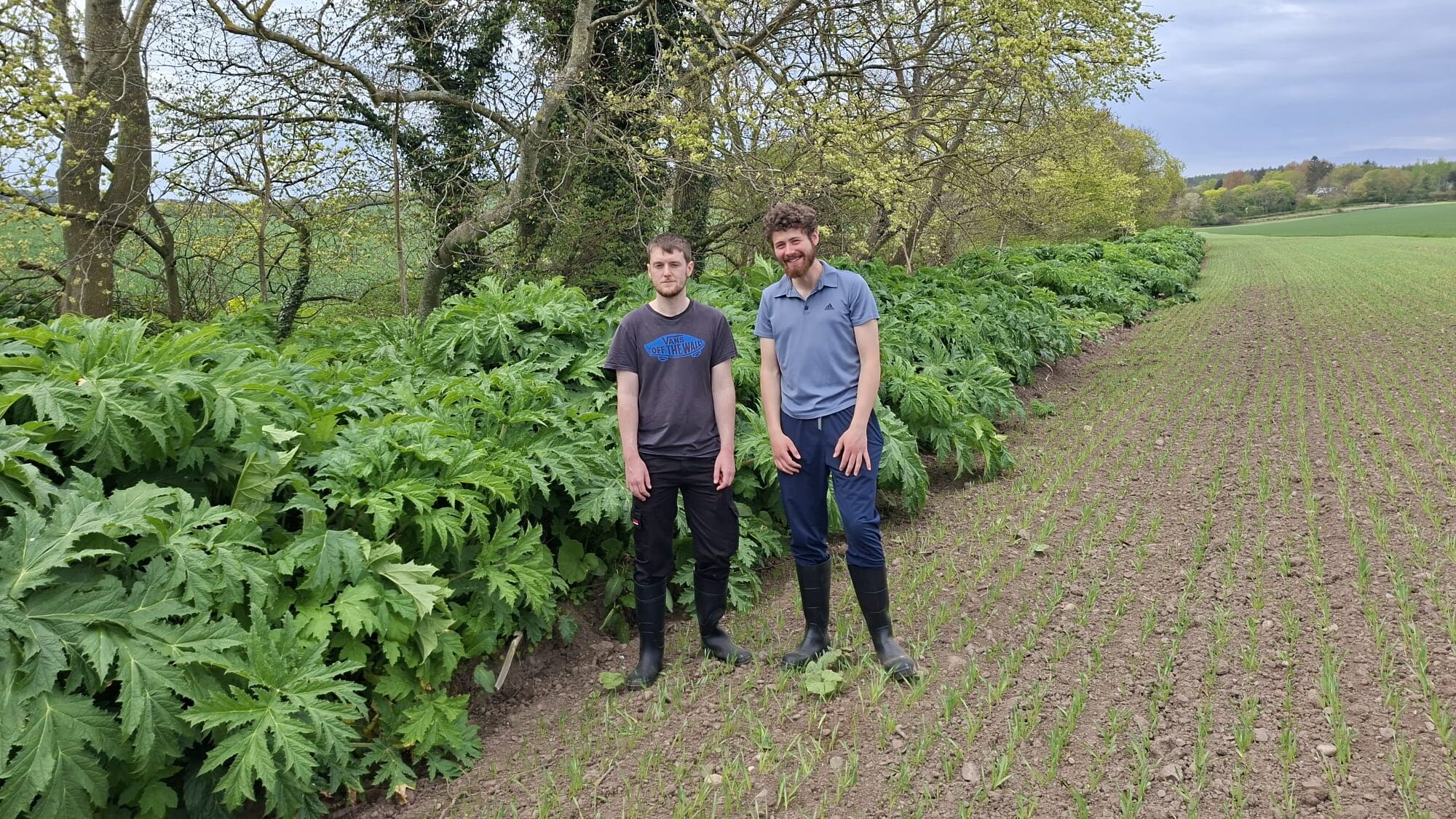
On the River Eden, all planned giant hogweed control was completed on time with herbicide treatments done, site checks complete and the final rogue flower heads chopped down by mid-July.
Project Officer Douglas Traynor said:
“Initially, it was a tough season, with difficult weather conditions delaying control work. This meant that by the time our team got out to spray, we were battling through high vegetation and treating very large giant hogweed plants. However, the development and control work completed by RESP and FCCT in recent years was a massive help to get things off the ground and allowed us to push through despite the tricky start.”
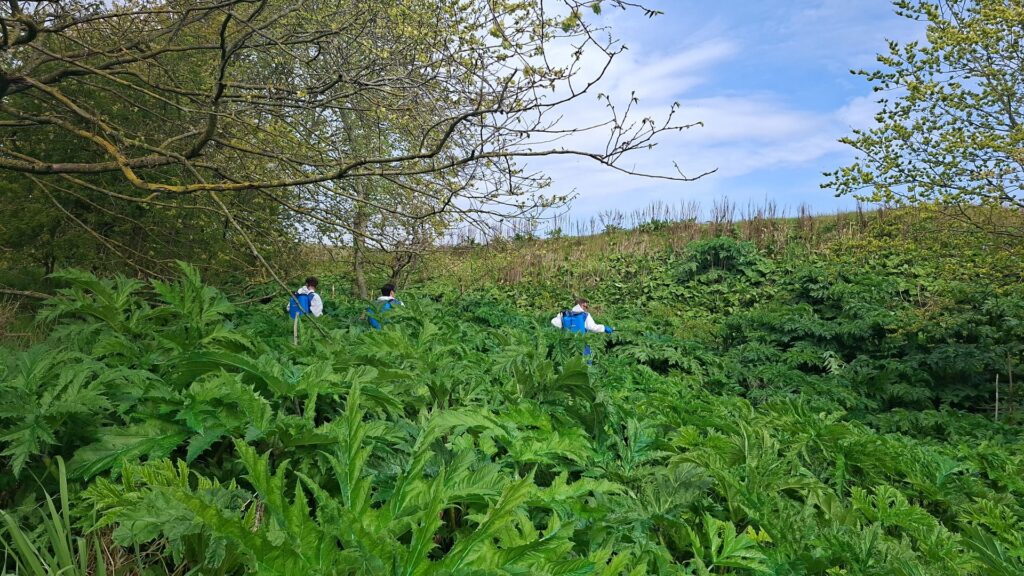
We set ambitious but achievable targets for our first year on the Eden, starting at the upstream source at Burnside and controlling all the way down to Springfield. In addition, we started control work on the Motray Water (a tributary of the Eden) which has a severe infestation. With help from our hard-working contractors, and assistance from partners to connect with landowners, we reached our downstream targets and had everything wrapped up before the giant hogweed started to seed.
On the River Earn we have had a different starting point, so our focus this year was to survey the river for giant hogweed and identify the upstream source, which we now believe is just downstream of Crieff. Over the winter months we will be making plans to begin giant hogweed control on the Earn in 2027.
American mink control
As well as cracking on with giant hogweed control, we’ve also been busy building a mink trapping network across the South Tayside area.
The Scottish Invasive Species Initiative began to expand our American mink control project to the River Earn in 2024, as part of a push to build up our network throughout the River Tay catchment. When Douglas started with us in April, he inherited a network of 24 live-capture traps and 10 volunteers. Since then, our network on the Earn has expanded to include 32 traps which are monitored by 13 volunteers.
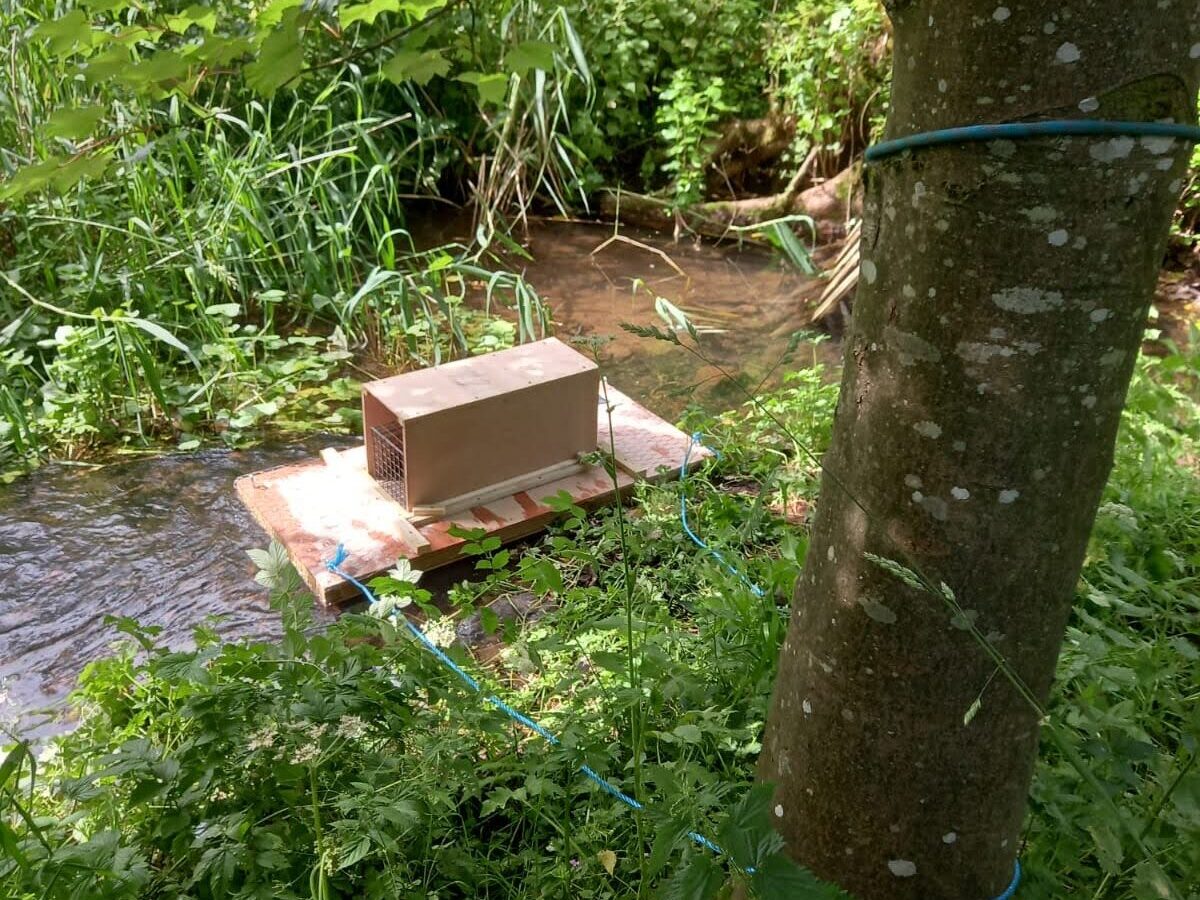
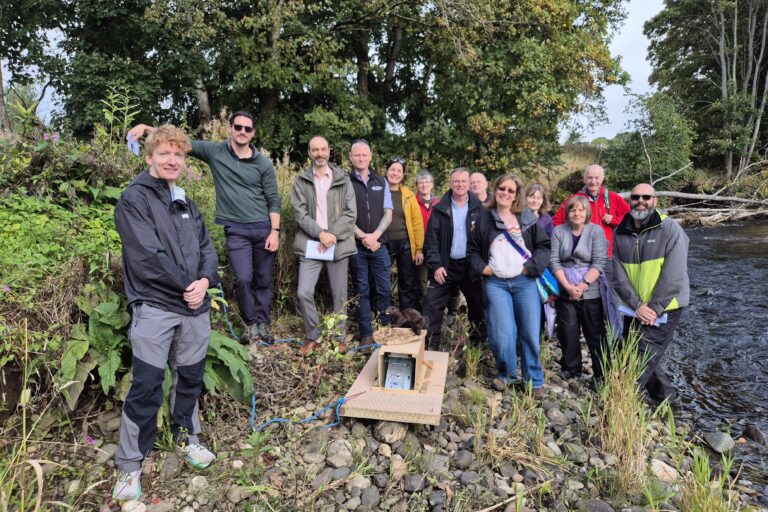
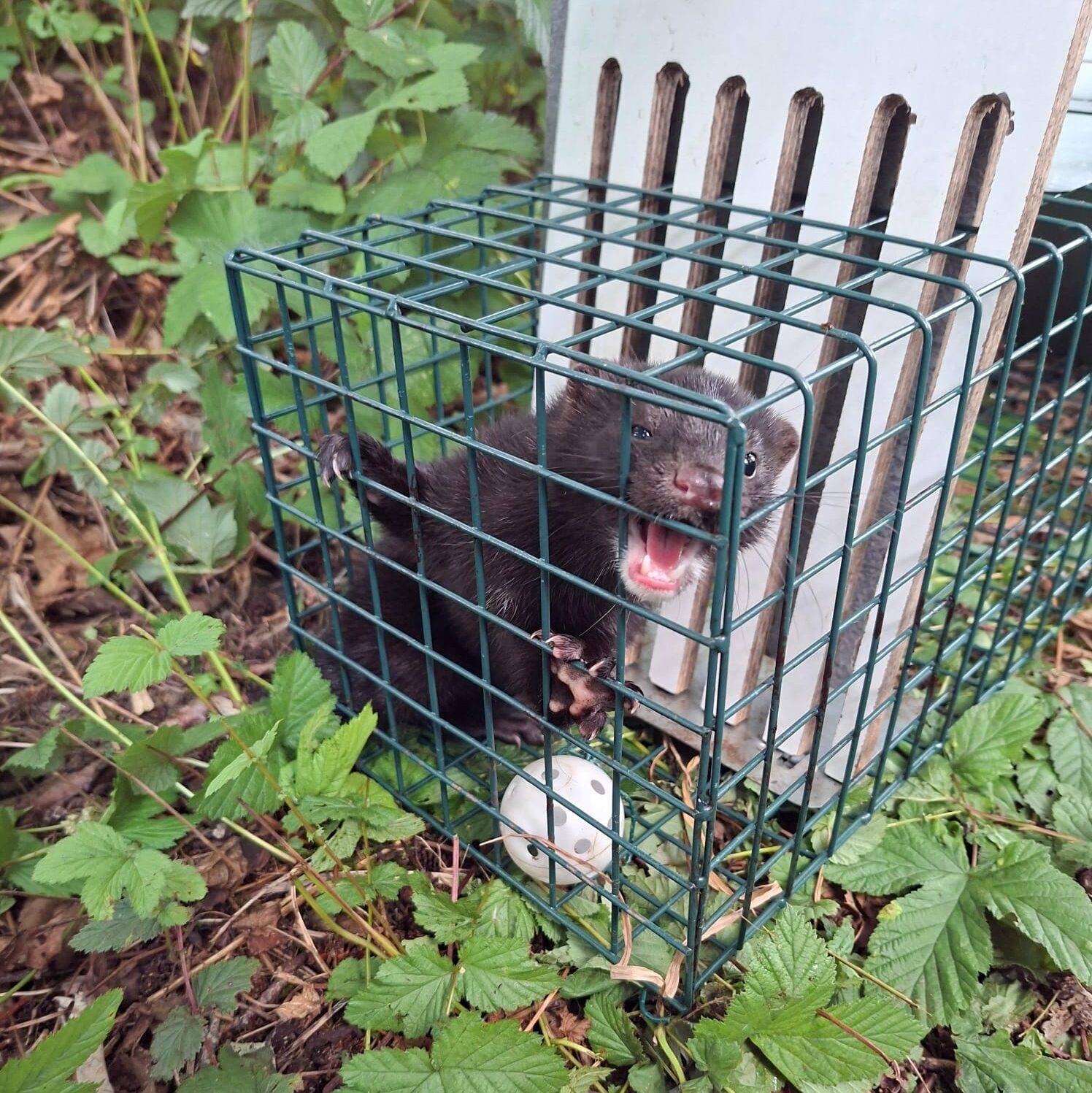
We started from scratch in the Eden catchment in April but Douglas has already deployed 15 mink traps on the Eden and nearby waterbodies, collectively monitored by 8 volunteers. Our very first mink from the River Eden was captured less than 24 hours after the trap was set up!
Altogether, this makes a total of 47 traps and 21 volunteers across South Tayside.
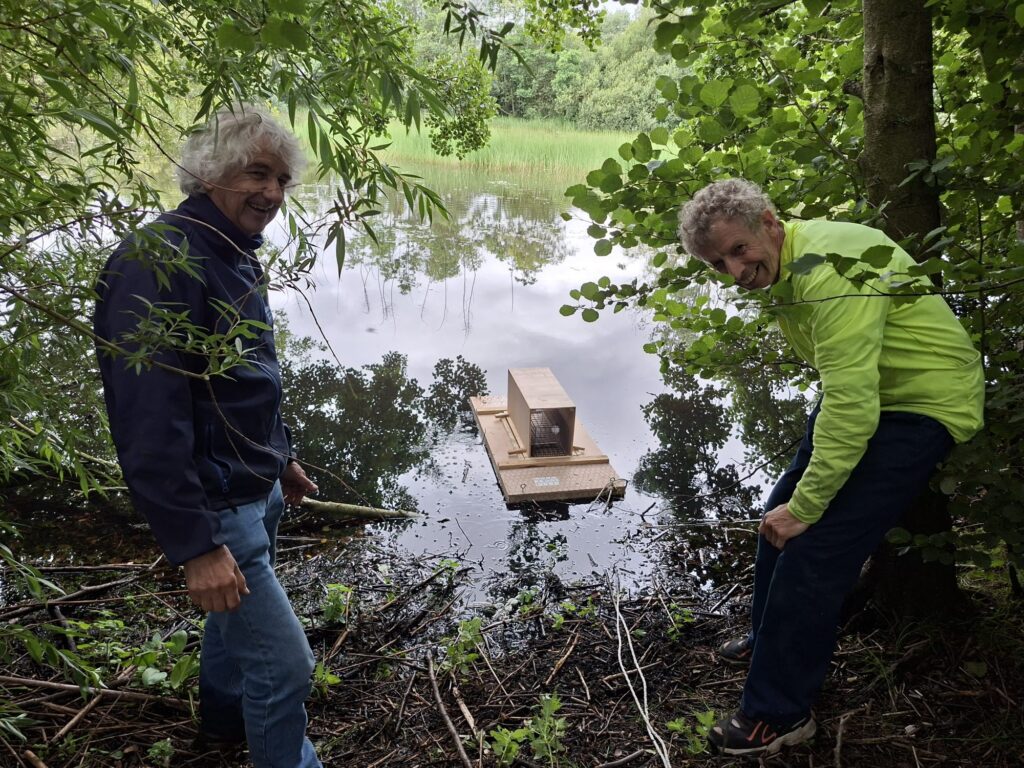
To control American mink in the South Tayside area, it will be important to build up a network on the Earn and Eden Rivers – but also in the waterways and coastlines in between. Mink are highly mobile animals and can travel considerable distances, so it is important to establish a network with good coverage across the entire landscape. We’re in the early stages of developing this – but we’re very pleased with progress so far.
In South Tayside we have already captured 39 mink this year – a higher capture rate than other areas in the project. We expect to see a lot of captures in Fife as there is a plenty of good quality habitat for mink and populations have not been controlled in the area before now. In addition, as South Tayside is a border region for the project, we can expect to continue to see high capture rates as mink can migrate in from uncontrolled areas outside the project, from the south and the west.
Next steps – Japanese knotweed control
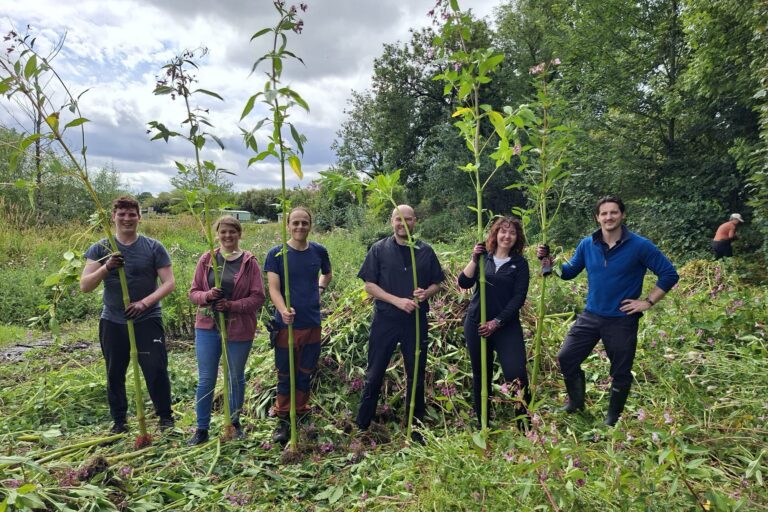
Over the coming weeks we will be moving on to Japanese knotweed control, with a focus on the River Earn which has an extensive infestation that begins high up in the catchment. Work will begin at St Fillans and progress down to Comrie – though we suspect there could be infestations around Loch Earn, so surveys will be carried out in this area. Contractors will be deployed on the most difficult sections of the river and we will be working with volunteers on others, including volunteers from the River Earn Improvement Association.
Japanese knotweed is, thankfully, less prevalent on the River Eden. It is known to be present on a few burns in the upper catchment – the upstream sources will be confirmed and treatment will begin from here.
Get involved
If you would like to get involved in the project, either as an invasive plant volunteer, mink volunteer or a land manager, please get in touch.
You can contact Douglas at Douglas@tdsfb.org or sign up on our website.
And stay tuned for more news from South Tayside!