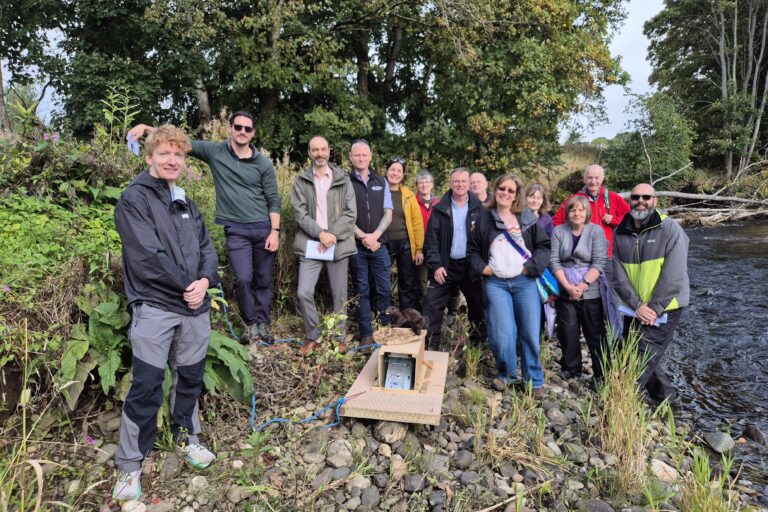
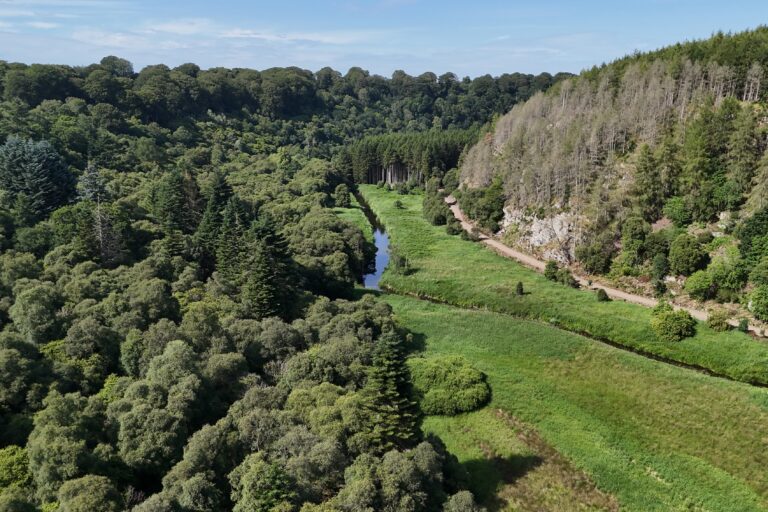
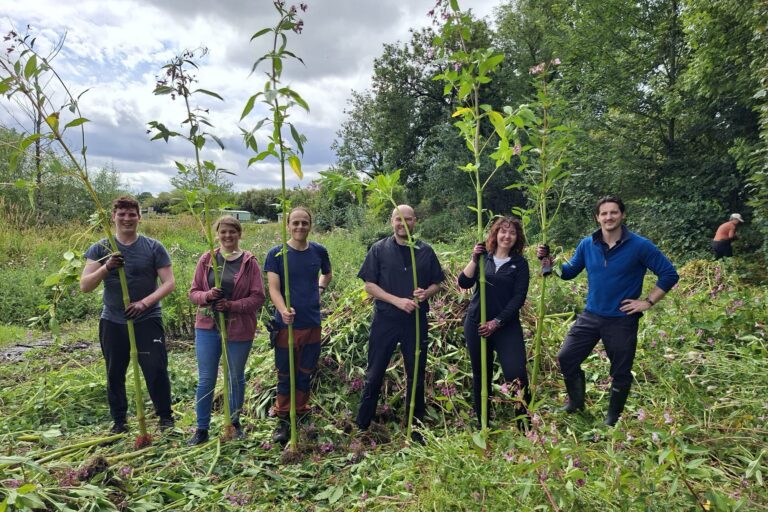
In April 2026 the Scottish Invasive Species Initiative expanded south for the first time to cover the Earn and Eden rivers in Perthshire and northern Fife
The Scottish Invasive Species Initiative has been operating since 2018, covering 43 river catchments across northern Scotland. It is the largest multi-species invasive species control project in Britain and covers over a third of mainland Scotland.
The project area includes West Sutherland, Wester Ross, north-east Inverness-shire, Moray, Aberdeenshire, Angus and Perthshire. Up until now, the River Tay in Perthshire has served as our southern boundary and we have covered more of the river and its tributaries as the project progressed over the years.
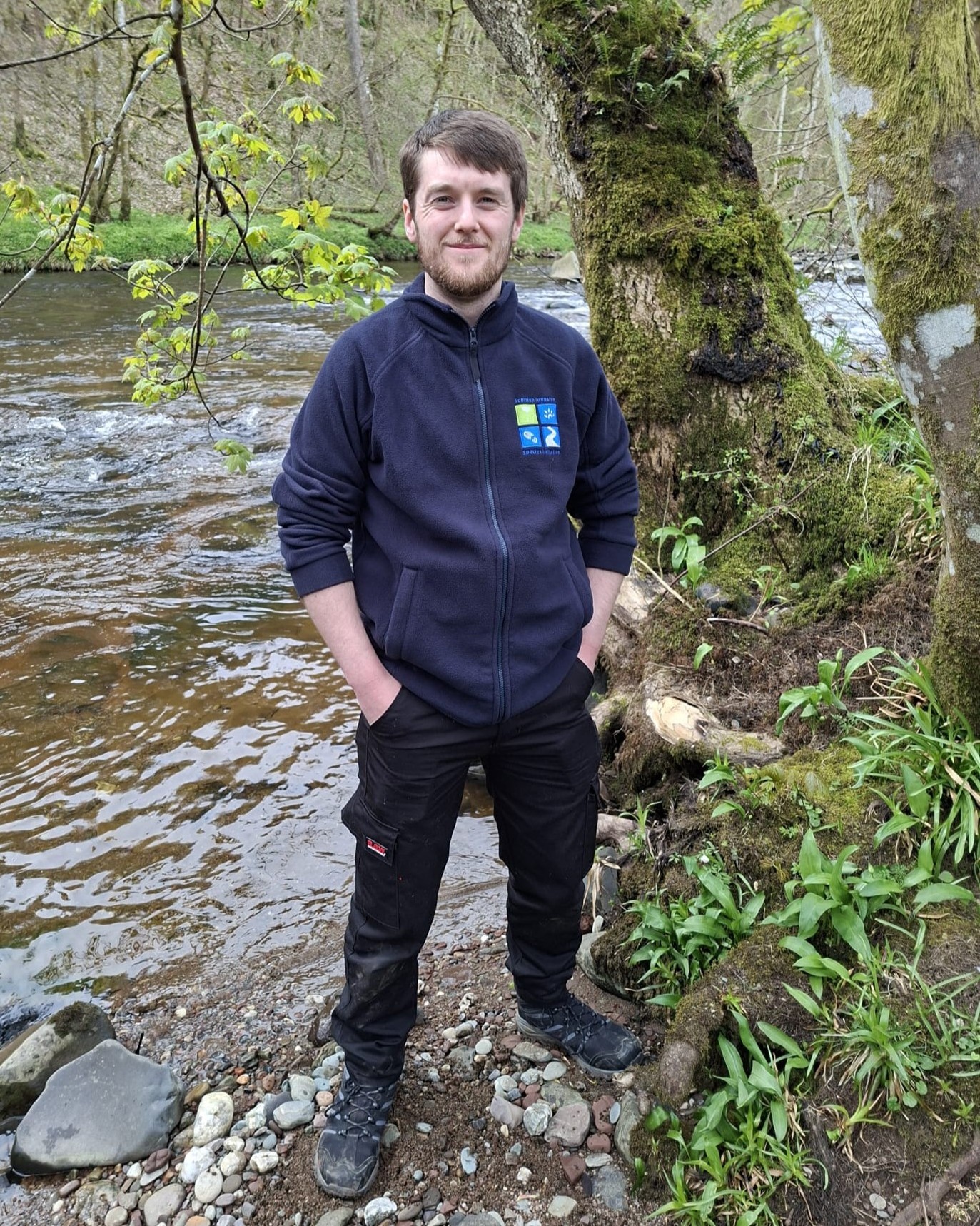
We are delighted to announce that from April the project has expanded in area to cover two new rivers – the River Earn, a tributary of the Tay, and the River Eden in Fife. This is the first project expansion since we started work in 2018. To lead and coordinate this work we appointed a new Project Officer, Douglas Traynor, to cover the new “South Tayside” area in April.
The River Eden
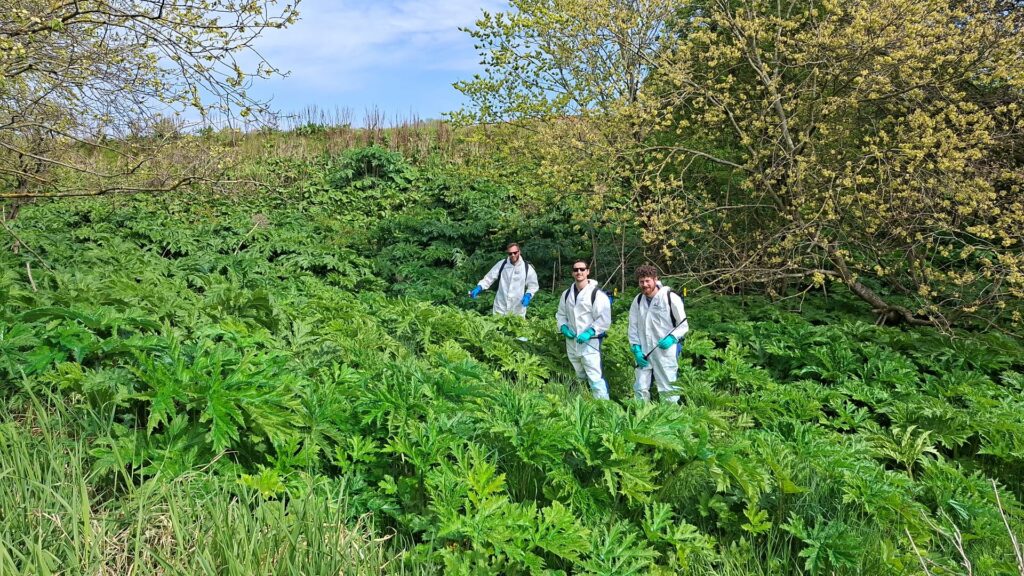
The expansion to the Eden follows development work undertaken by the River Eden Sustainability Partnership (RESP). Supported by a grant from the Scottish Government’s Nature Restoration Fund, RESP surveyed and mapped landownership, riparian habitats, invasive non-native species (INNS) distribution and habitat pressures and opportunities along the River Eden and Motray Water. They also trained local volunteers who are now ready to help with control of invasive non-native plants.
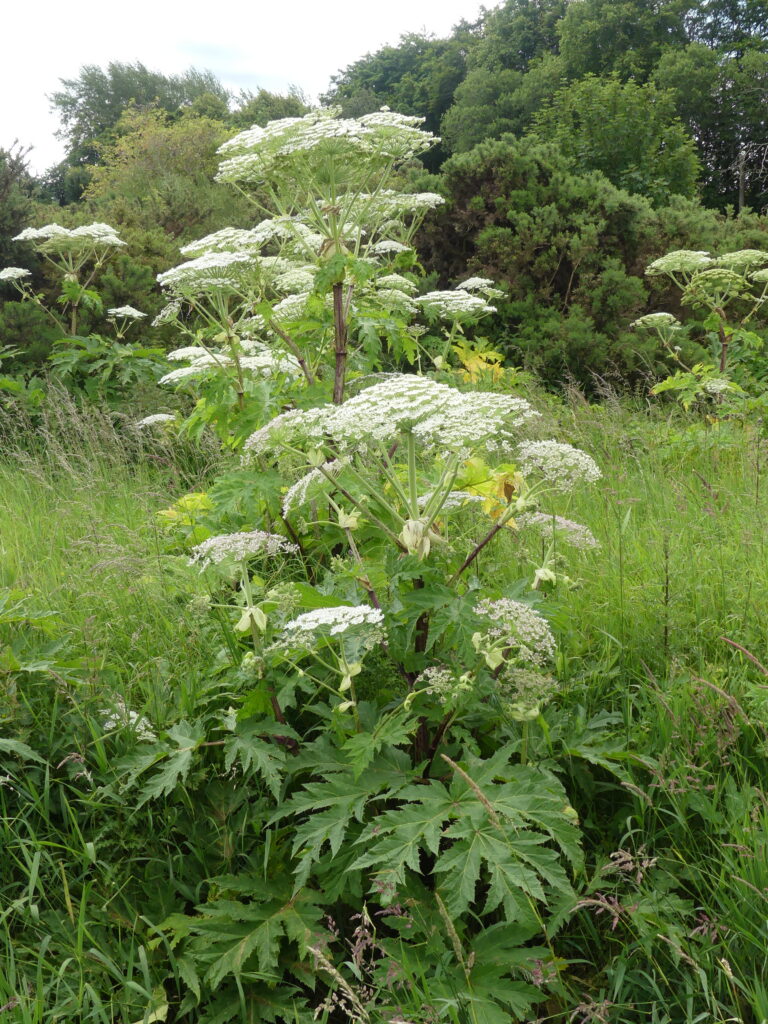
Throughout this work the Scottish Invasive Species Initiative kept in close contact with RESP, providing advice and support where needed. Mark Purrmann-Charles, Project Officer for North Tayside, joined RESP for a field training day in 2025 to help volunteers get up to speed with techniques to treat giant hogweed.
Following this development project, and important control work coordinated by the Fife Coastal and Countryside Trust, the Eden was well prepared to join our programme and the Initiative is now undertaking control of giant hogweed, Japanese knotweed and American mink in the catchment.
Michael Farrell, chairman of RESP and secretary of the Eden Angling Association, said:
“RESP is delighted at the extension of the Initiative to South Tayside. From the outset, the Initiative has offered us advice and support as we built our source-to-sea strategy for INNS control on the Eden. Our work surveying the catchment and building a network of trained volunteers and landowner contacts has helped make this extension possible. We now have a dedicated Project Officer in place to tackle invasive species on the River Eden and Motray Water.
We are really impressed with the way Douglas has hit the ground running since his appointment in April. In a few short months he has managed to extend giant hogweed control further downstream than ever before and we have a robust invasive plant control strategy in place for the rest of the season and next year. In addition, we are pleased to see a trapping network being built to control American mink in the Eden catchment and North Fife for the first time.”
The River Earn
The project will also expand to the River Earn, which, together with the River Eden and waters in between will form the Tayside South project area. The River Earn is the most downstream tributary of the Tay, meeting the river near the village of Abernethy. Expanding to the Earn is a natural next step for the Initiative and builds on our existing work across the Tay catchment.
Although there has not been a full development project on the Earn, the Tay District Salmon Fisheries Board (TDSFB) carried out a survey of Japanese knotweed and other invasive species in May 2019 on the upper catchment between St Fillans and Crieff. The River Earn Improvement Association has updated the survey information and had historically deployed contractors in some areas to treat Japanese knotweed. Nature Restoration Fund awards from Perth and Kinross Council in the last 3 year enabled the Association to train volunteers in Safe Use of Pesticides and to purchase necessary herbicides and equipment required to work with these chemicals safely. Volunteers treated Japanese knotweed on sites in the upper catchment in 2024 and 2025 and will do so again in 2026, as well as supporting Douglas’ planned work.
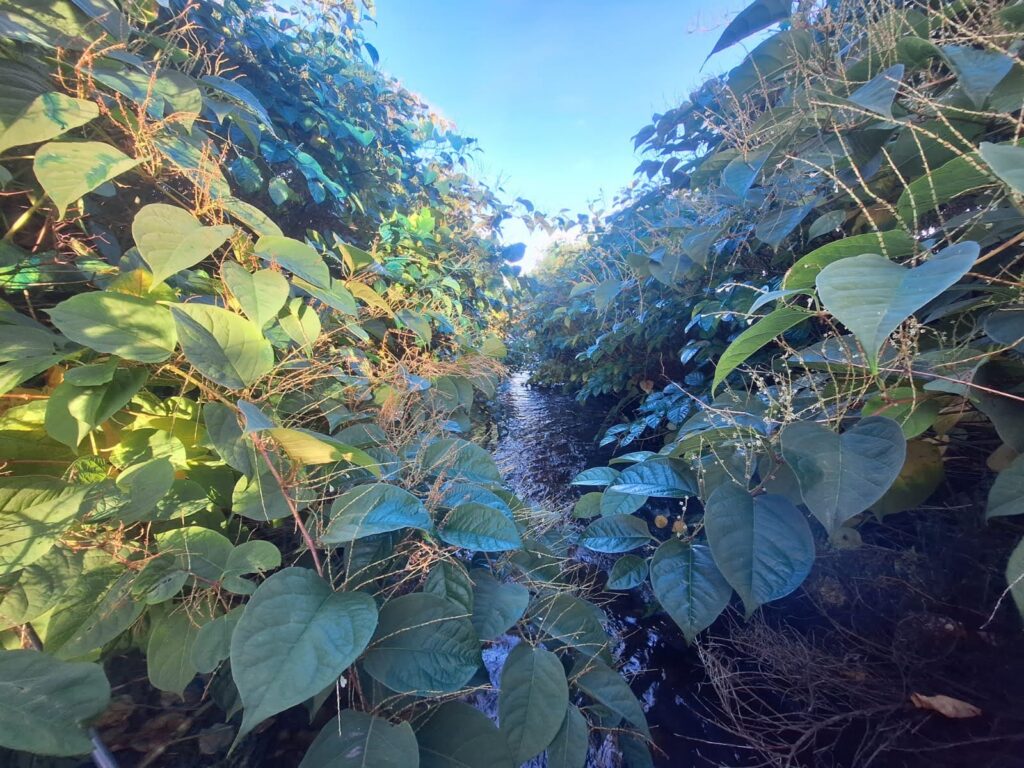
The Association were in touch with our team throughout this process and their initial work provides a good basis to extend our control into the River Earn. We look forward to working with the Association and others to bring catchment-based invasive plant control to the Earn.
John Robertson, Treasurer of the River Earn Improvement Association (REIA), said:
“Invasive non-native species are a serious problem on the River Earn and we are delighted that the Initiative is expanding their work to cover this area. A progressive top-down strategy is needed to tackle the large and extensive infestations of Japanese knotweed and giant hogweed which are impacting our rivers, our wildlife and our communities.
Over the past few years, REIA has begun working in the upper catchment to tackle Japanese knotweed and our group of trained volunteers is ready to help with future control work. We are also very pleased that there will be increased trapping of American mink in the catchment, with the help of volunteers and to benefit native wildlife.”
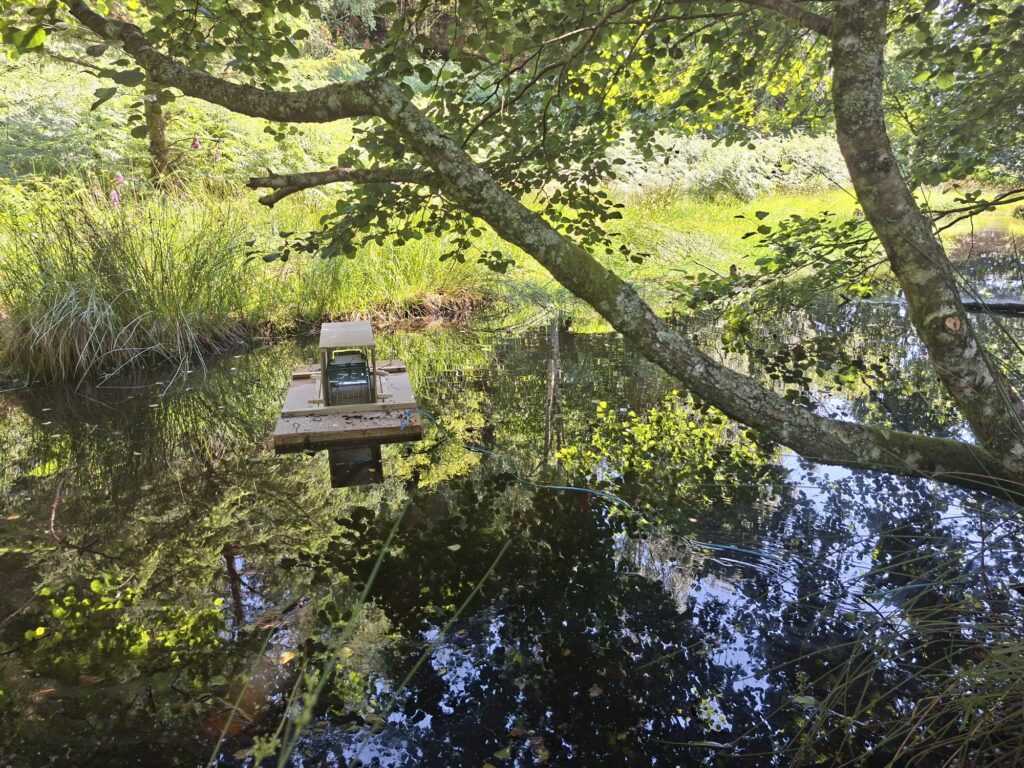
The Initiative started to build an American mink trapping network on the River Earn in 2024, giving us a head start as we look to expand the project in this area. This meant that, when Douglas joined the project in April, he inherited a group of 10 volunteers collectively monitoring 24 live-capture traps and is now working steadily to expand this network.
Get involved
The Scottish Invasive Species Initiative works with land managers, communities and volunteers to tackle target species. As we begin work on the Earn and Eden Rivers, we will be looking for help in these areas.
Callum Sinclair, Project Manager of the Scottish Invasive Species Initiative Project said:
“We are delighted and excited to expand our project area south to include the rivers Earn and Eden and the waters of North Fife. This extends both our invasive plant and American mink control work significantly after the excellent preparatory work of the River Eden Sustainability Partnership, the Fife Coastal and Countryside Trust and the River Earn Improvement Association in recent years. We have made a great start in the new South Tayside area because of this work and have appointed Douglas to our team to lead our work in this new area.
Volunteers – including landowners and land managers – are essential to the project and we are always looking to welcome new people to participate. For anyone interested in helping us tackle the problem of invasive non-native species in South Tayside, this is a great time to get in touch. Every volunteer, land manager or community group helping in our plant or mink control programmes will make a real difference to Scotland’s nature now, and for the future.”
If you would like to get involved in the project, either as an invasive plant volunteer, mink volunteer or as a land manager, please get in touch. You can contact Douglas at Douglas@tdsfb.org or sign up on our website.
Further Information
River Eden Sustainability Partnership
A full report on the River Eden INNS survey can be accessed here
A storymap on the River Eden development project can be accessed here