Gight Wood Wildlife Reserve is a fragment of ancient lowland woodland in Aberdeenshire – one of the last remaining and least disturbed in the area. Set on the steep slopes of the River Ythan, the woodland supports native deciduous trees including hazel, oak and rowan. The reserve is also home to a variety of wildlife including badgers, bats and woodland birds. Habitat like this is becoming increasingly rare, making the site an important place to protect and conserve.
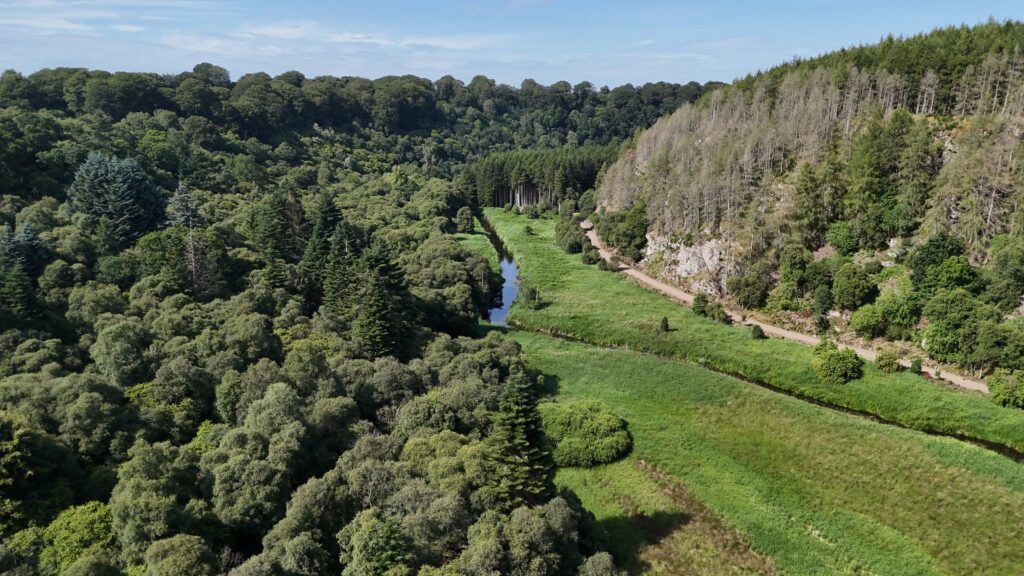
The reserve is owned by the Scottish Wildlife Trust who manage the site for the benefit of native species. One of their many duties includes invasive non-native species control, with staff and volunteers tackling some of the species we target in the Scottish Invasive Species Initiative. Their work on the reserve is an important part of invasive non-native species control in the River Ythan catchment.
Let’s have a look a few of the species the Trust is dealing with – and how their efforts tie into the Initiative’s work across the wider catchment…
Giant hogweed
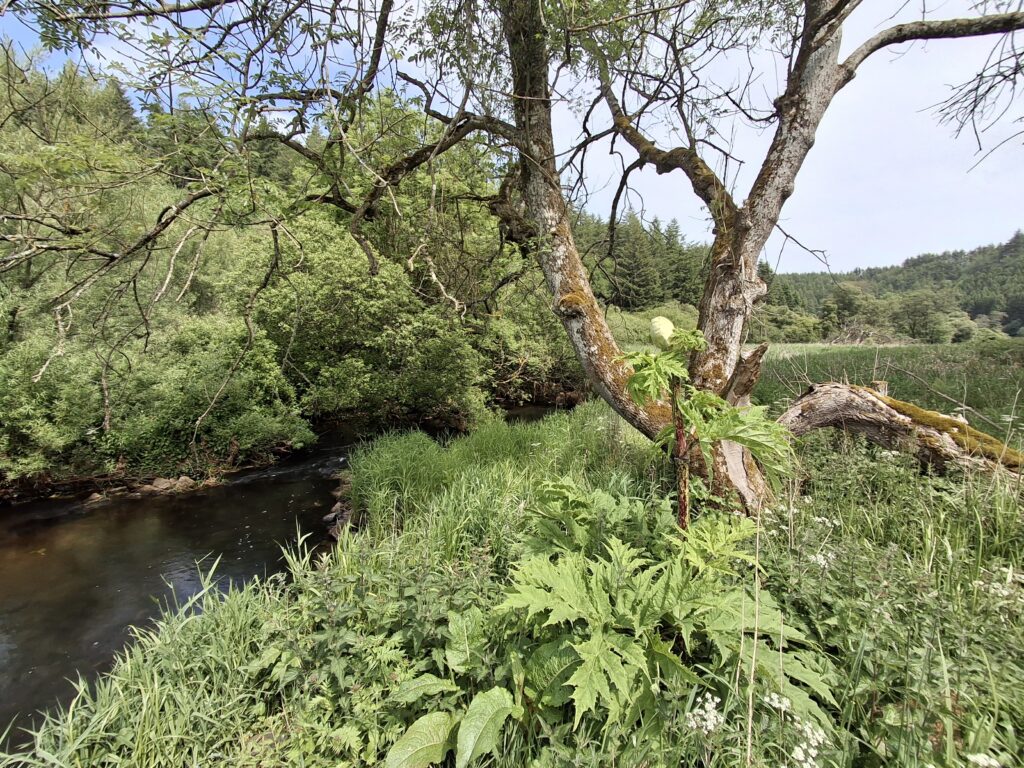
Giant hogweed is controlled from source-to-sea on the River Ythan, with the majority of infestations concentrated on burns around Fyvie village, which is located upstream of the Gight Wood reserve. While our team are working upstream, the Scottish Wildlife Trust have been tackling the plant on the reserve.
This is a huge help to the Initiative – the Trust are managing around 2.5 km of river, treating known infestations and keeping an eye out for any new ones that pop up. Luckily there is very little giant hogweed present on the reserve, with only a few plants emerging each year and very few reaching maturity and producing flowerheads. By keeping on top of the problem, the Trust is contributing to catchment-wide management of this plant and helping us work towards eradication across the River Ythan.
Himalayan Balsam
Himalayan balsam is more widely spread throughout the Ythan catchment. The plant is present on the Burn of Stonehouse, which runs through a newly acquired part of the Gight Wood reserve.
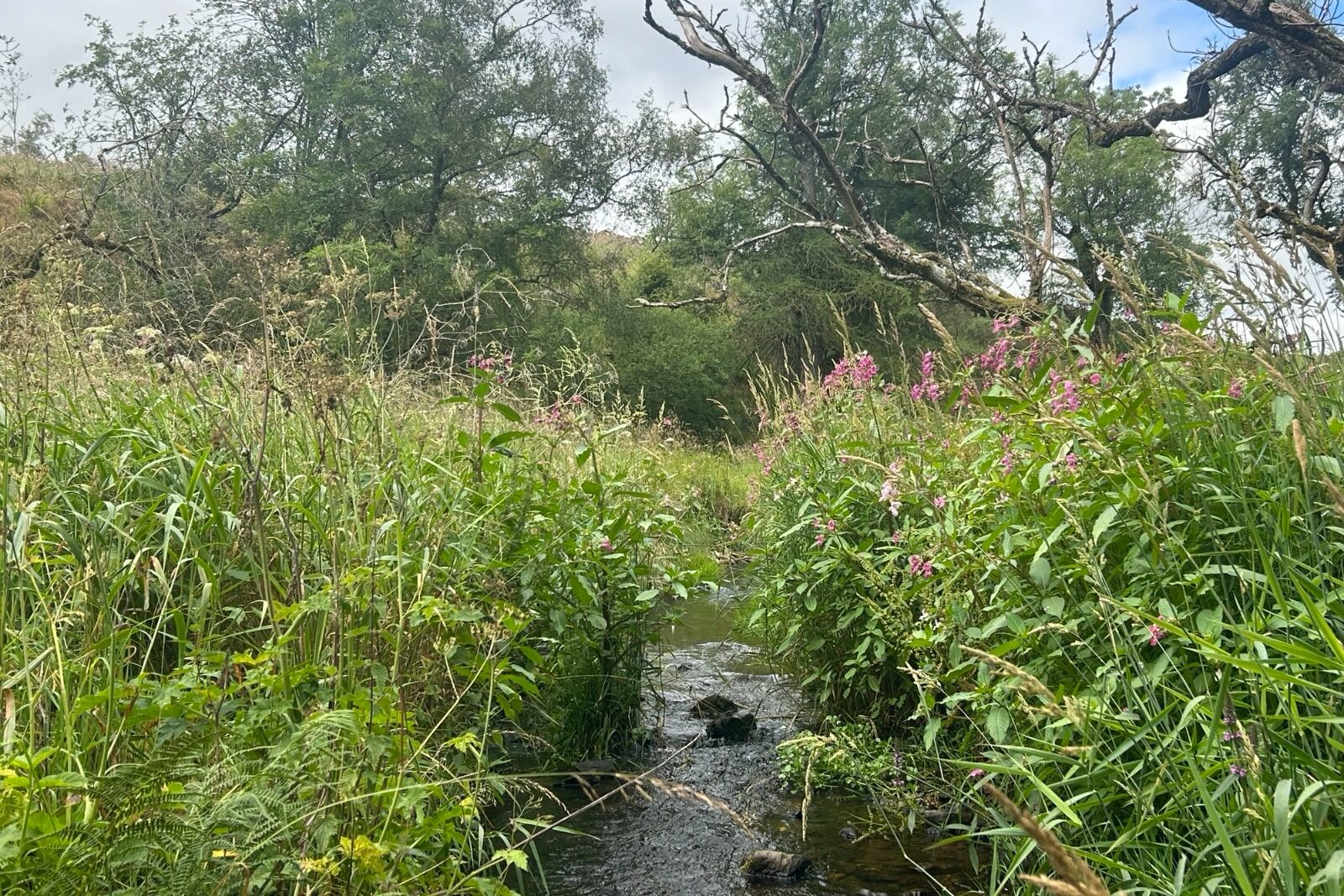
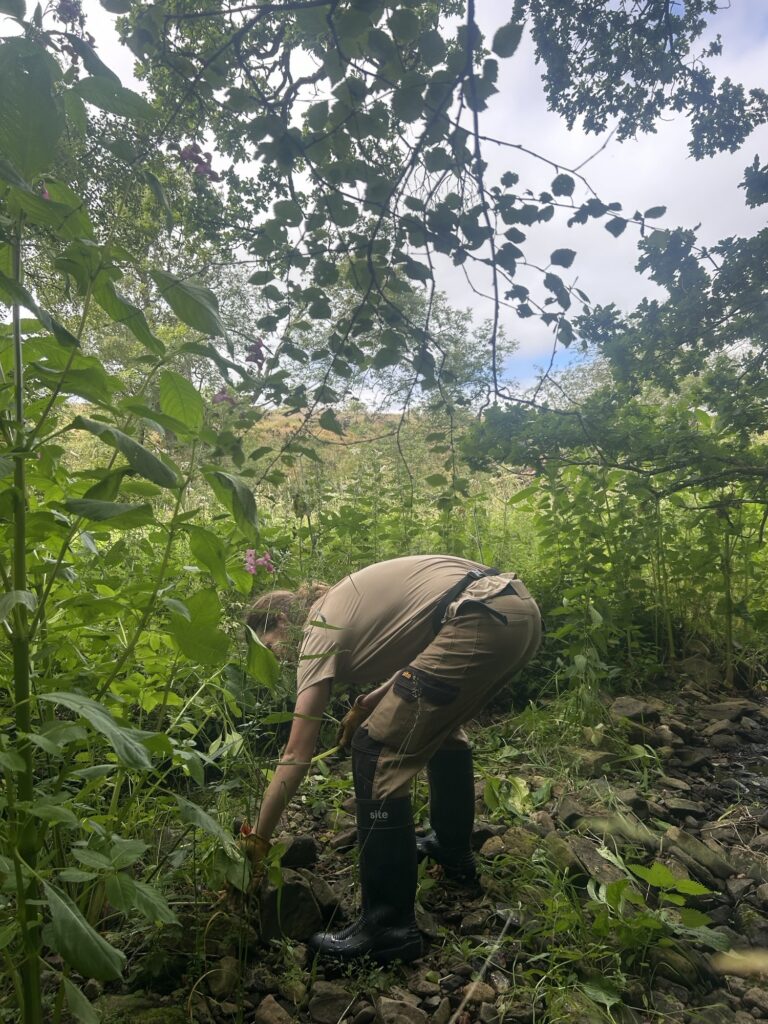
While the Trust have been working hard to tackle Himalayan balsam within the woodlands, our local team are managing this species on either side of the reserve. Unfortunately, this year we discovered an additional outbreak upstream of the woodlands, so we will need to look at how this can be incorporated into our control programme in future.
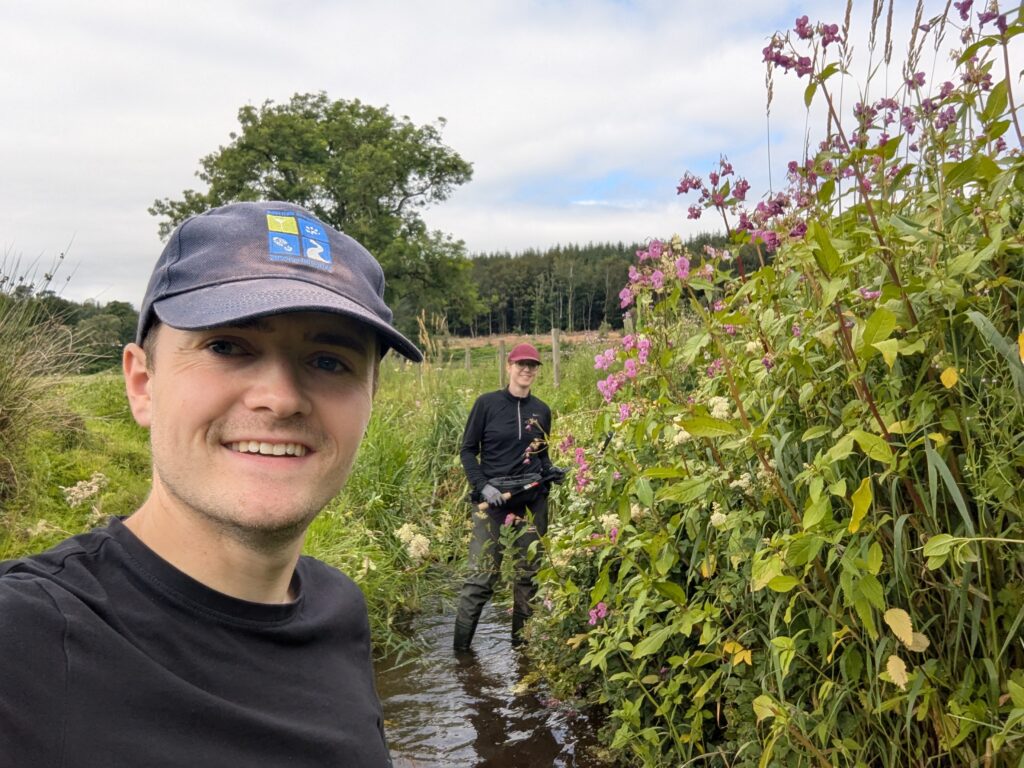
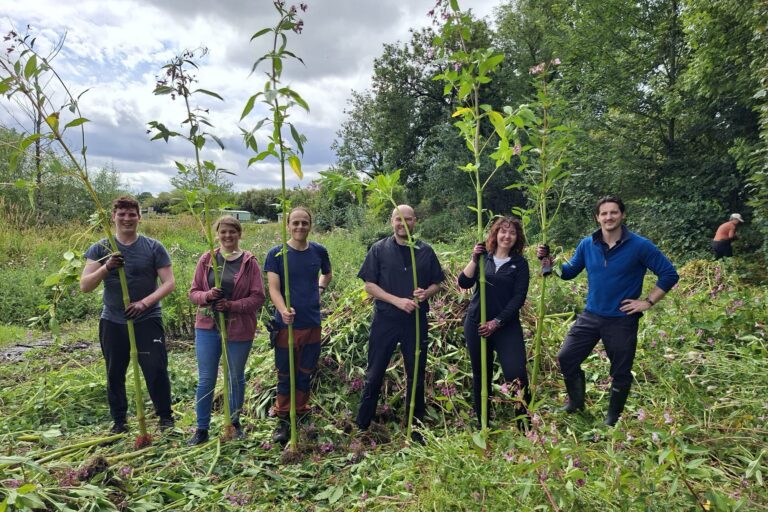
Despite this setback upstream, the Trust are doing an excellent job managing balsam in the reserve with the help of volunteers. By working together and collaborating to manage balsam within and outside the reserve, we hope to make progress on the upstream sources in the River Ythan catchment.
Japanese knotweed
Japanese knotweed is, thankfully, a relatively small problem on the Ythan and within the reserve. There is a single stand known to be present in Gight Wood, a short distance away from the river, which the Trust team are managing. Our team are managing all other known infestations on the Ythan, with the help of local landowners, preventing the problem from getting any worse and moving towards eradication across the catchment.
American mink
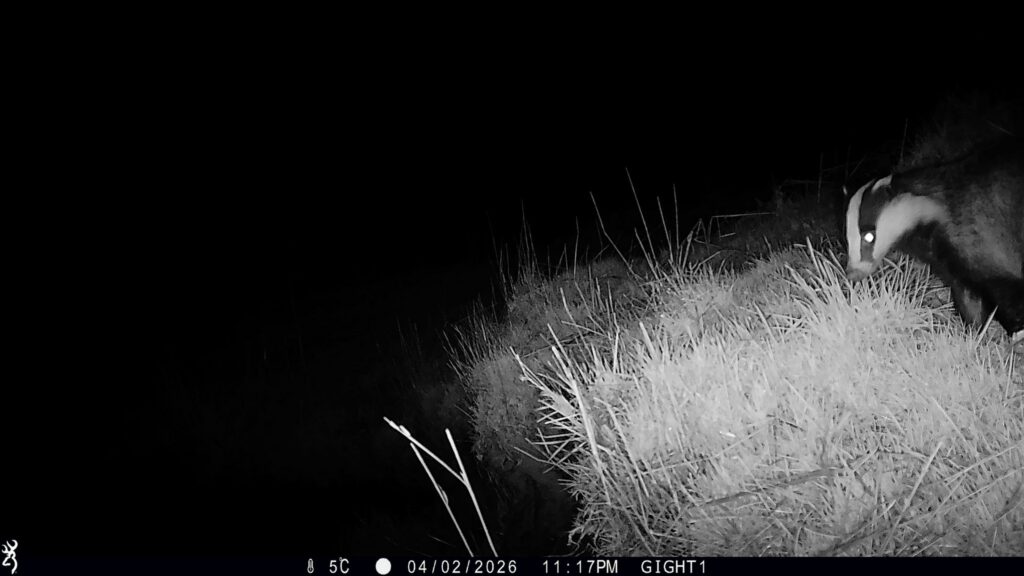
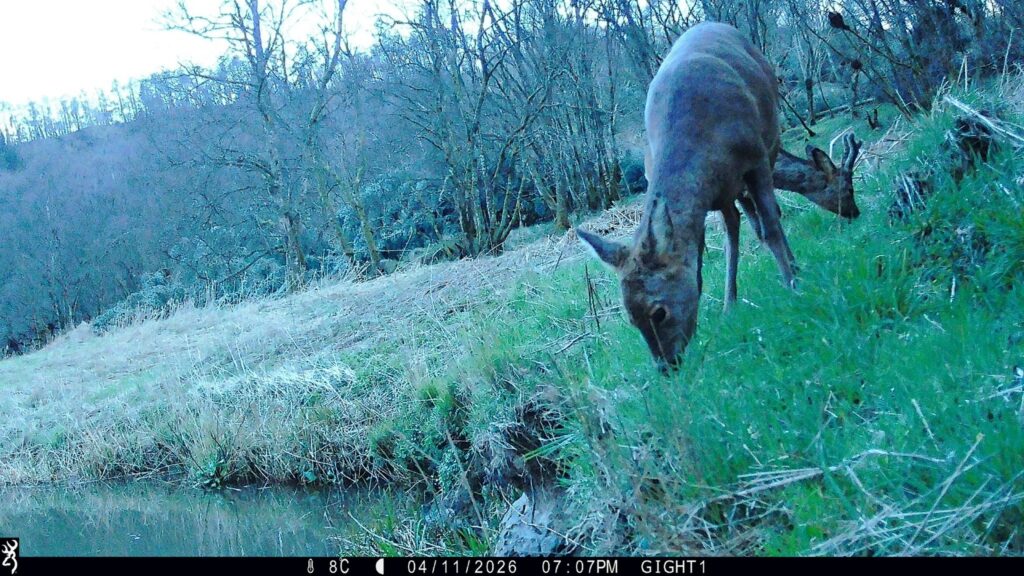
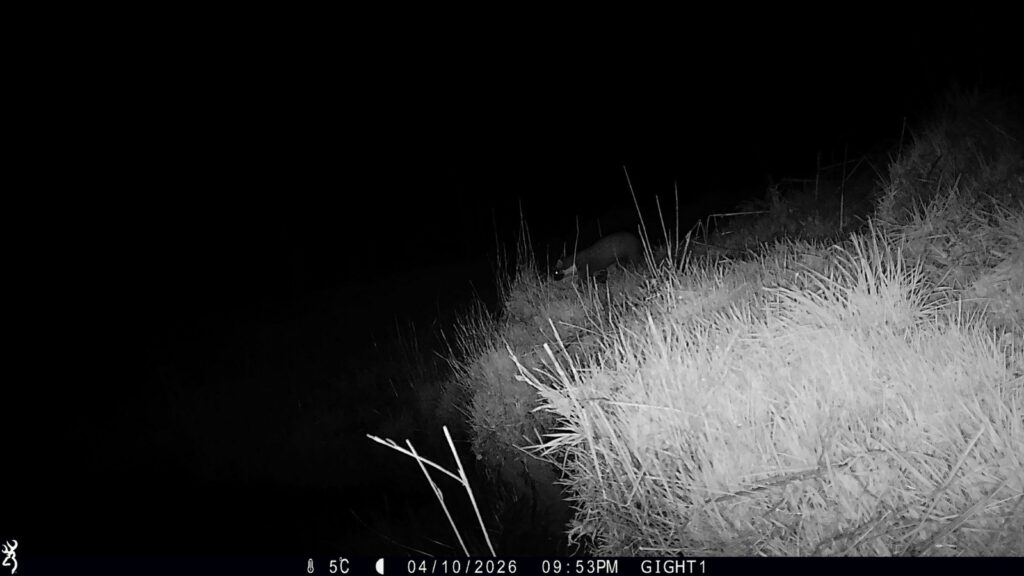
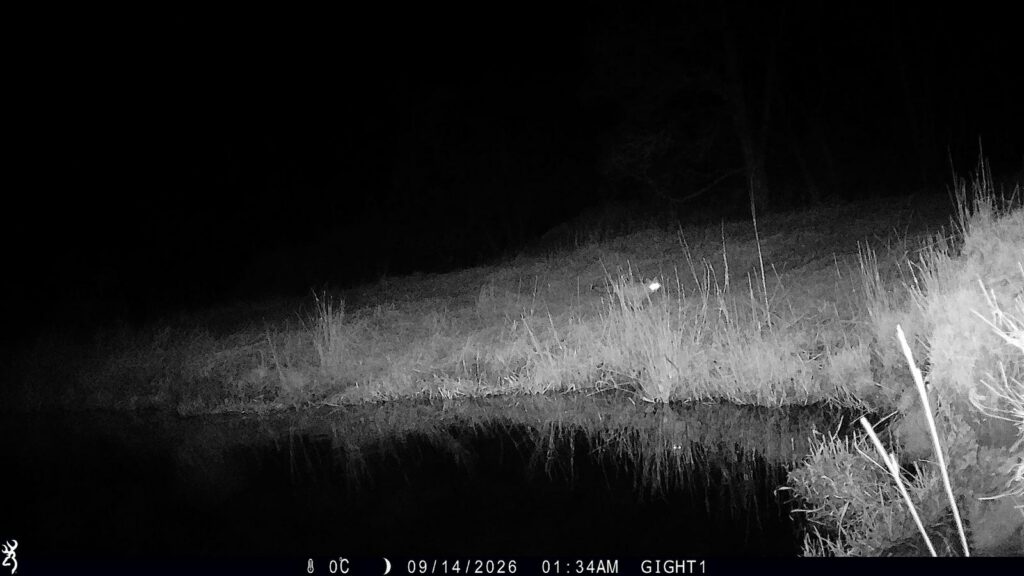
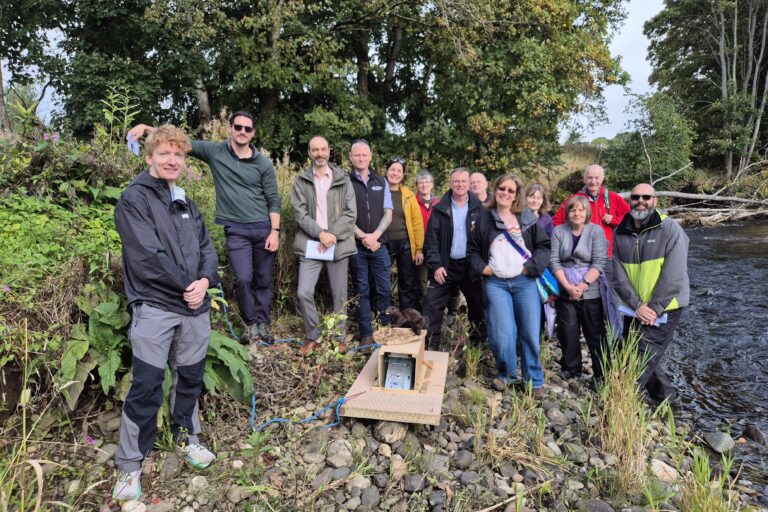
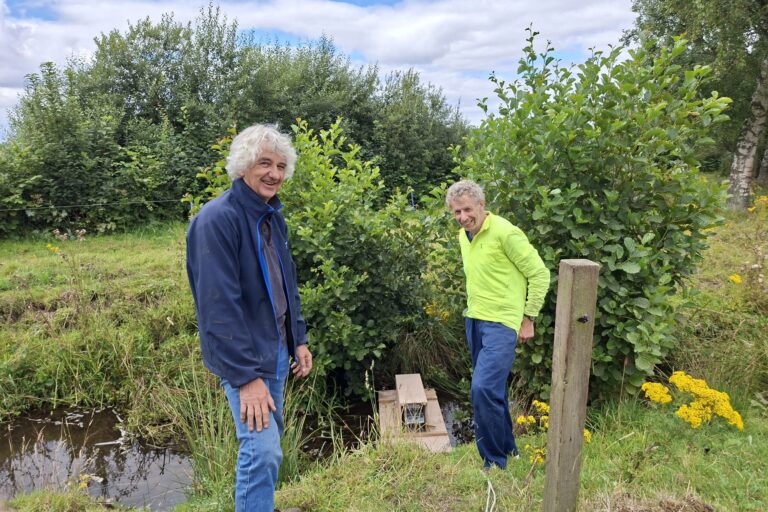
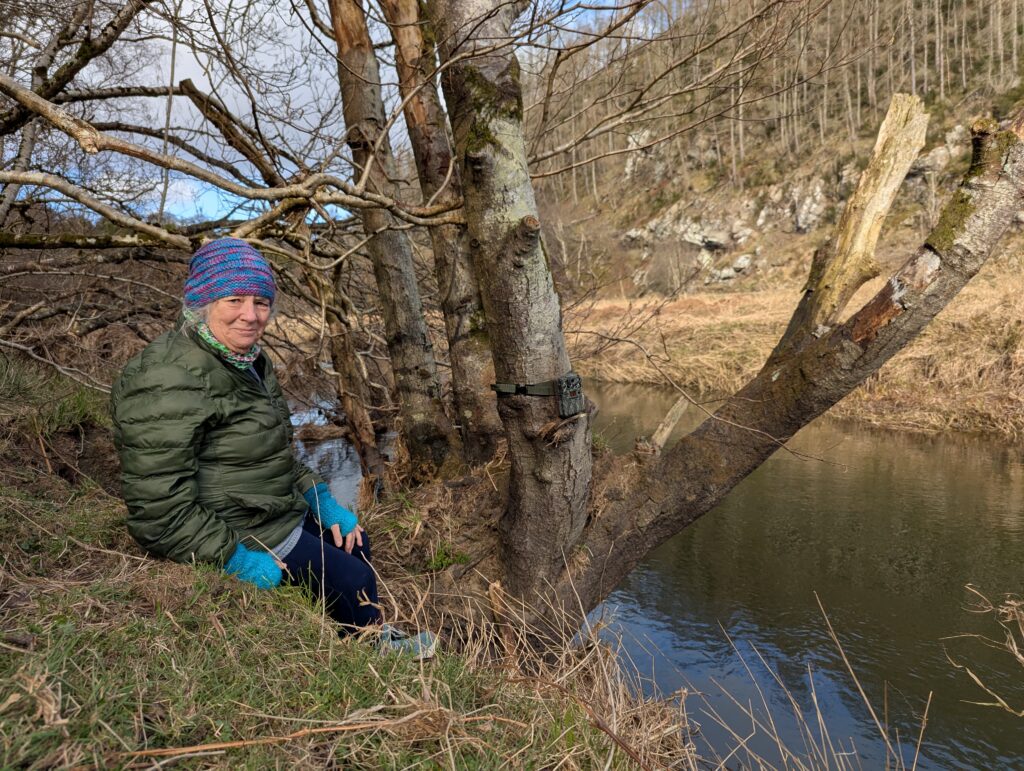
The Scottish Wildlife Trust do not have staff based at the Gight Wood reserve but they have given permission for us to monitor for American mink with the help of a local volunteer. Phone signal is very limited in the area, which has prevented us from deploying a remoti unit, but a combination of a clay monitoring pad and a trail camera allow us to monitor for mink and respond rapidly to any signs or sightings. We haven’t seen any mink yet but we have seen a lot of wildlife on the trail camera, including deer, badgers, foxes and pine marten. It’s been lovely to see the varied native wildlife making use of the reserve.
Collaboration
The Scottish Wildlife Trust is one of the many conservation organisations we are working with across the project area who are making significant contributions to the Scottish Invasive Species Initiative project. We’re very pleased to be working alongside them to improve important and rare habitat for the benefit of native wildlife. Thanks to everyone who has helped at the Gight Wood Wildlife Reserve!