By Hamish Baker, Seasonal Project Officer, Scottish Invasive Species Initiative and Findhorn, Nairn & Lossie Rivers Trust

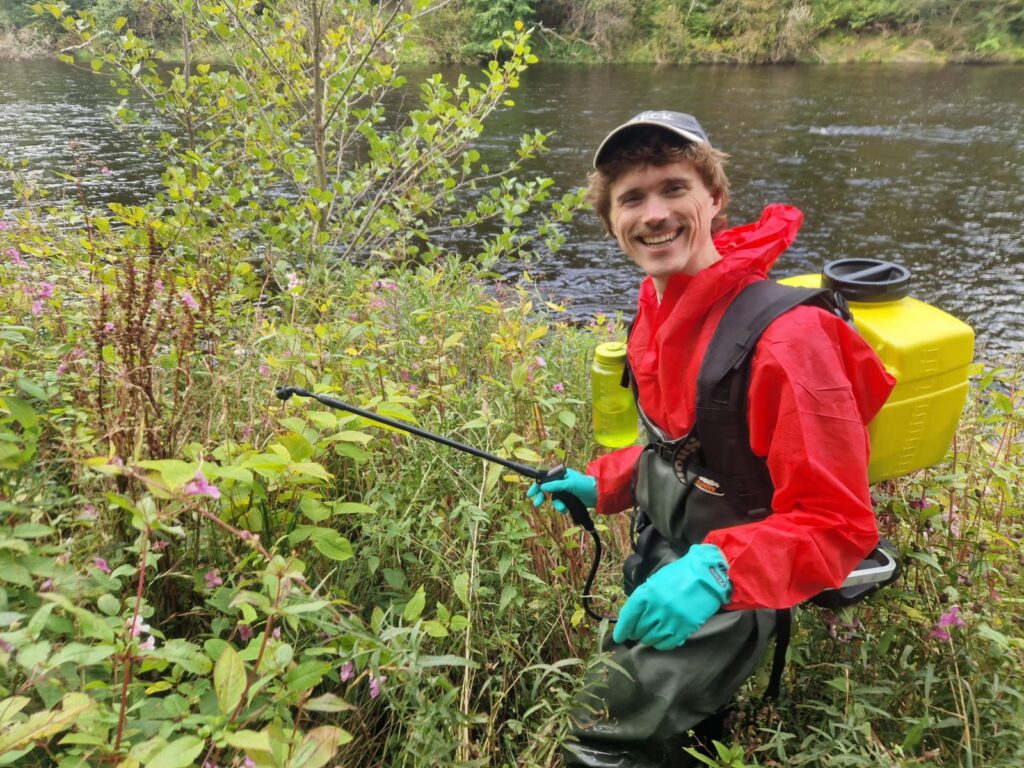
I have spent my summer working for the Scottish Invasive Species Initiative in the Findhorn, Nairn and Lossie river catchments. Growing up near the River Nairn, I thought I had a pretty good grasp of it and the surrounding area, but one of the best things about my job has been seeing parts of a river I never normally would.
Birds have been a constant fixture in my life, and during long days out on the river treating invasive plant species, I would see a huge variety of birds. This brought me constant entertainment while out in the field, sometimes pausing to try and mimic a song or call, often to no avail. Working on the project for six months also gave me the opportunity to observe the changes of the seasons, not only visually, but also in the comings and goings of different birdsongs.
Before this job I knew very little about invasive non-native species (INNS), and while I’m no expert now, I have learned not only how to manage INNS practically, but how these species impact local wildlife. Of particular interest to me, due to my obsession with birds, was how mink may impact or alter the communities of birds living along the rivers. With this in mind, I have written about some of the birds I have enjoyed seeing over my summer on the rivers, and how or why they may be particularly susceptible to mink predation.
Sand Martin (Riparia riparia)
Along the banks of the River Lossie, I see a riverbank cliff, pock marked with burrows. Small, agile birds flit in and out, chattering incessantly, their conversations interrupted by a natural impulse to prey upon the invertebrates they share the air with. A streamlined body betrays their relation to swallows. However, their short, slightly forked tail and brown plumage allude to a different species.
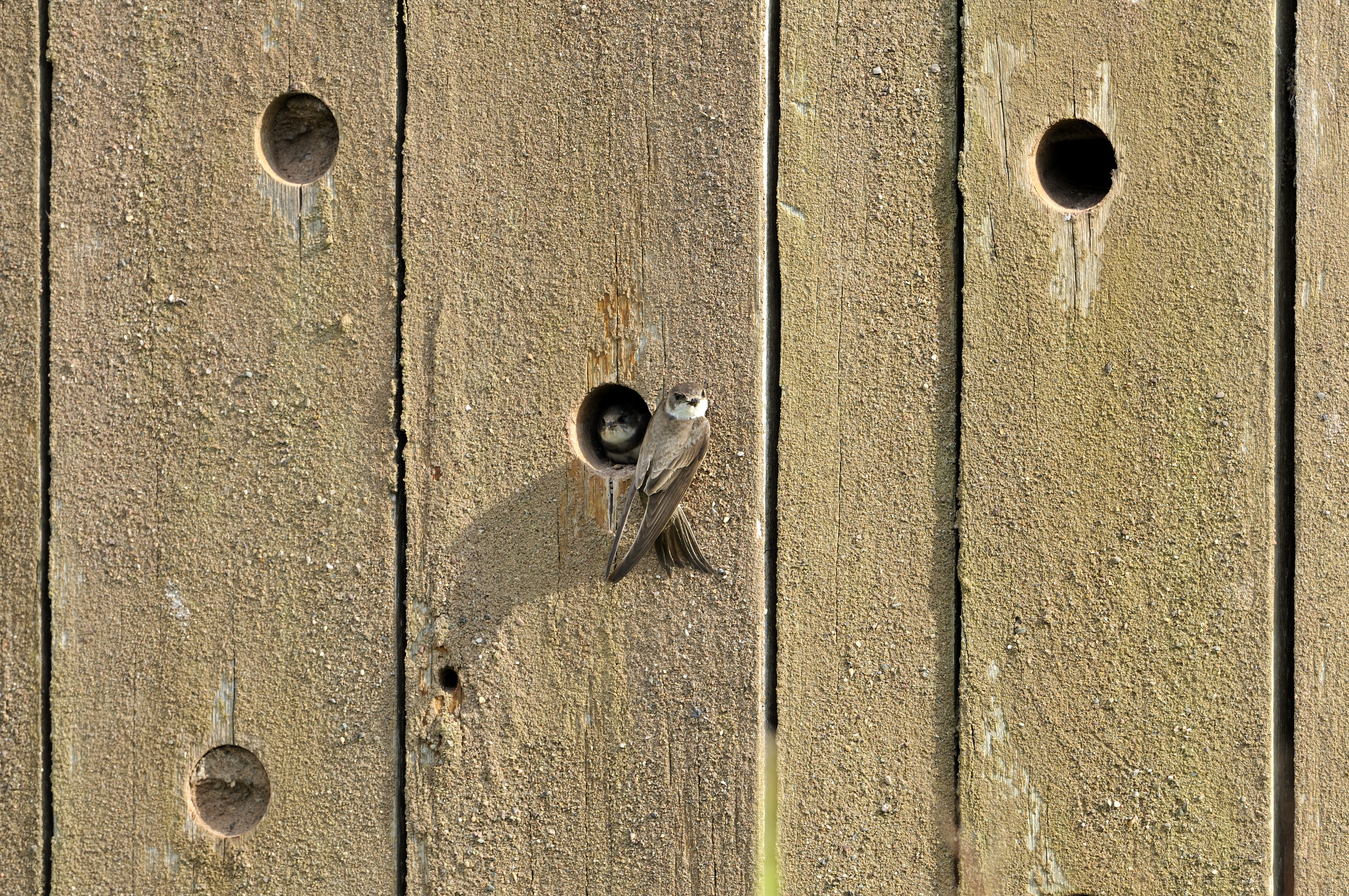
These are sand martins, and they have travelled over 4000 km from the arid Sahel region in Africa to breed on our riverbanks – our long days and abundance of food providing the impetus for their pilgrimage. While the species population is stable in the UK, droughts in Africa have twice been the catalyst for a crash of the European population.
Closer to home, they can be vulnerable to predation pressure. Although these birds are preyed upon by owls, badgers, foxes, rats and even herons, the effect of mink on populations can be especially damaging as they have not evolved together. The unique nesting behaviour of the sand martin is its downfall, with their long mustelid-shaped burrows only too inviting to a mink. Most native predators cannot access a sand martin burrow as easily as the mink – who often kill more prey than they need, leading to high casualties in a colony. Both chicks and adults can fall victim to mink, and in rare occasions entire colonies are decimated, as occurred at the Attenborough Reserve in Nottinghamshire.
Common Kingfisher (Alcedo atthis)
On the upper reaches of the River Nairn, as I search for Japanese knotweed, a bolt of electric blue shoots past, nearly knocking me off balance as I try to follow it downstream. Once composed, I look and spot the kingfisher, perched upon a feeble branch above the river, motionless and patient as it waits for its prey. Within a fraction of a second it initiates its freefall, tucking its wings behind itself just before it hits the water. It vanishes briefly, only to re-emerge with a small fish held firmly inside its bill, which it easily brings back up to its branch to eat.
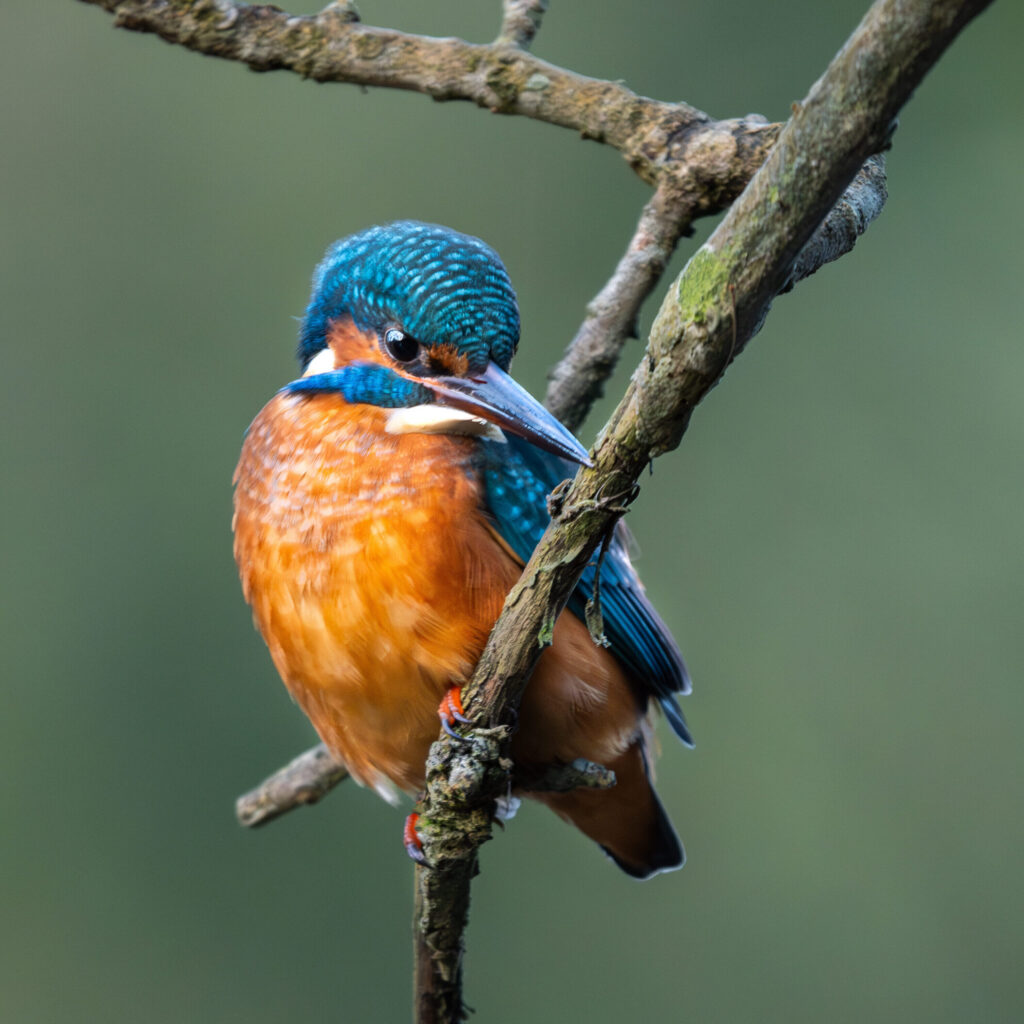
Kingfishers are a unique bird, with their bright blue and orange plumage, large dagger-like bill, and rapid flight up and down our rivers. As the name suggests, their diet is almost exclusively made-up fish, which it hunts from vantage points in the vegetation along the water’s edge. Thankfully the population appears to be stable in Scotland, however cold winters have been known to kill off many individuals, as well as pollution events.
This species is also known to be predated on by mink, which can climb into the burrows of kingfishers – long, narrow chambers the birds excavate themselves – killing any chicks they find inside. Kingfisher parents are known to defend their nests vigorously, and have been observed divebombing mink, though this is rarely enough to deter the predator.
Common Sandpiper (Actitis hypoleucos)
A beige bird bobs up and down on a rock as though thoroughly enjoying a silent disco I am not lucky enough to be invited to. As I approach, it bobs more vigorously, before crouching down and springing into the air with a low flight and stiff wings, leaving a three-note chirp in its wake.
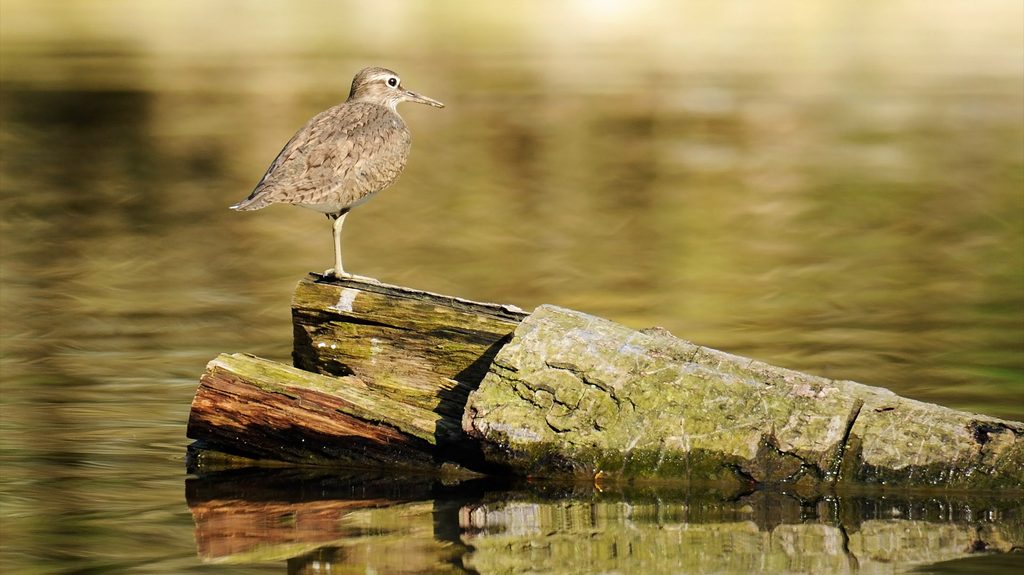
Common sandpipers are one of our many migratory birds which arrive in late April to Scotland’s upland rivers and lochs to breed. They are usually identified from other small brown waders by their ‘teetering’ behaviour, whereby it bobs up and down, typically flicking its tail in the process. You will often hear their three-note call in the upper catchments during the summer.
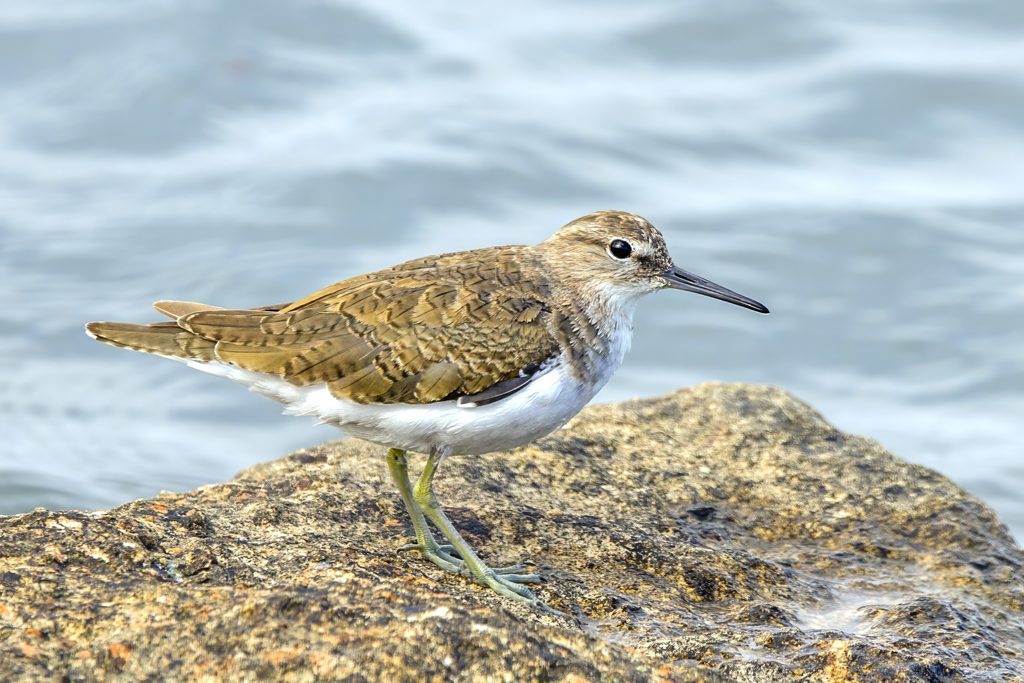
Mink are known to predate on the species, as do other mammalian predators. As a ground nesting bird, the common sandpiper is very vulnerable to mink – but especially as they only lay one brood of eggs per season. This can result in complete breeding failure when eggs or chicks are predated on and can cause a local reduction in the number of common sandpipers year on year if mink are present in the area.
A look back on the summer
Autumn is now in full flow, and I am ready to move on from my season working for the Initiative and the Findhorn, Nairn and Lossie Rivers Trust. While helping to tackle INNS in my local rivers, I have been lucky over the summer to get to spend time with the birds I have mentioned above – a few of my favourite native species. I hope that the work I have been involved in has made a difference to their survivability and breeding success this year, and that next summer, I will get to see them again.