By Jan Simpson, Project Officer for the Dee and Don Rivers
Since 2018, The River Dee Trust has partnered with the Scottish Invasive Species Initiative to tackle invasive species in the River Dee and the River Don catchments. With a new round of funding and a project expansion in 2023, the focus of control effort on the River Don moved downstream to cover the area from Strathdon to Inverurie. At this point it was vital that control started in a concerted way on the River Urie, the Don’s biggest tributary.
For a long time the Don District Salmon Fishery Board and The River Dee Trust had been aware of the extent of the giant hogweed infestation on the Urie and had previously tackled it under different projects but, as various funding sources ran out, control was not able to continue consistently. The Scottish Invasive Species Initiative began control works on the River Urie in 2023 – here is how we’ve got on so far…
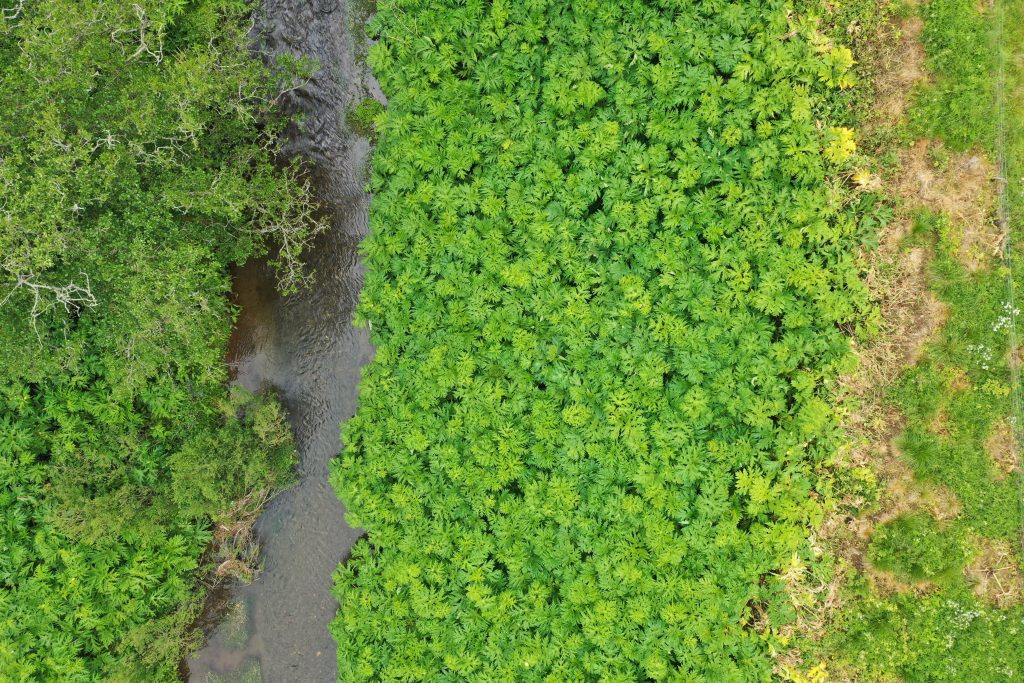
What is Giant Hogweed?
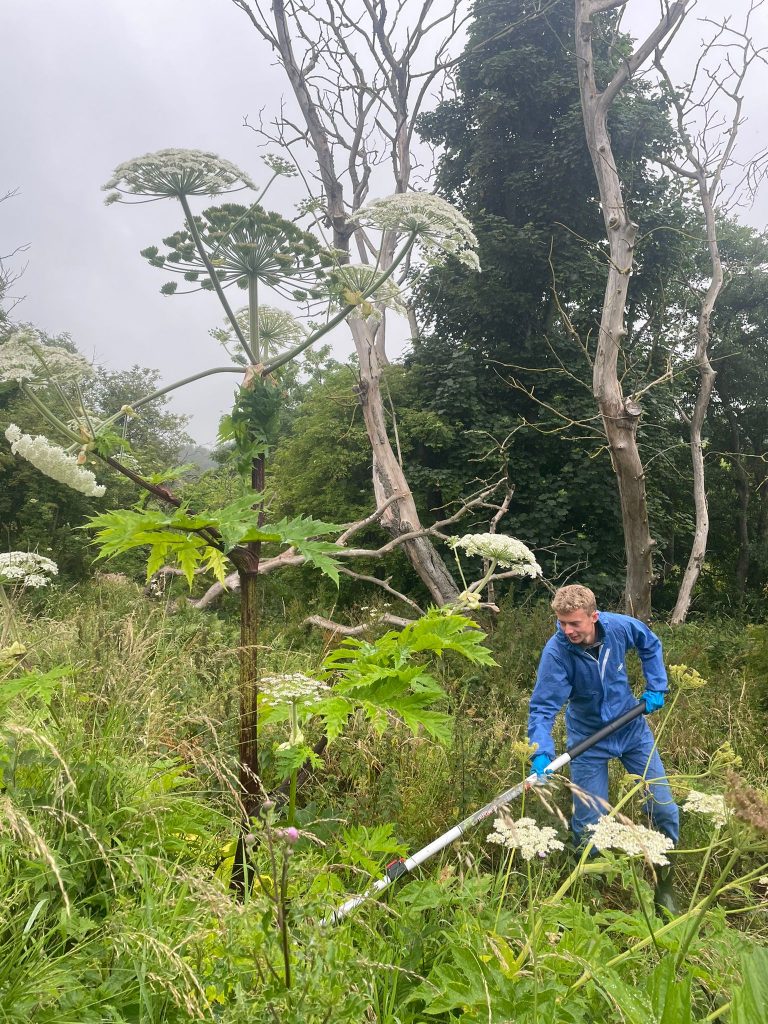
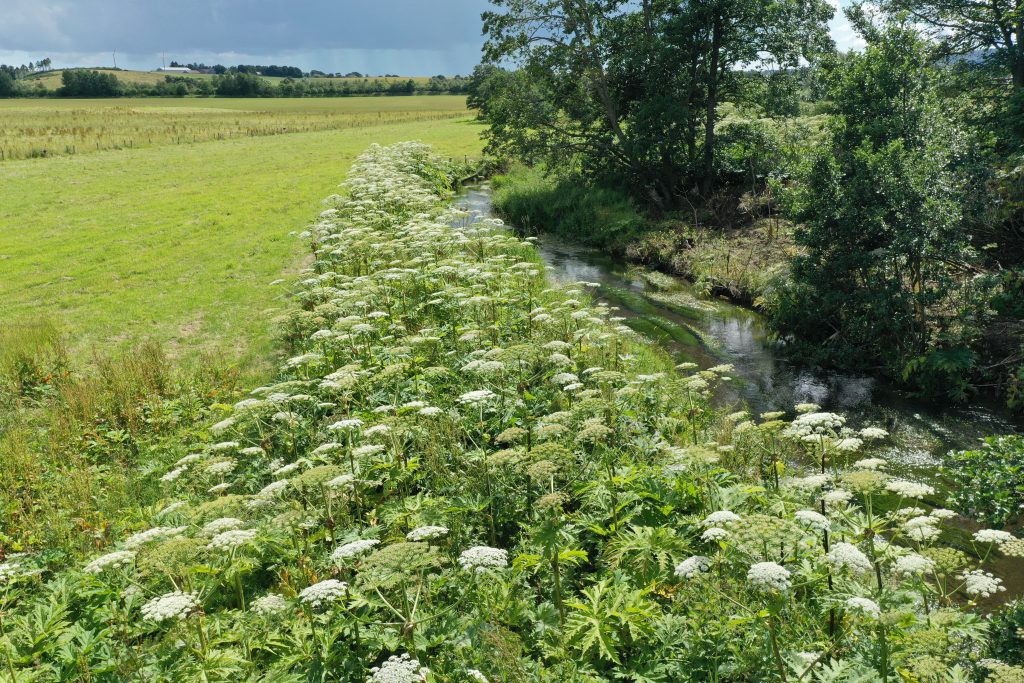
Giant hogweed originates from Southwest Asia and was first found in the wild in the UK in the early 1800’s. It is an umbellifer that can grow to over 2m high with big, jagged leaves and flowers up to 1m across. They flower only once after around 2-3 years of growth but this can take longer depending on conditions.
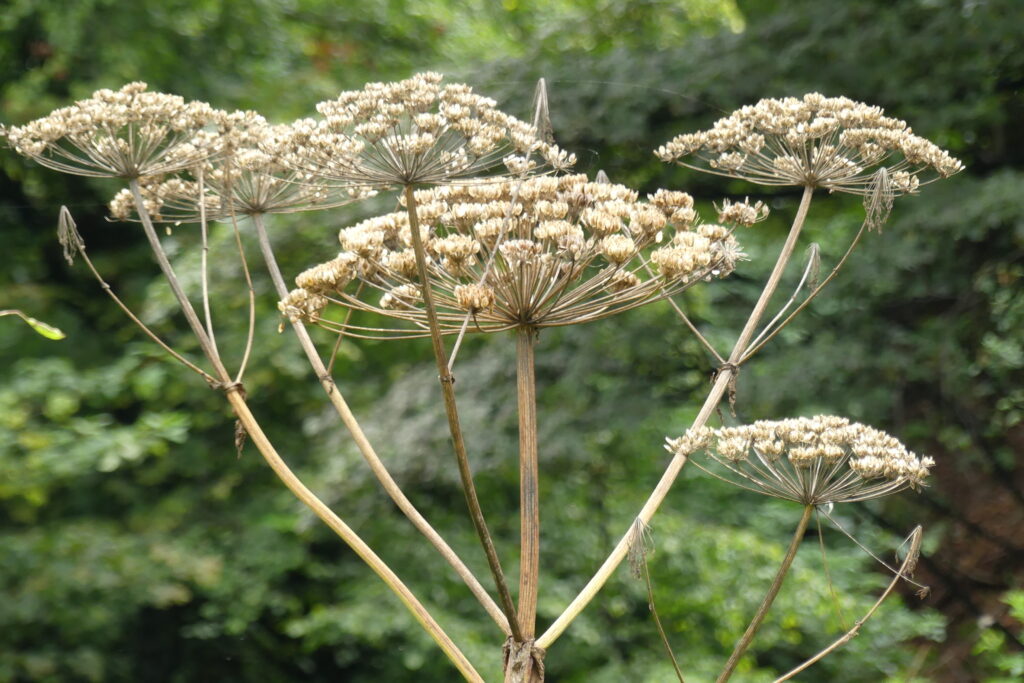
Each flower can produce up to 50,000 seeds which remain viable for up to 10 years and form a dense seedbed in the soil in areas with sizeable infestations. Giant hogweed has significant ecological impacts for native biodiversity – it forms dense stands along rivers, roads, and railway lines, outcompeting native plants and reducing species diversity. It also poses serious health hazard for people, pets and animals as it has phytotoxic sap. When this sap comes into contact with human skin and is exposed to UV radiation (in sunlight) it causes severe burns. The risk of contact with the sap means that giant hogweed infestations often limit the use of outdoor spaces for recreational activities such as angling, walking, kayaking and swimming.
Giant hogweed control
To ensure effective control of giant hogweed, it’s important that the upstream source of the infestation is found and controlled. This allows us to carry out top-down control across a river catchment, making sure that areas aren’t reinfested by seeds washing down from upstream.
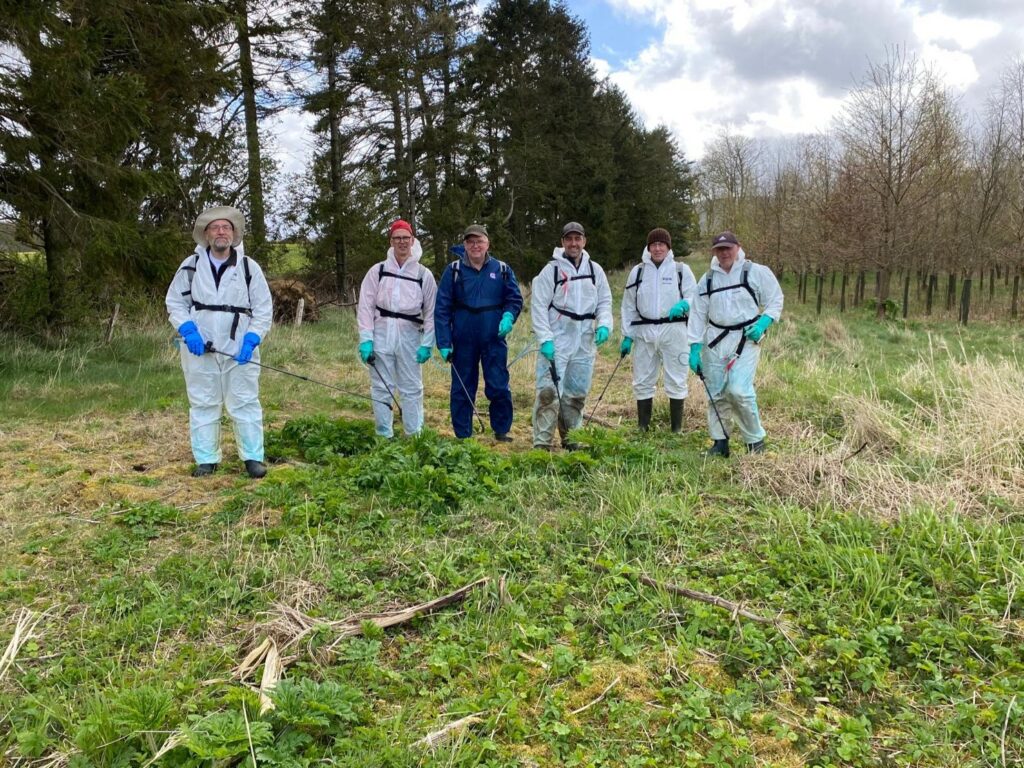
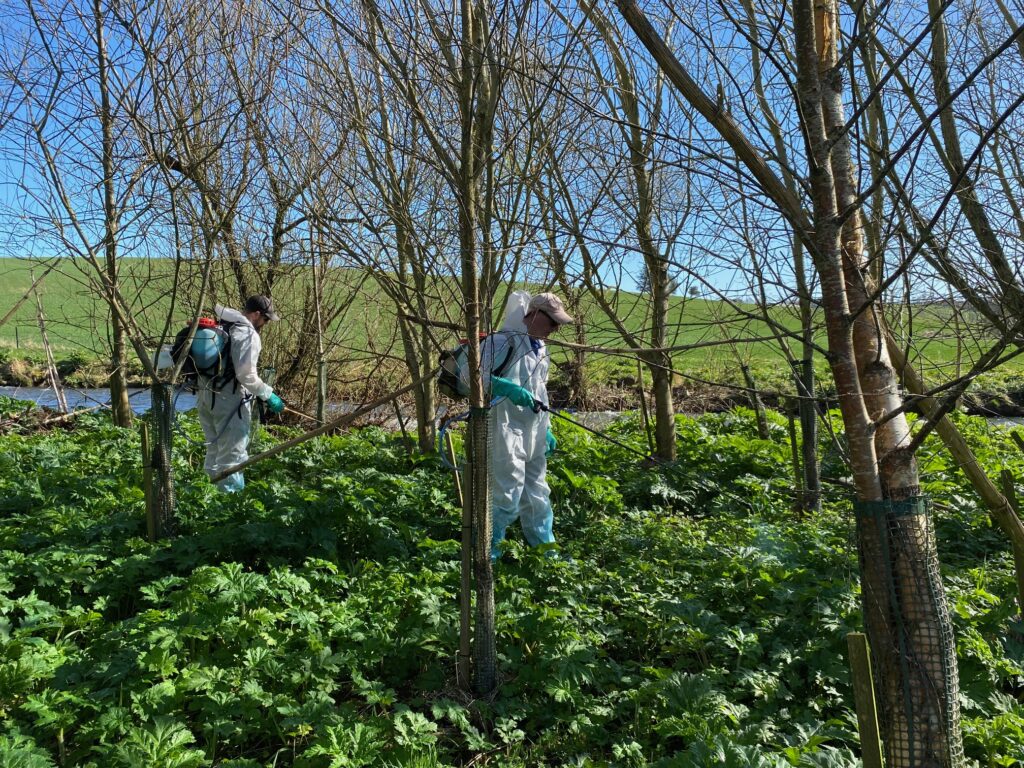
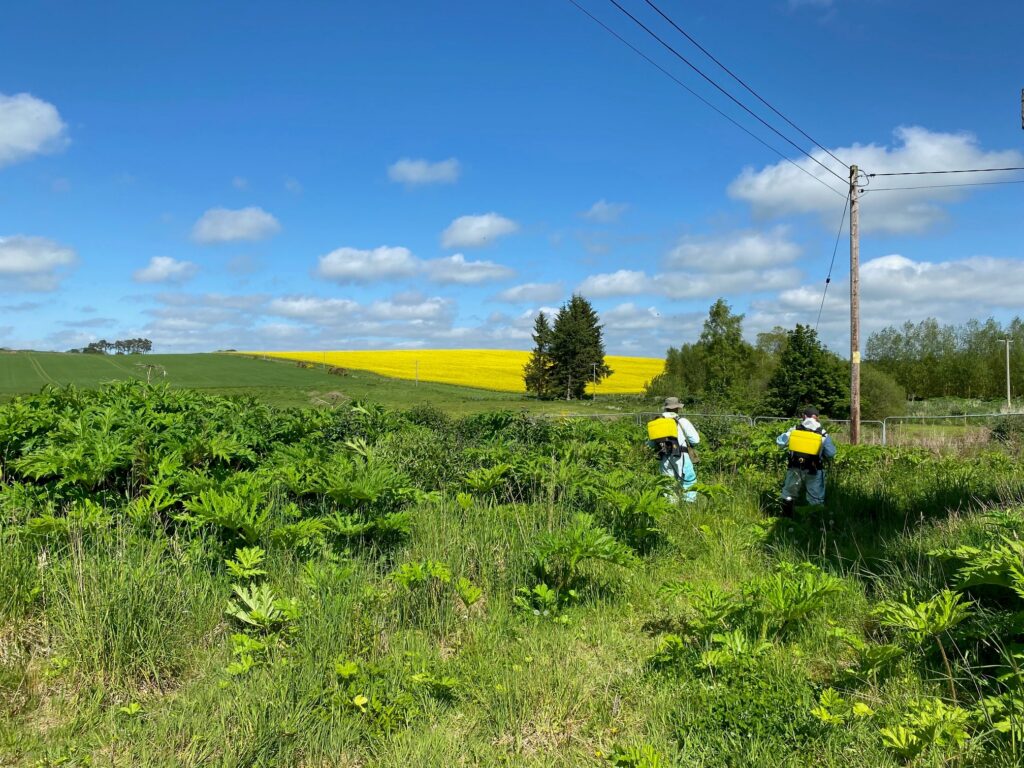
Giant hogweed is treated by appropriately trained staff and volunteers with a herbicide spray, following product guidelines and wearing appropriate PPE. Later in the season, when flowers are forming, we carefully cut the buds/flowers off with a long-handled sickle and spray herbicide directly into the hollow stems. This helps to ensure no flower can go to seed.
Giant hogweed control is a long-term undertaking in areas where the plant has really taken hold. After the first 4 years or so of control you might not expect to see flowering plants but immature plants will still be present from the existing seed bank.
History of giant hogweed on the Urie
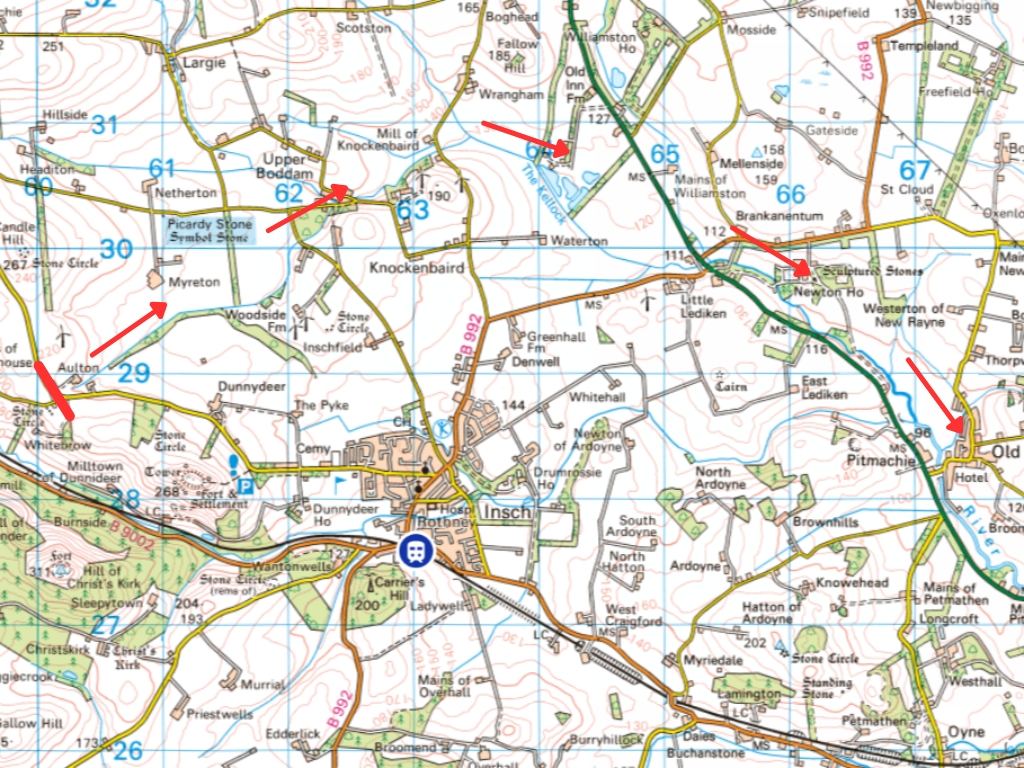
We know that the giant hogweed on the River Urie comes from small burns running into the Kellock Burn, which joins the Urie just above Old Rayne. It is thought the plants originally came from an estate just outside the catchment on the River Deveron side.
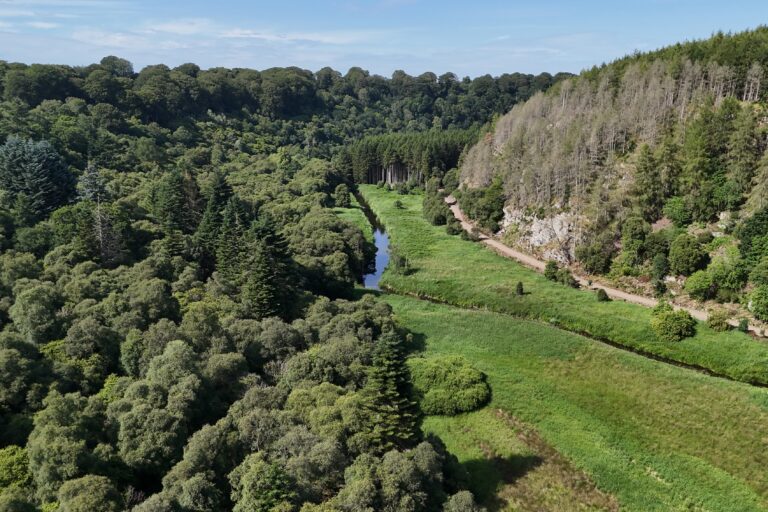
In total, giant hogweed is present on both banks for over 30 km. For around 14.5 km, giant hogweed is the dominant plant species and, in many areas, can be found at some distance from the river itself.
Two previous rounds of funding in 2011 and 2017 allowed plant control to take place on the Kellock and Urie but, unfortunately, they were both short term so the results of the control were short lived. This history has led to one of the first problems we encountered on the River Urie – the local community had become disillusioned with the stop-start nature of control so far.
Planning
One of the first things we had to do was to update our landowner records – this meant an awful lot of time knocking on doors and trying to work out where people meant when they said ‘over that hill and round that corner then turn left and keep going’! Once we knew who owned what land, we were able to get permission to carry out our first round of control in 2023.
We also had to make sure there were no time periods when we wouldn’t be able to carry out control due to ongoing works in the area. Most of the River Urie runs through heavily agricultural areas, so if there were to be cattle moved into the fields, crops being planted or harvested, or other works taking place, we had to make sure we knew about it so we could schedule our work around this.
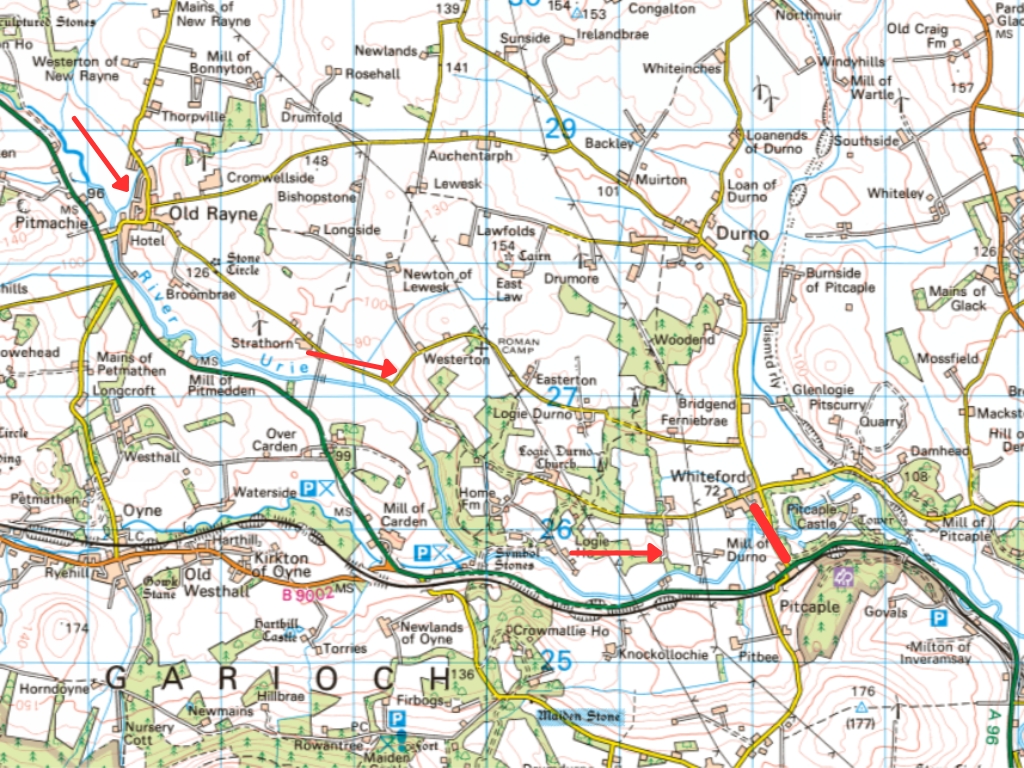
We also needed to consider how much of the river we could realistically tackle in our first year of control. We decided that the first section would be from Aulton at the top of the problem area, down to Whiteford, a distance of over 15 km of river and about half of the infested section of river.
Spraying Contractors
In the initial years of control work, with particularly extensive infestations, the Scottish Invasive Species Initiative will deploy contractors to get on top of the problem. Once sites are fully under management and improved, we then look to work with land managers and volunteers to continue annual treatment.
Contractors are a limited resource in Aberdeenshire, but we were able to appoint two contractors in 2023, who between them took on over 13km of river length. We finished within waving distance of our ambitious finishing point, albeit in a narrower strip along the river than intended. Both contractors did fantastic work and mucked in with areas outwith their original contract before the giant hogweed got ahead of us and started going to seed.
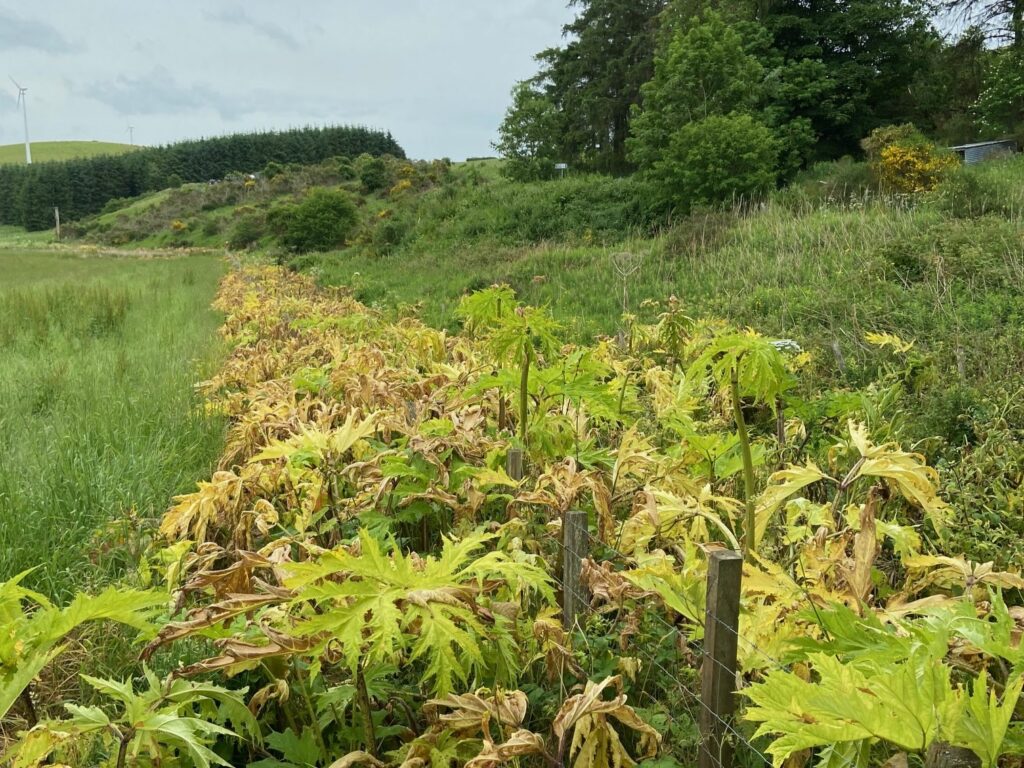
In 2024 we had a better idea of what we were facing and, with one of the same contractors who worked with us in 2023, we completed control on the targeted 15 km stretch of river. Once again, our contractor was a huge help in areas beyond their original contract boundaries, including cutting fields of hogweed which we just couldn’t have done without his tractor and mower.
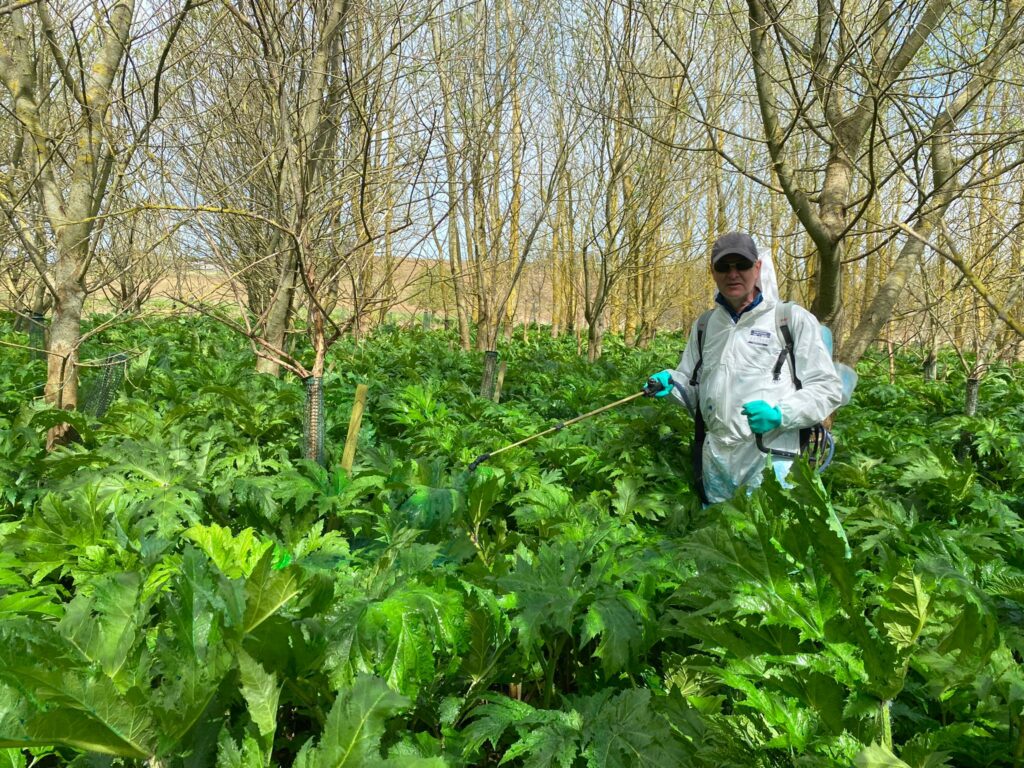
In 2025, we had a great year of giant hogweed control with two teams of contractors covering the entire 15 km control area. This and the dry, calm weather meant we sprayed most plants early in the season, when access was still relatively easy, and we didn’t have so many tall hogweed plants to weave our way between. There were still a few plants that managed to flower, particularly in areas slightly further from the river, but they were chopped down long before they got a chance to go to seed.
An update on the 2026 control season
In 2026 we were all delighted to see a considerable improvement in the number and age structure of plants. There is now a higher proportion of immature plants on our control sites – this is an early sign that sites are improving as fewer plants are surviving to mature and produce flowerheads. Although there is still a long way until we are clear of giant hogweed on the Urie, we are heading in the right direction.
With this improvement the contractors were able to venture into some of the areas slightly further from the river that, in previous years, had been sprayed by volunteers, the project team and Don District Salmon Fishery Board staff. Given the less-than-ideal weather conditions for most of the summer, this was hugely helpful.
The weather this summer has made control work more challenging, as we are unable to spray herbicide in wet or windy conditions. However, we have once again made it down to Whiteford, our current downstream limit, despite the difficult weather.
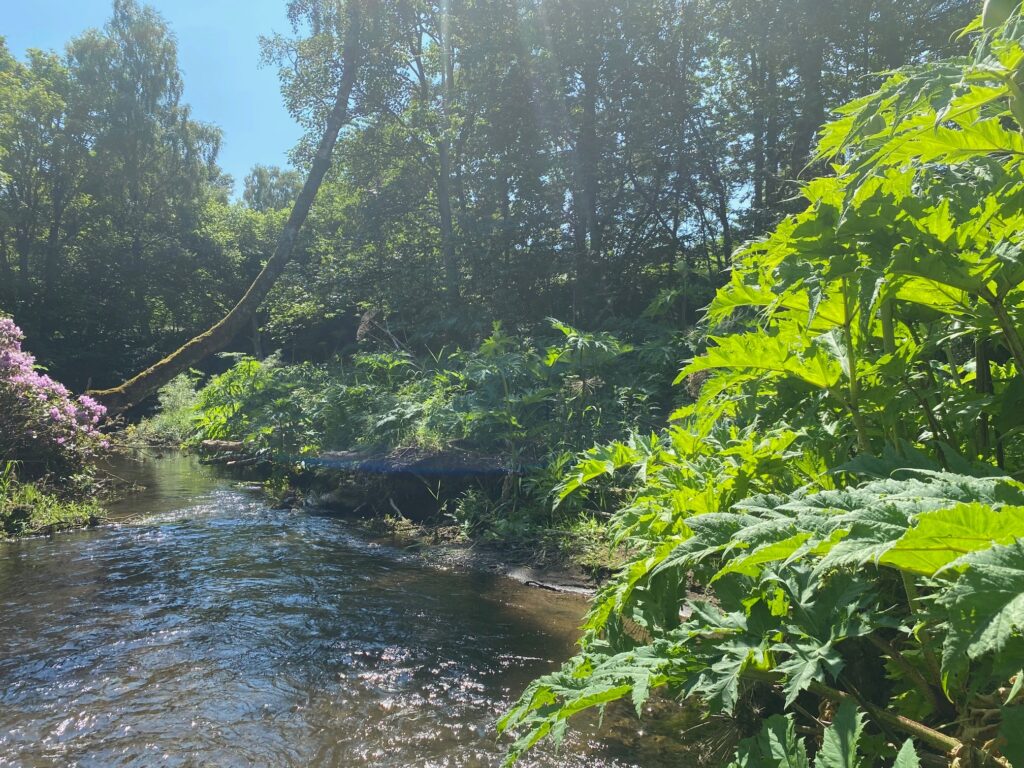
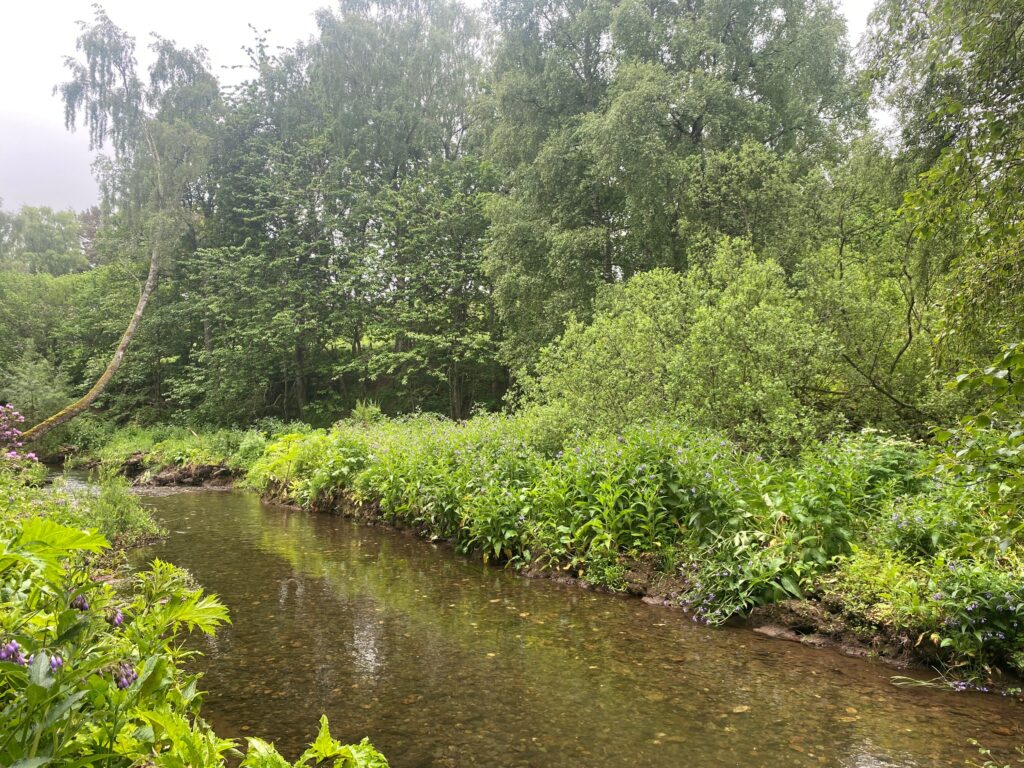
What next?
The Initiative is currently funded to March 2028, and we are already working hard to secure further funding beyond this. We will continue giant hogweed control on the River Urie in 2027, potentially looking to extend control works a little further downstream if conditions are favourable.
We are pleased to hear from members of the local community who have noticed improvements in the areas we’ve been controlling. We do often get a follow up question – ‘have you seen downstream?’.
The reality is that it will take a long time before we are able to cover the full extent of the river down to Inverurie. The infestation is severe and there is an extensive seedbank in the soil – as the seeds can be viable to up to ten years, it will take some time before the sites we are currently working on improve. It is important not to overextend and push further downstream than we can manage effectively, as control work must be consistent from year-to-year.
Nevertheless, we are very pleased with progress so far. In just a few short years we have half of the infested section under management and sites are showing signs of improvement. We’re getting there!
A thank you to our wonderful volunteers
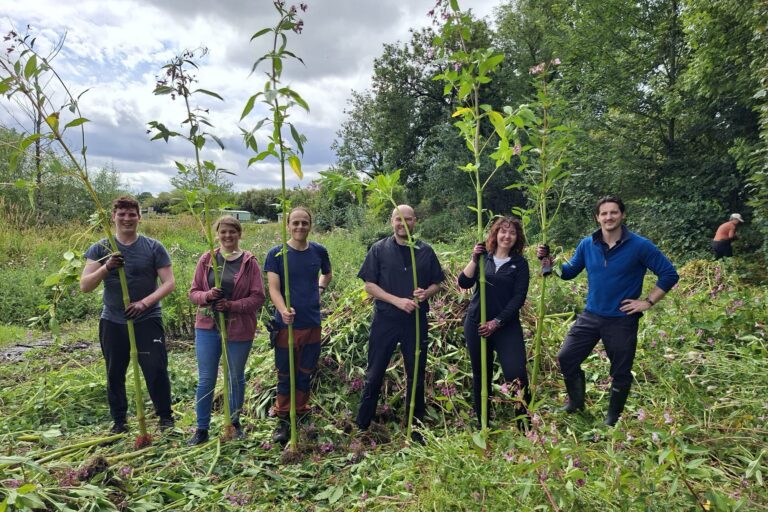
On most of our control areas in the Dee and Don catchments we’re accompanied by a fantastic group of volunteers who are skilled, qualified and more importantly, slightly crazy, as they are willing to give up an awful lot of their free time to wade through giant hogweed jungles!
When we couldn’t find enough contractor help in 2024 we were initially reluctant to ask our volunteer team to venture onto the Urie because of the sheer amount of giant hogweed present. Luckily, we had underestimated their dedication to the cause! With their help we managed to carry out spraying on a much larger section of the Urie than we thought we would manage and were able to control all of the giant hogweed within that area. We’ve had a dedicated team of volunteers helping every year since and their contributions have helped us cover more of the river than we would be able to manage.
If you would like to get involved and help us tackle giant hogweed on the Urie in 2027, you can sign up to volunteer on our website.