How do you find – and reach – a giant hogweed flower in the middle of a forest of gorse?
There are many complex sites on the River Spey where accessing giant hogweed plants can be challenging. In some cases this is due to extensive infestations of invasive plants but in others it is the native vegetation that creates serious barriers.
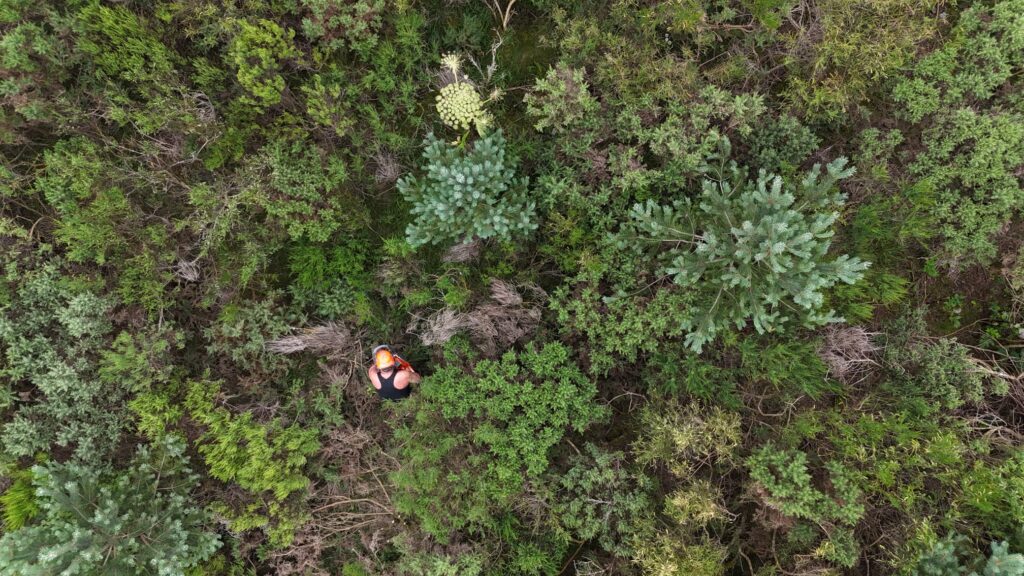
Gorse is a native evergreen shrub in Scotland with spiky, needle-like leaves. It can grow in large and dense patches that are impossible to pass through safely. This has caused issues for us when giant hogweed is present in among the gorse, as it becomes very difficult to access the plants to treat them.
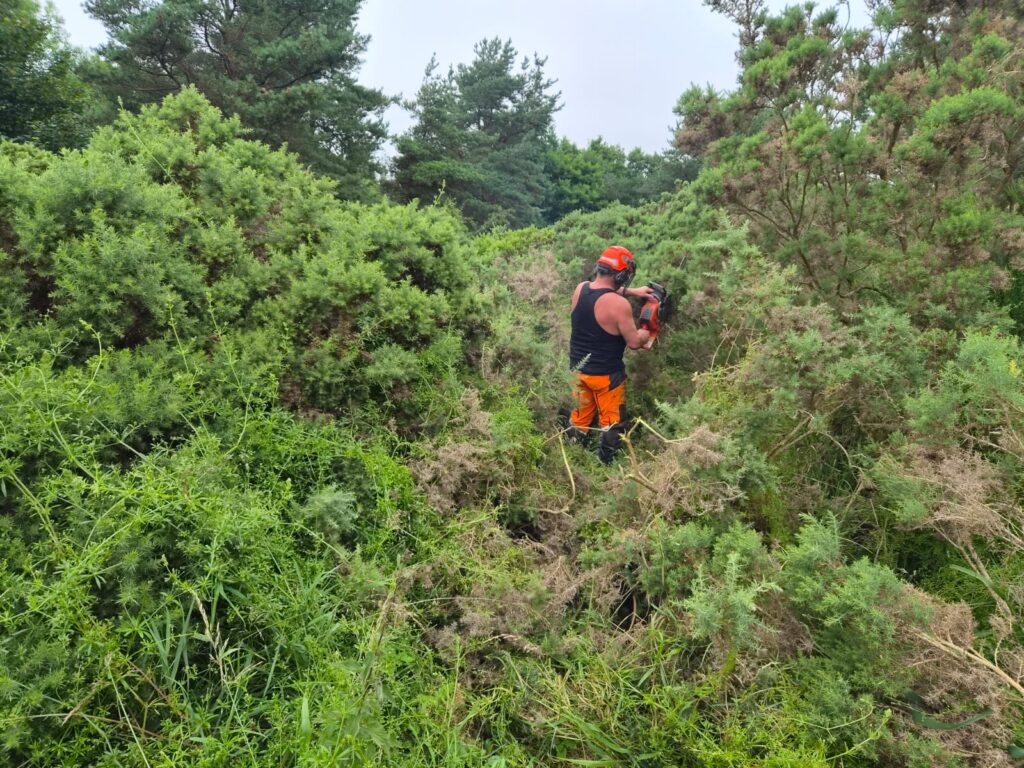
Karen and Duncan have come up with an innovative solution first to find, and then reach, giant hogweed plants in these situations. Over the past few weeks they have been combing through fields of gorse using a drone, which flies overhead and feeds back a live video stream allowing them to spot the bright white giant hogweed flowers in among the dark green gorse.
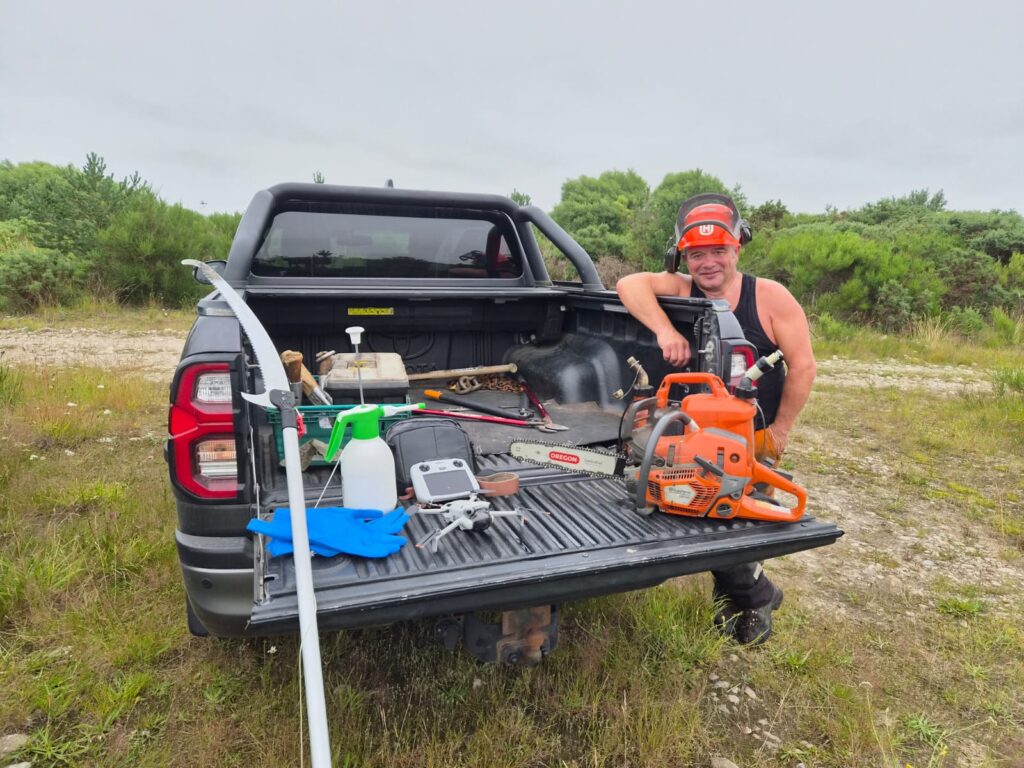
Once spotted, the drone hovers about 2-3m above the flowerhead which provides a visual target for folk on the ground. Duncan can then lead the way through the thickets with a chain saw, cutting a path through the gorse, while Karen follows behind with a sprayer and extendable saw to deal with the giant hogweed.
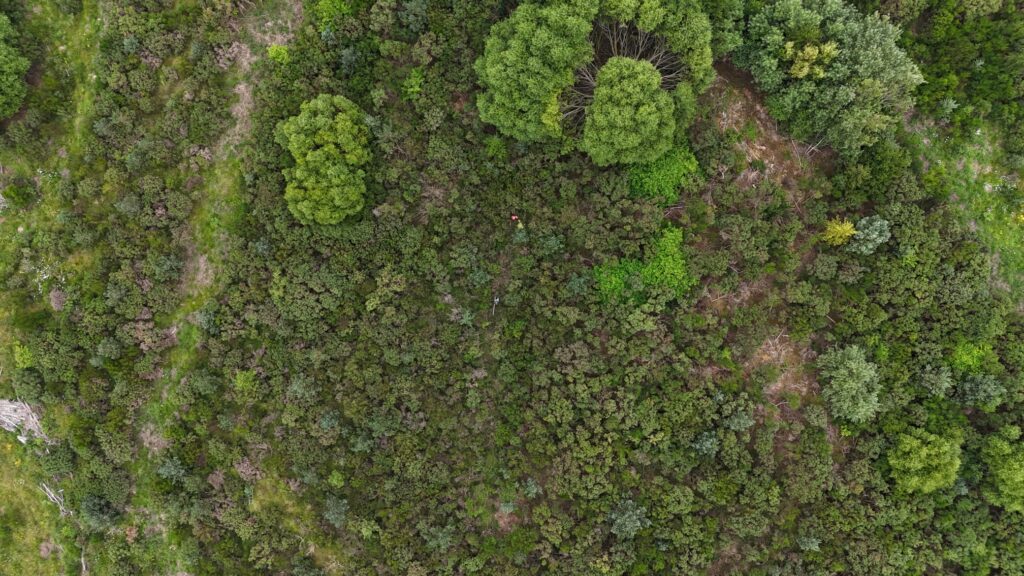
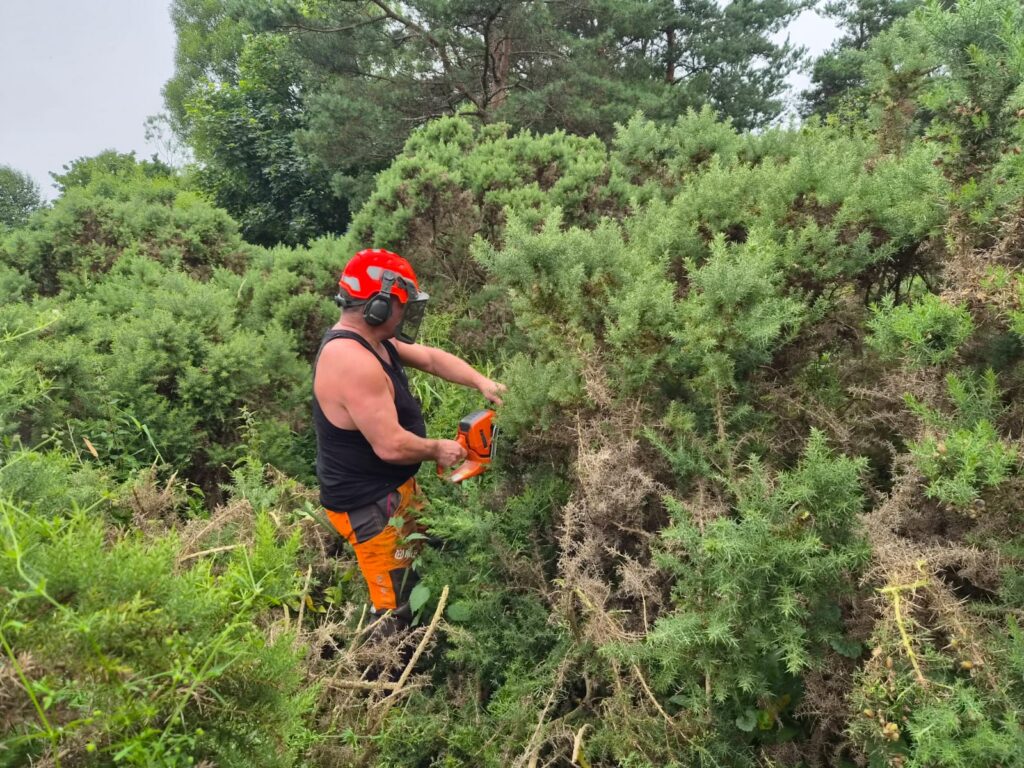
Together they have gone through several sites on the River Spey to mop up the final few flowerheads. This has been a slow process and it can take many hours just to get one or two plants – but it is worth the time investment as a single giant hogweed flower can produce 20-50,000 seeds. If control sites are going to improve in the long term, it is essential to get every last flower head and prevent them from going to seed and replenishing the seedbank in the soil.
We’re very grateful to Duncan, Director of the Spey District Salmon Fishery Board, for his help with this work. On complex sites such as these, pulling in different and varied skillsets allows our team to adapt their techniques to fit the situation and overcome whatever challenges are thrown at them.
Want to know more about techniques we’re using to tackle giant hogweed on sites with dense patches of gorse? Read our article on robotic mulchers deployed on the Spey and Lossie Rivers – or find out about top ropers at Muirden Farm Quarry in the Deveron catchment.