In 2023 the Scottish Invasive Species Initiative began trialling a new method of chemical application to treat extensive giant hogweed and Japanese knotweed infestations in the Findhorn, Lossie and Spey river catchments. You can find out more about this innovative method in our first blog – Putting ‘Pressure’ on Invasive Plants: A New Approach to Giant Hogweed and Japanese Knotweed Control. In this follow-up blog, Project Officers Karen and Elise share their thoughts on the effectiveness of the new method and progress at control sites after three years of treatment.
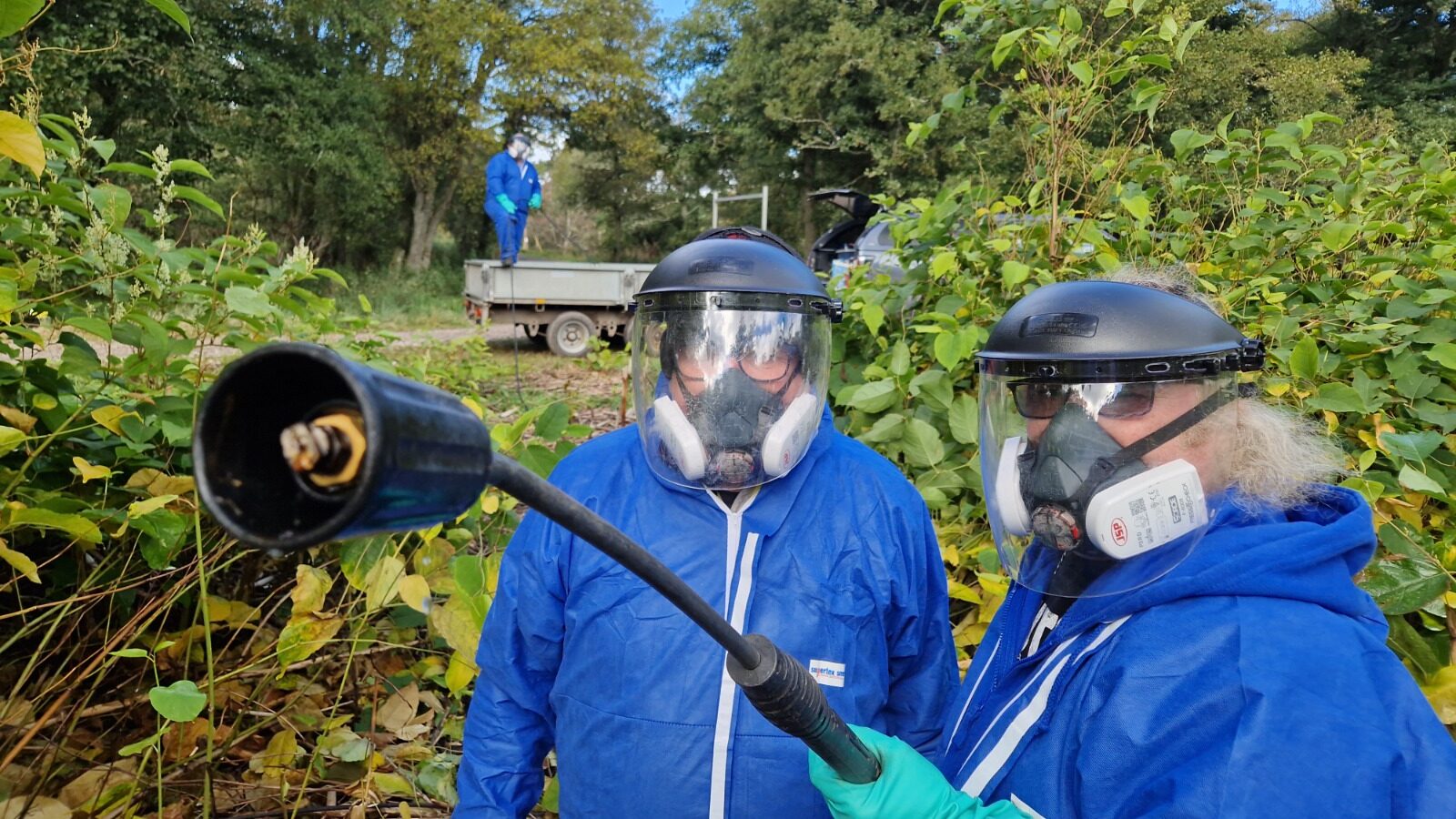
After deploying the spray tank on the Rivers Spey, Findhorn and Lossie for the first time in 2023, we returned to treat giant hogweed and Japanese knotweed at the same sites in 2024 and 2025 where required.
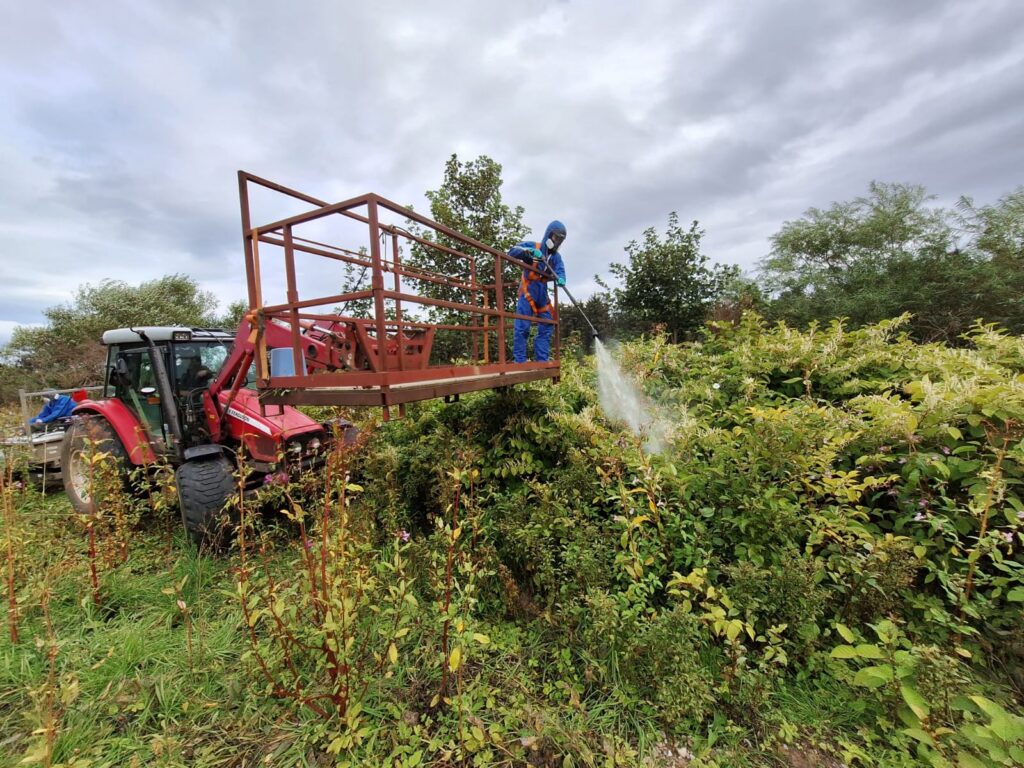
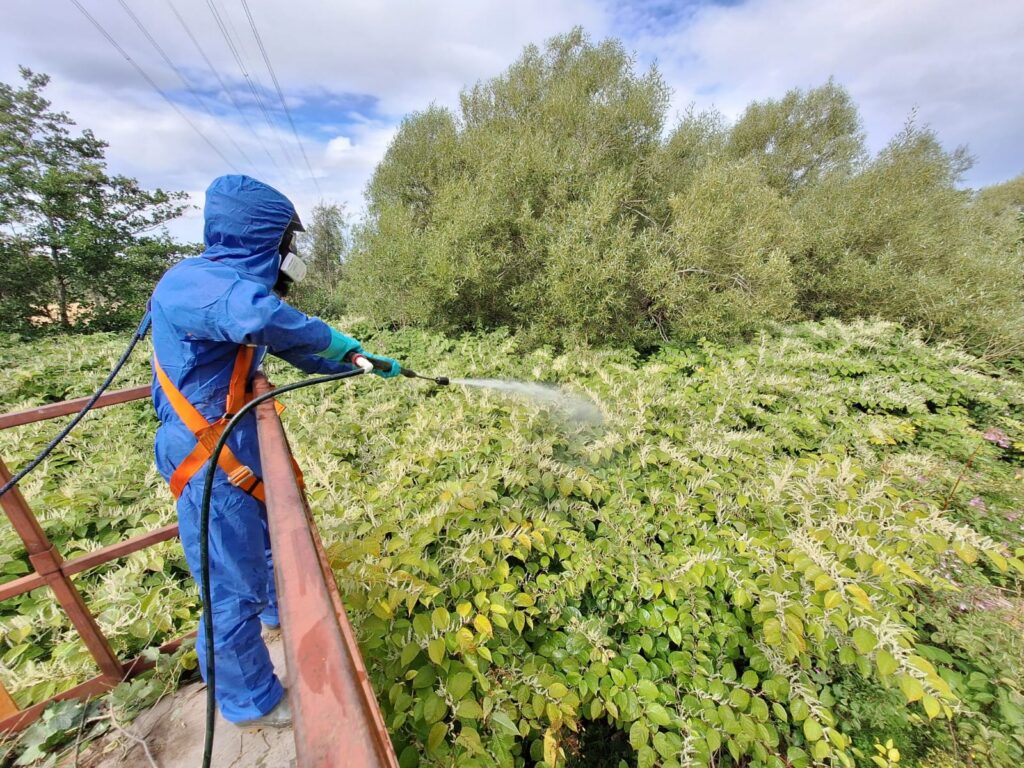
In 2023 the spray tank was used on five management units across the Findhorn and Lossie catchments and eight management units across the Spey catchment. These were sites with particularly intense and extensive infestations of the target species which could have taken multiple years to bring under management using traditional methods. The tank, used either on foot or in combination with a tractor and cage, allowed us to cover far more ground in a day that we would have with a knapsack sprayer or stem-injector. With the extended reach of the tank’s hose and lance, we were able to push into large merging stands more quickly and effectively.
Lossie and Findhorn catchments
Of the five management units where the spray tank was utilised in 2023, giant hogweed was treated on two and Japanese knotweed on three. These sites all displayed extensive, mature infestations of the target species. In 2024, all but one of the control sites (a Japanese knotweed site) were deemed to be so improved that returning with the tank was unnecessary. Pre-treatment surveys of this last site in 2025 showed that only patchy regrowth remained of the original infestation, so we resumed more traditional methods of control to mop up the stragglers.
While the spray tank was useful in treating giant hogweed, this method really shone in the treatment of large areas of Japanese knotweed on the River Lossie. This was due to the nature of mature knotweed infestations – consisting of large stands with a dense, interlocking canopy of leaves. These canopies were perfect targets for the tank, allowing us to achieve good coverage without risking off-target application. As we were able to treat entire stands in one go with the spray tank, rather than pushing in from the edges over multiple years, we saw a rapid decline in knotweed abundance on management units where treatment was carried out.
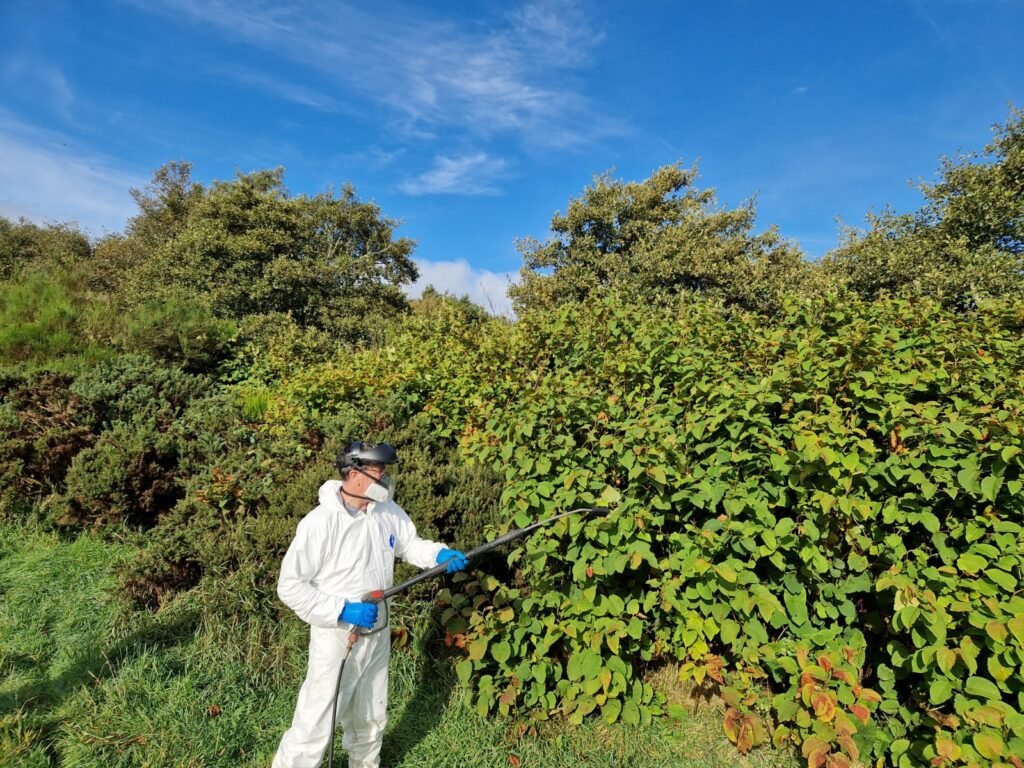
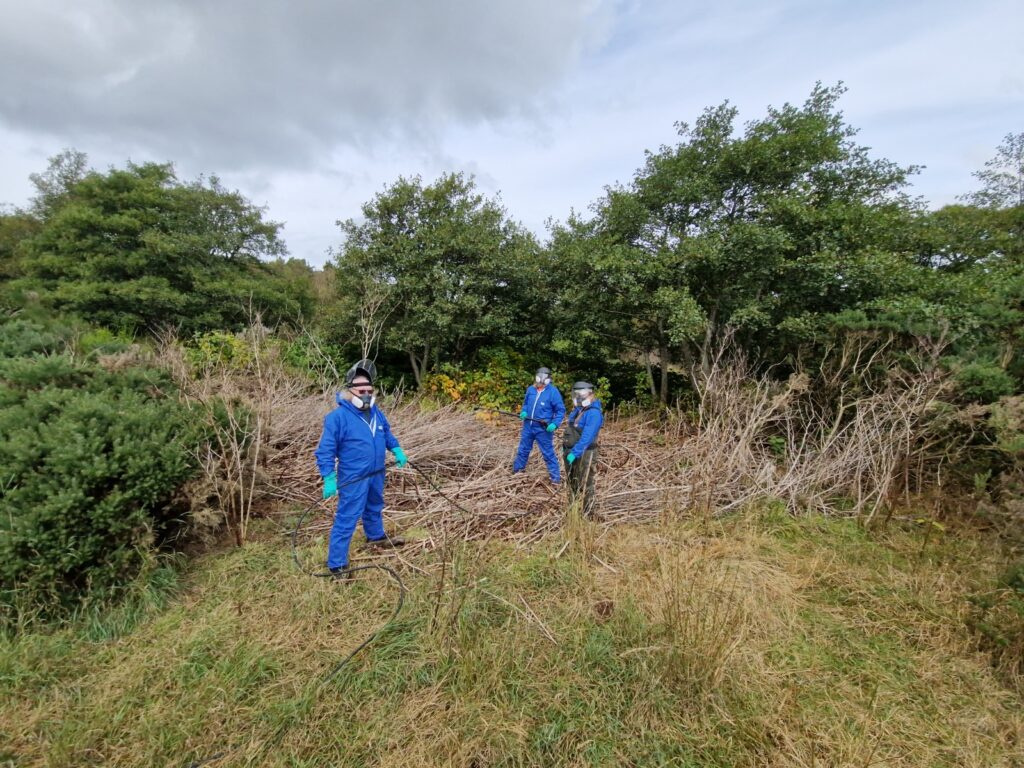
For example, on one site on the lower Lossie, Japanese knotweed completely dominated the site prior to treatment. It was treated once with the spray tank in 2023, after which knotweed abundance sharply declined. Since then, it has only required a quick sweep with knapsack sprayers to effectively treat the isolated sprigs of knotweed regrowth.
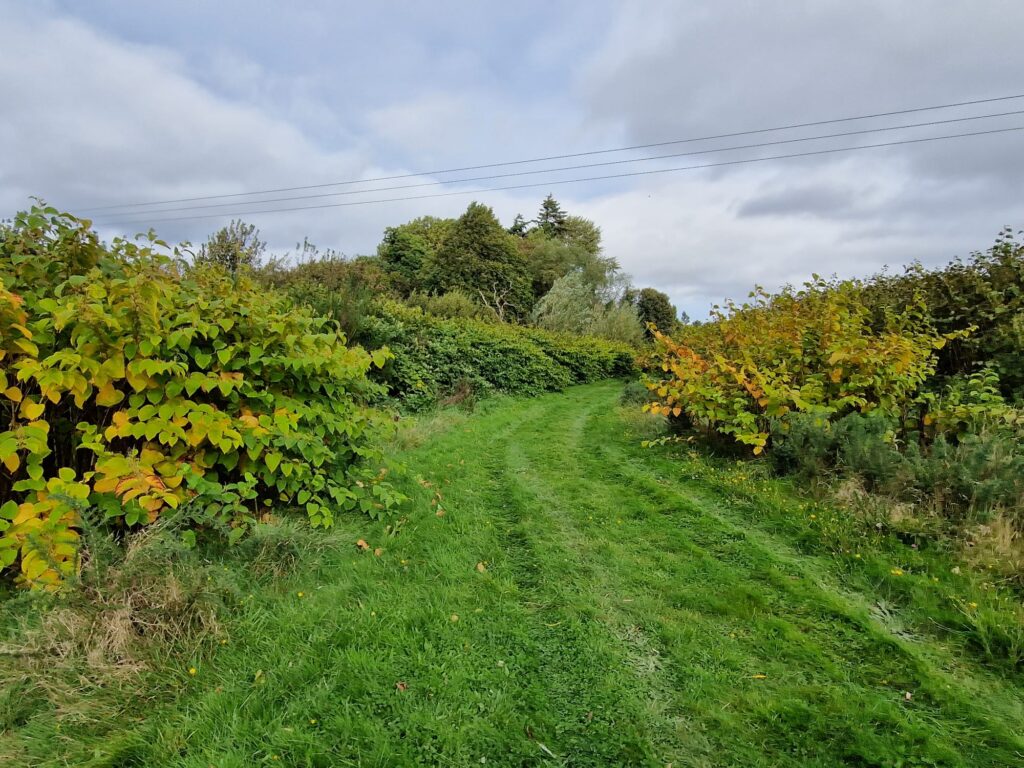
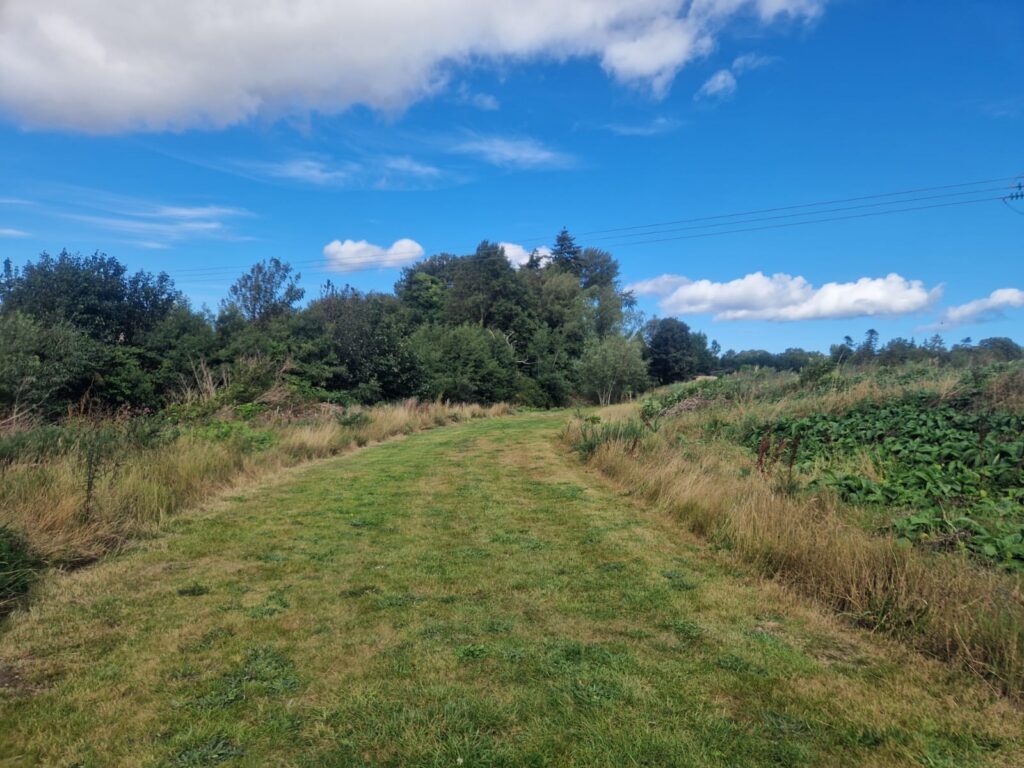
Being able to deploy the spray tank on appropriate sites across the Findhorn and Lossie catchments has allowed us to make quick progress in bringing infestations of giant hogweed and Japanese knotweed under control. This has meant we have had to spend less time in these areas overall in the last three years, which in the long term will allow us to expand our control program downstream more rapidly.
Spey catchment
Across the Spey, all sites controlled with the power sprayer shared a common challenge: vast, dense infestations of invasive non‑native plants that were almost impossible to tackle on foot using traditional methods. Following the initial treatment in 2023, we returned to seven sites with the power sprayer in 2024 and four sites in 2025, with the remainder treated with backpack sprayers. We anticipate returning to four again in 2026.
It should be noted that in many cases we are returning to treat different parts of Japanese knotweed sites – now that we have pushed further into infestations and can reach new stands with the tractor and cage. In the Spey catchment, infestations extend hundreds of metres from the river. On many of our knotweed sites, it has therefore taken a couple of years to reach every corner, even with the power sprayer and tractor mounted cage.
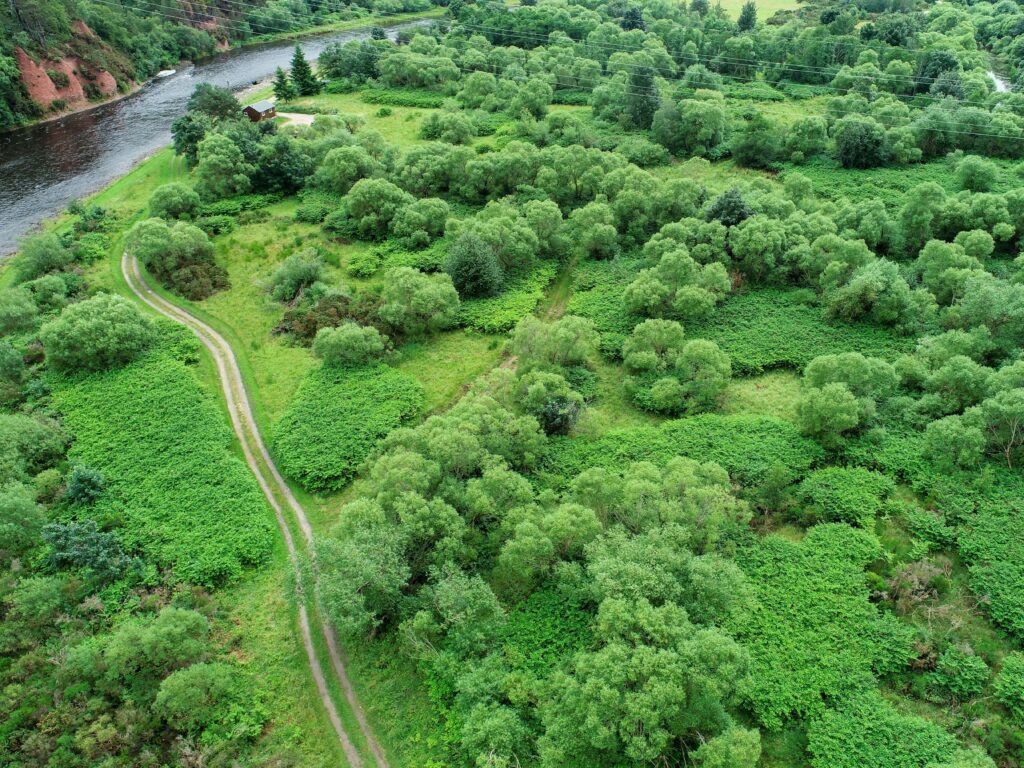
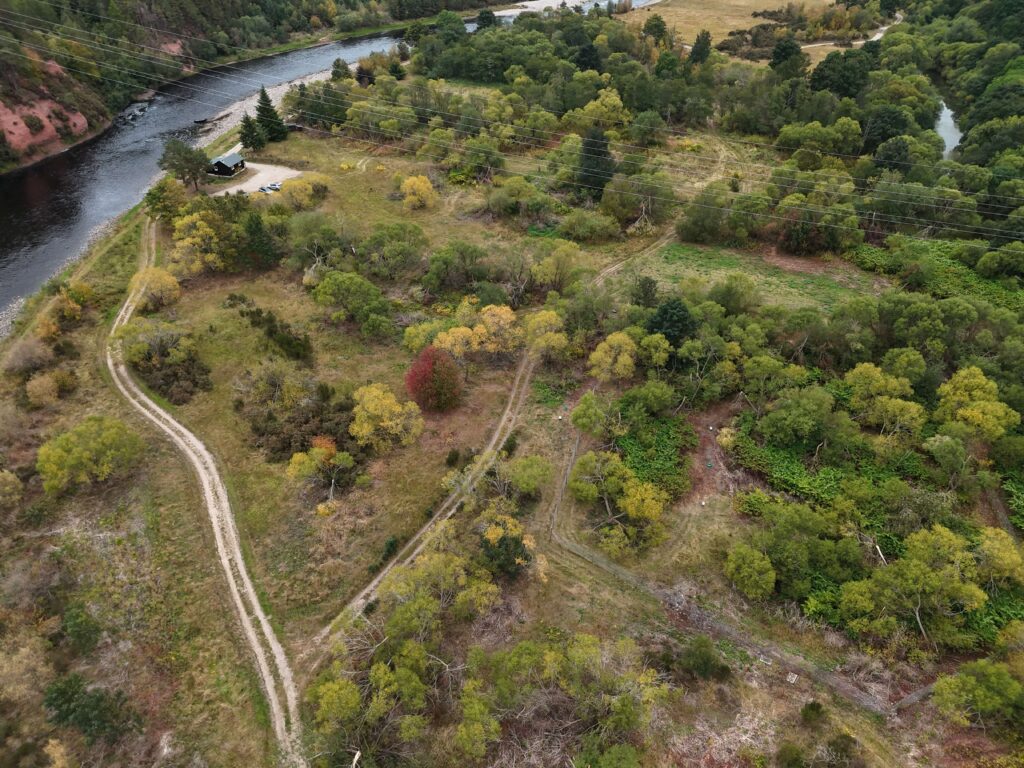
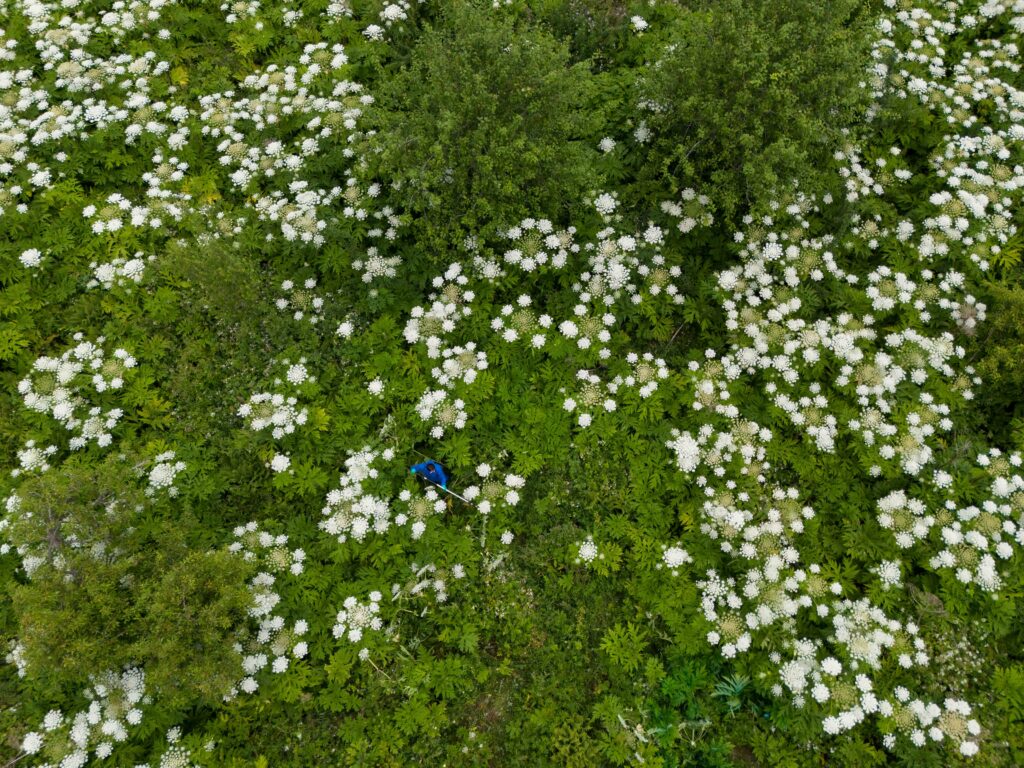
Giant hogweed sites behave differently and progress is less linear – in years with only small seedlings, it would not be appropriate to use the power sprayer, resulting in a ‘break’ year with knapsack sprayers used to complete control. The power sprayer may then be deployed in the subsequent year, as the carpet of seedlings matures into larger plants.
Overall, progress has been remarkable. In just two or three years, we have seen phenomenal results, with every site showing clear improvement. Many areas are now experiencing a strong resurgence of native vegetation in places that were previously dominated and heavily shaded by invasive plants, particularly on Japanese knotweed sites.
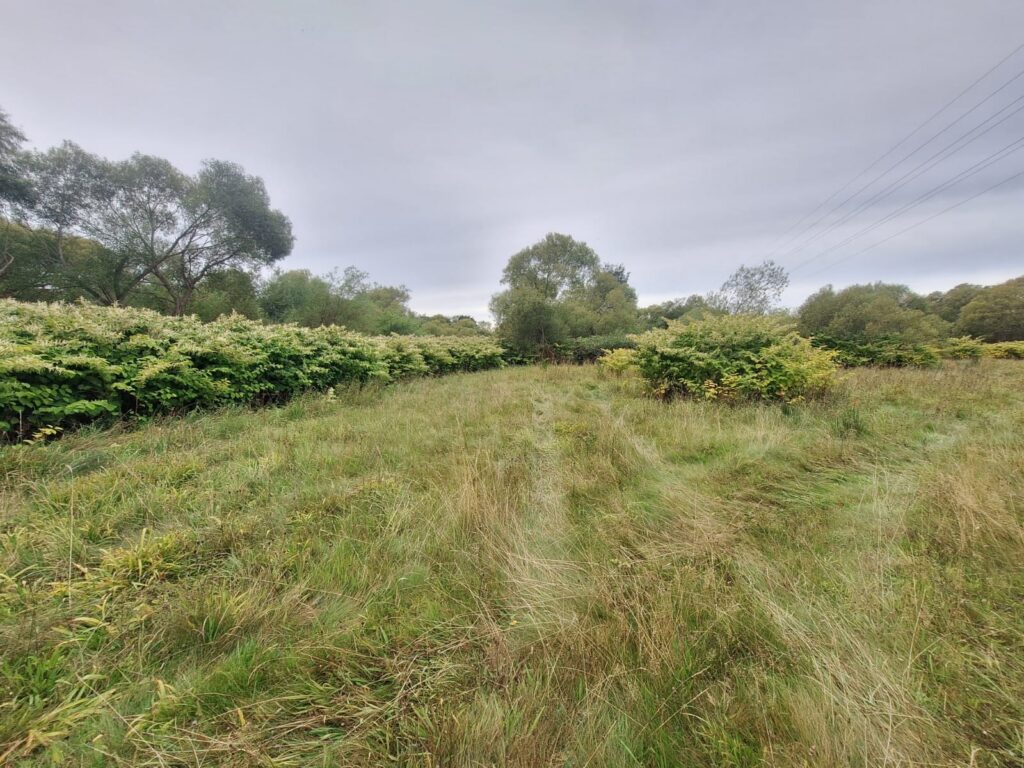
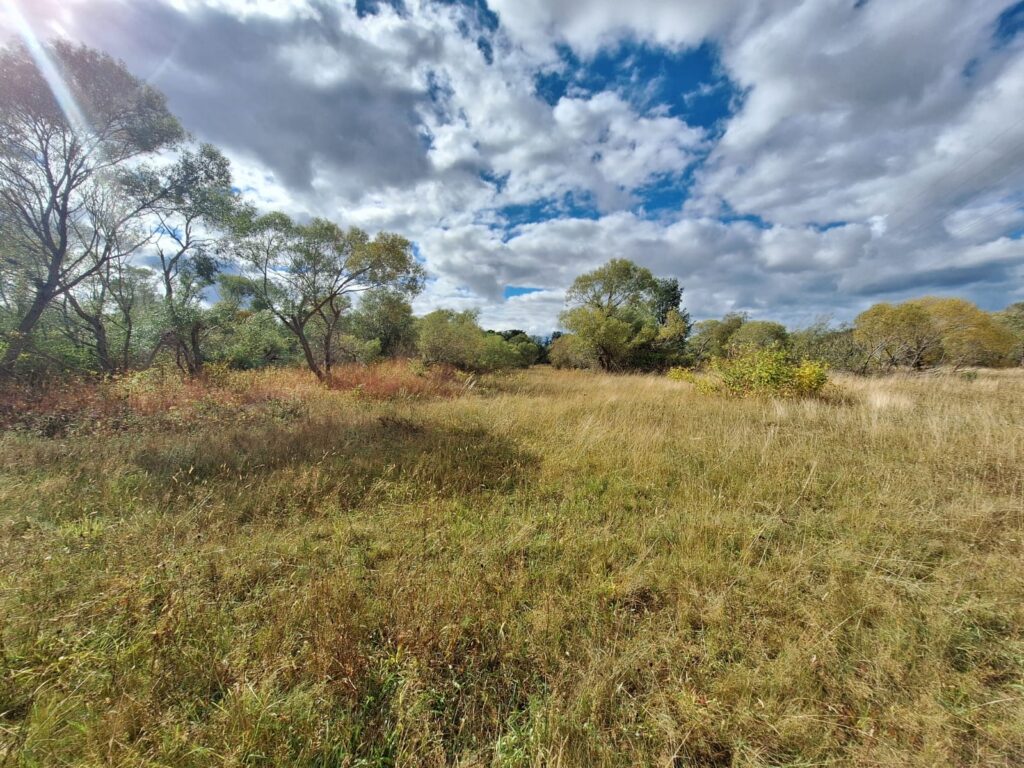
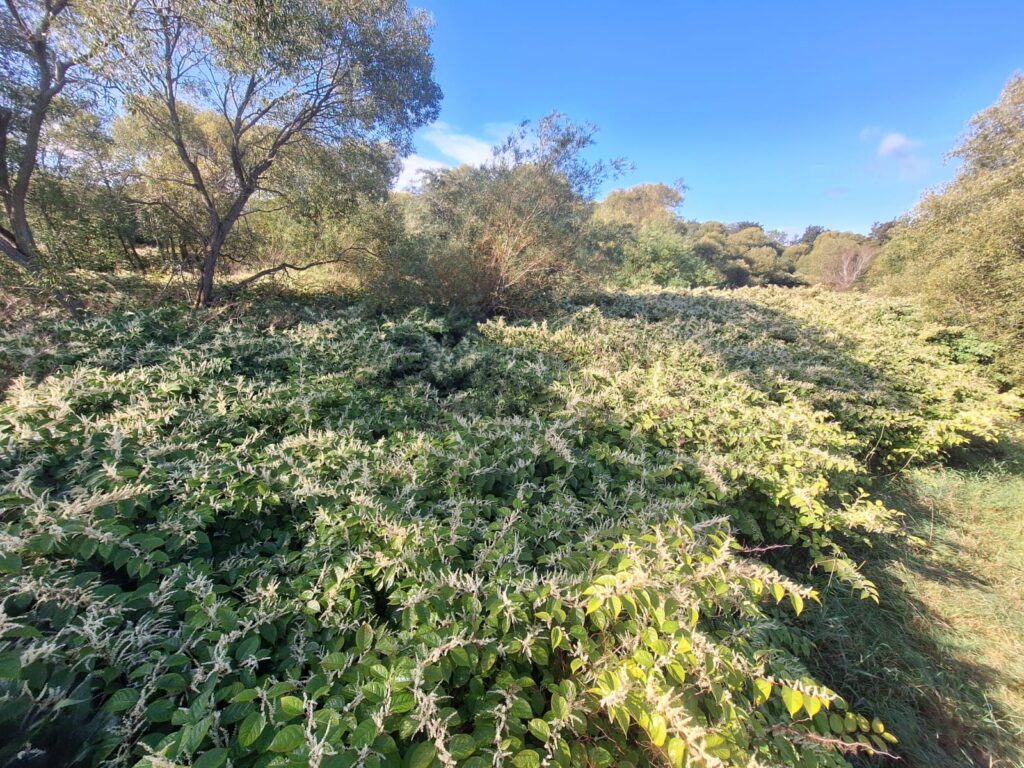
The spray tank enables efficient control in difficult conditions, allowing us to tackle large infestations more quickly and effectively. This accelerates site improvement and builds capacity to expand – though currently on the River Spey we are still moving sideways on knotweed sites rather than downstream. This also improves the speed and effectiveness of giant hogweed control on mixed sites.
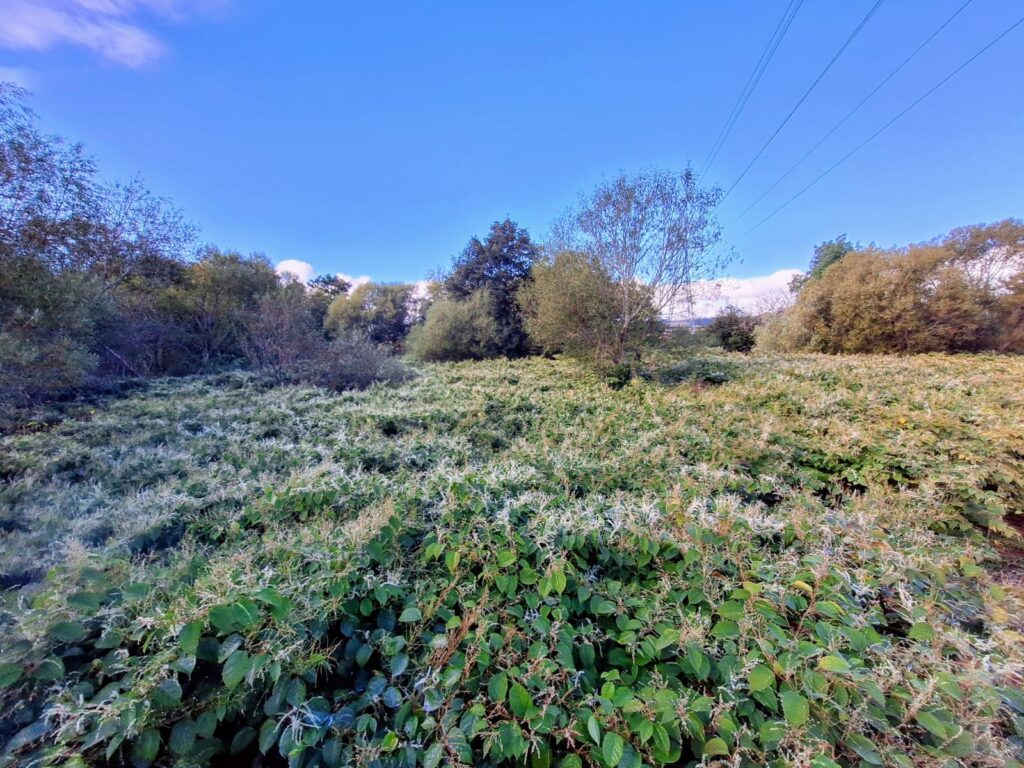
A success story
We are thrilled with how effective this method has been in reducing plant abundance. The approach also showcases the power of collaboration—bringing together the skills of project staff and land managers to develop smarter, more efficient approaches.
The method is not without limitations. It requires vehicle access for a trailer or tractor, meaning our foot-access-only sites are not suitable and so cannot benefit from it. So, while this is not a universal solution for large infestations, it has proven incredibly valuable – quickly bringing extensive areas under control and speeding up the timeline toward eradication.
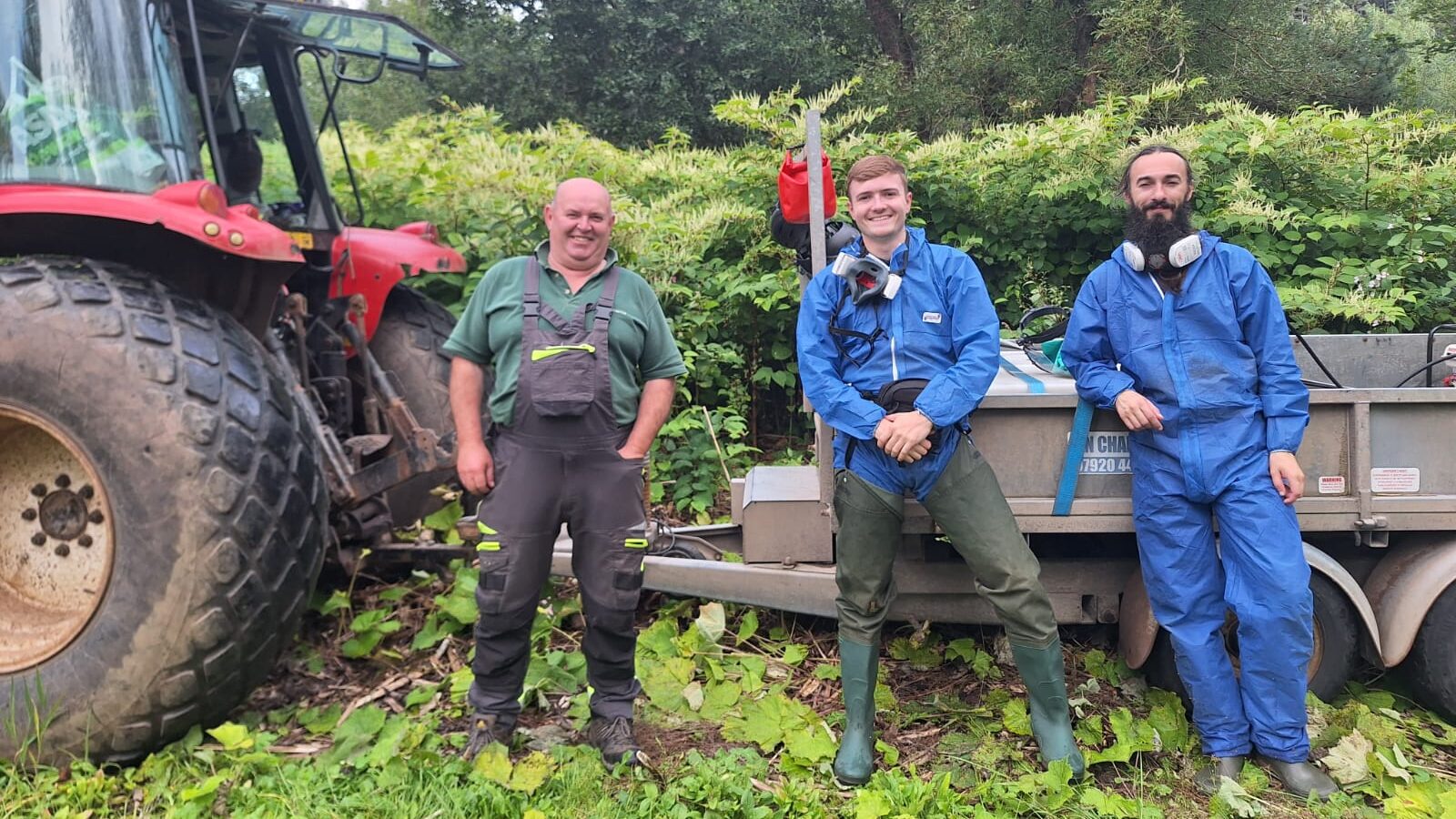
Ongoing monitoring and follow‑up treatment will still be needed for several years, but the spray tank has given us a significant head start in tackling giant hogweed and Japanese knotweed across these sites.
Looking ahead: ‘Engine-uity’ in action
As our current control sites improve on the Findhorn, Spey and Lossie – and more broadly across the project – we begin to look further downstream at the strongholds of invasive plants in the lower reaches of our rivers. Areas we aim to bring under management in the future, with extensive, dense forests of giant hogweed and impenetrable walls of Japanese knotweed. These sites are likely to be very challenging to control but, inevitably, will be the next step in our journey towards source-to-sea eradication in multiple catchments.
The control work carried out from 2023 – 2025 using a motorised spray tank has not only served in the short term, by rapidly improving sites on the Findhorn, Spey and Lossie, it has also served as a trial for future work. As we progress downstream in our catchments, a power sprayer could come into operation where required to break the back of dense infestations and allow us to make more rapid progress in the early years of treatment on challenging sites.
© Ashley Coombes, Epic Scotland