The Rivers

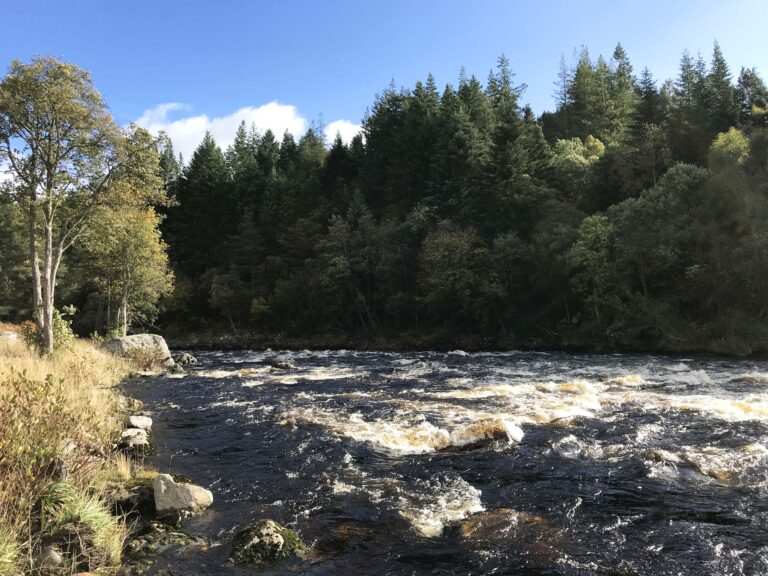
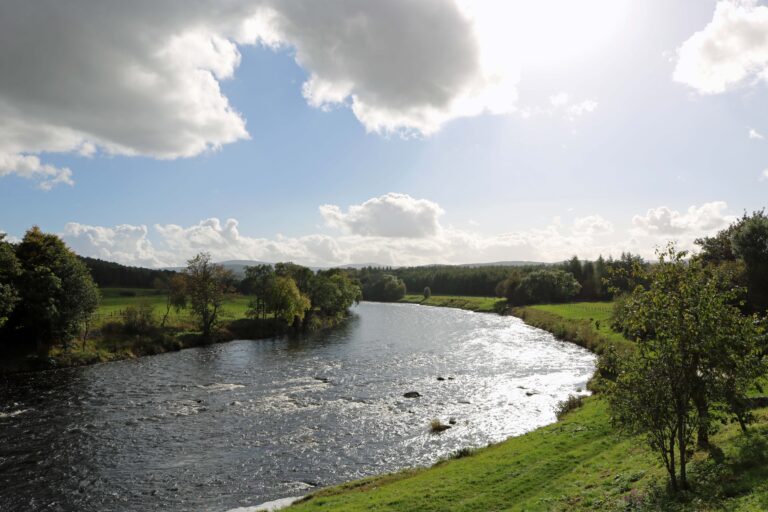
The Dee and the Don Rivers are both situated in Aberdeenshire, in the east of our project area. The River Dee is the larger catchment and is one of the most famous salmon fishing rivers in the world, while the River Don is best known for trout fishing.

The Cowie Water, Carron Water, and several small coastal burns also fall within these districts. The Cowie and Carron Waters are small rivers which flow east through southern Aberdeenshire and meet the North Sea at Stonehaven.

The River Dee is important for nature conservation and the area has many designated sites. The entire river is a Special Area of Conservation (SAC) for Atlantic salmon, freshwater pearl mussel and otter and the catchment contains Special Protection Areas (SPA), Sites of Special Scientific Interest (SSSI), and important wetland areas. Over half of the catchment lies within the Cairngorms National Park, including the Deeside valley and Lochnagar mountains area which is designated a National Scenic Area (NSA) for its outstanding scenery. In the River Don catchment, notable sites include Paradise Wood and Tilliefoure Wood – designated for their oak and broadleaf woodlands – and Corby, Lily and Bishops Lochs.

Our project partner for the catchments is The River Dee Trust. The Dee and Don Fishery Boards and Rivers Trusts work together in partnership to manage both rivers; our local Project Officer works closely with all partners. The Boards and Trusts have been tackling invasive species in the catchments for many years, starting work locally before the Initiative began.
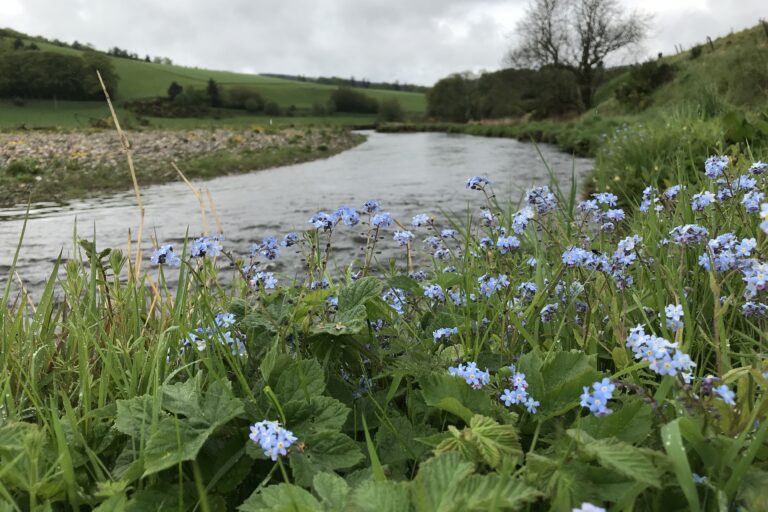
The Dee and the Don

  • The River Dee

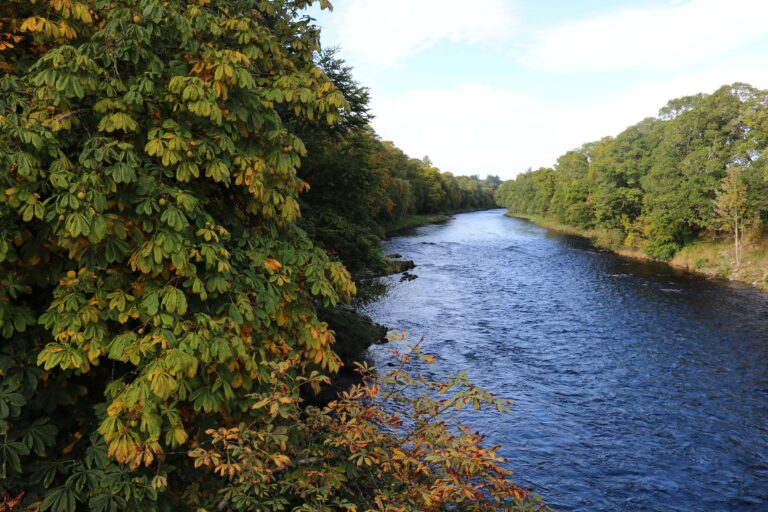
    The River Dee rises at the Wells of Dee, high on the slopes of Braeriach in the Cairngoms Mountains. As the river flows east through Aberdeenshire it passes Braemar, Ballater, Dinnet, Aboyne, Banchory and Peterculter before meeting the North Sea at Aberdeen Harbour. Major tributaries include the Lui, Gairn, Muick, Tanar and Feugh; standing waters in the catchment include Loch Muick, Loch Davan, Loch Kinord, and Loch of Skene.

    In total, the Dee and its tributaries drain a catchment area of 2,100 km² (811 square miles). Approximately 55% of this lies within the Cairngorms National Park with the remaining 45% in Aberdeenshire Council and Aberdeen City. From source to sea the Dee is 140 km (87 miles) in length, making it the fifth longest river in Scotland. 

  • The River Don

    The River Don, Scotland’s sixth longest river, flows 135 km (84 miles) east through Aberdeenshire, on a route which lies generally parallel to and north of the River Dee. The source of the Don lies between Glen Avon and Cock Bridge in the Cairngorm Mountains and the river passes through Alford, Kemnay, Inverurie, Kintore and Dyce before meeting the North Sea just north of Aberdeen City.

    There are two distinct topographical areas in the catchment: the west is mountainous while the east consists of relatively flat floodplains and farmland between Kildrummy and the coast. Main tributaries include the Conrie, Carvie, Ernan, Nochty, Deskry, Buchat, Kindie, Leochel and Urie. In total, the Don and its tributaries drain a catchment of 1,312 km² (507 square miles). 

Our Activities

Click the expandable sections to find out more about our plant control activities; information on American mink is listed below.

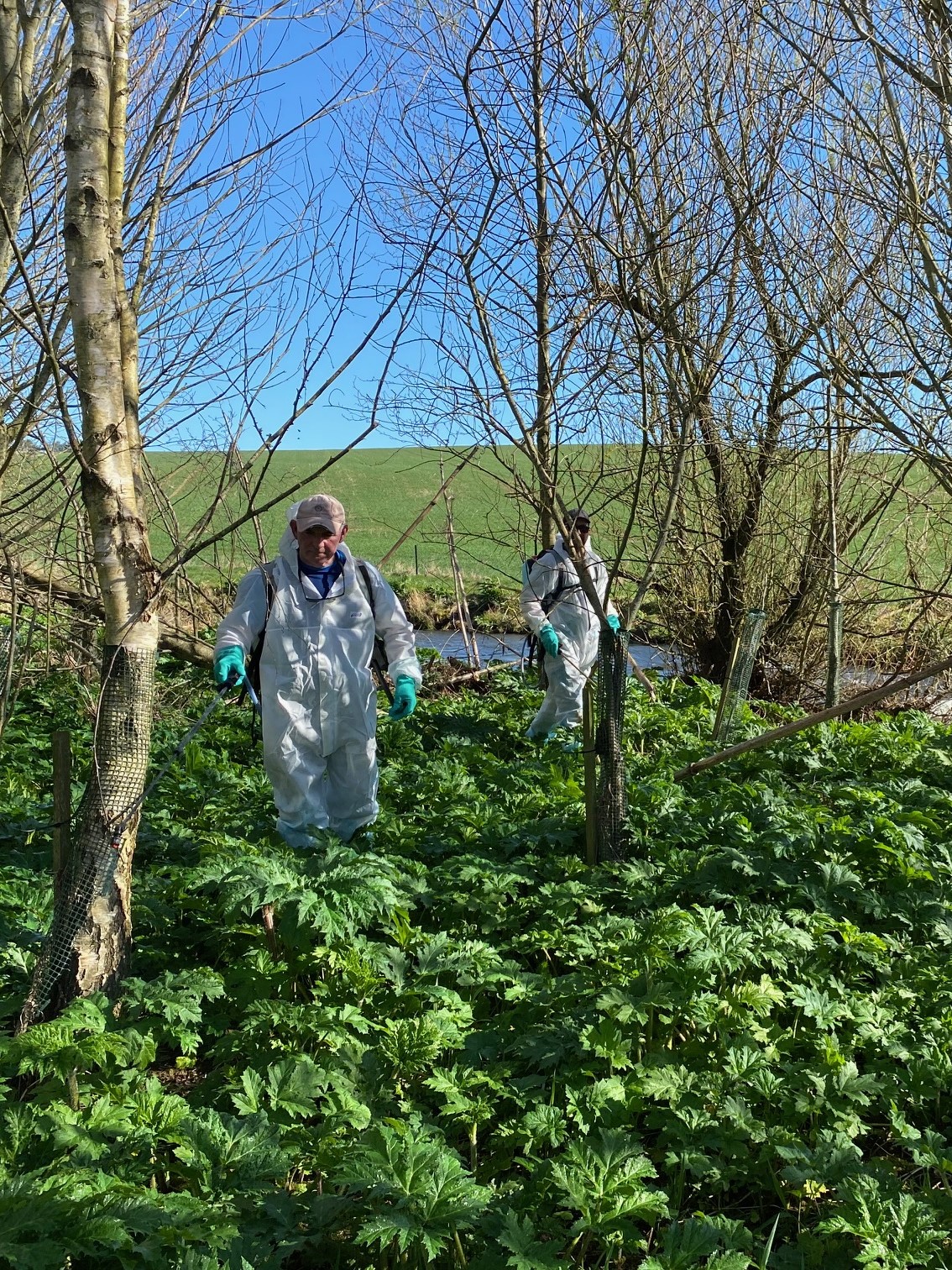
Giant hogweed is the main species we are controlling on the Dee and the Don Rivers, working in collaboration with volunteers, land owners and land managers.

On the Dee, infestations are limited to the main stem of the river; the source is just downstream of Banchory, where our work begins. Control work continues down to the outskirts of Aberdeen city which is our current downstream limit.

On the Don, the upstream source of the infestation is at Strathdon; we are controlling from here to Inverurie. There is also an extensive infestation on the River Urie, a main tributary of the Don, with the upstream source at Aulton (near Insch). We began control work on the River Urie in 2023 and we are currently treating down to Whiteford.

On the River Carron, there is a minor infestation which begins just outside of Stonehaven. This is fully under management and control work is completed by the local Angling Association with our support.

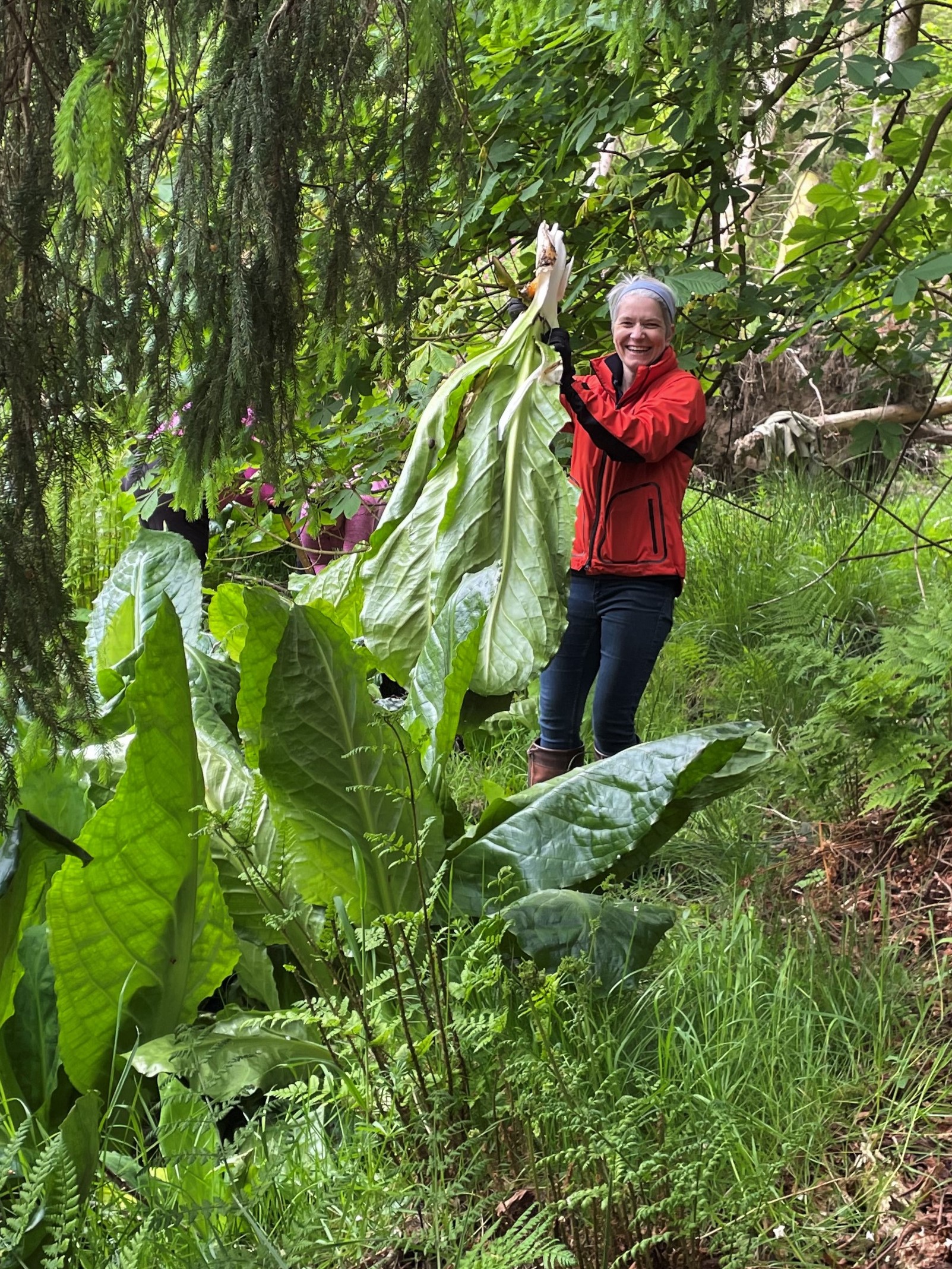
American skunk cabbage is present in scattered locations in the Dee and Don catchments. It is an emerging problem on the River Dee and has not yet spread extensively along rivers banks but significant infestations can be found on burns and wetland areas.

We are controlling notable infestations on the Sheeoch Burn and the Burn of Durris in the Dee catchment. The majority of this work is undertaken by the project team and volunteers.

Please notify us if you see this species present anywhere in the Dee, Don, Cowie and Carron catchments – sightings are crucial to prevent early infestations from spreading.

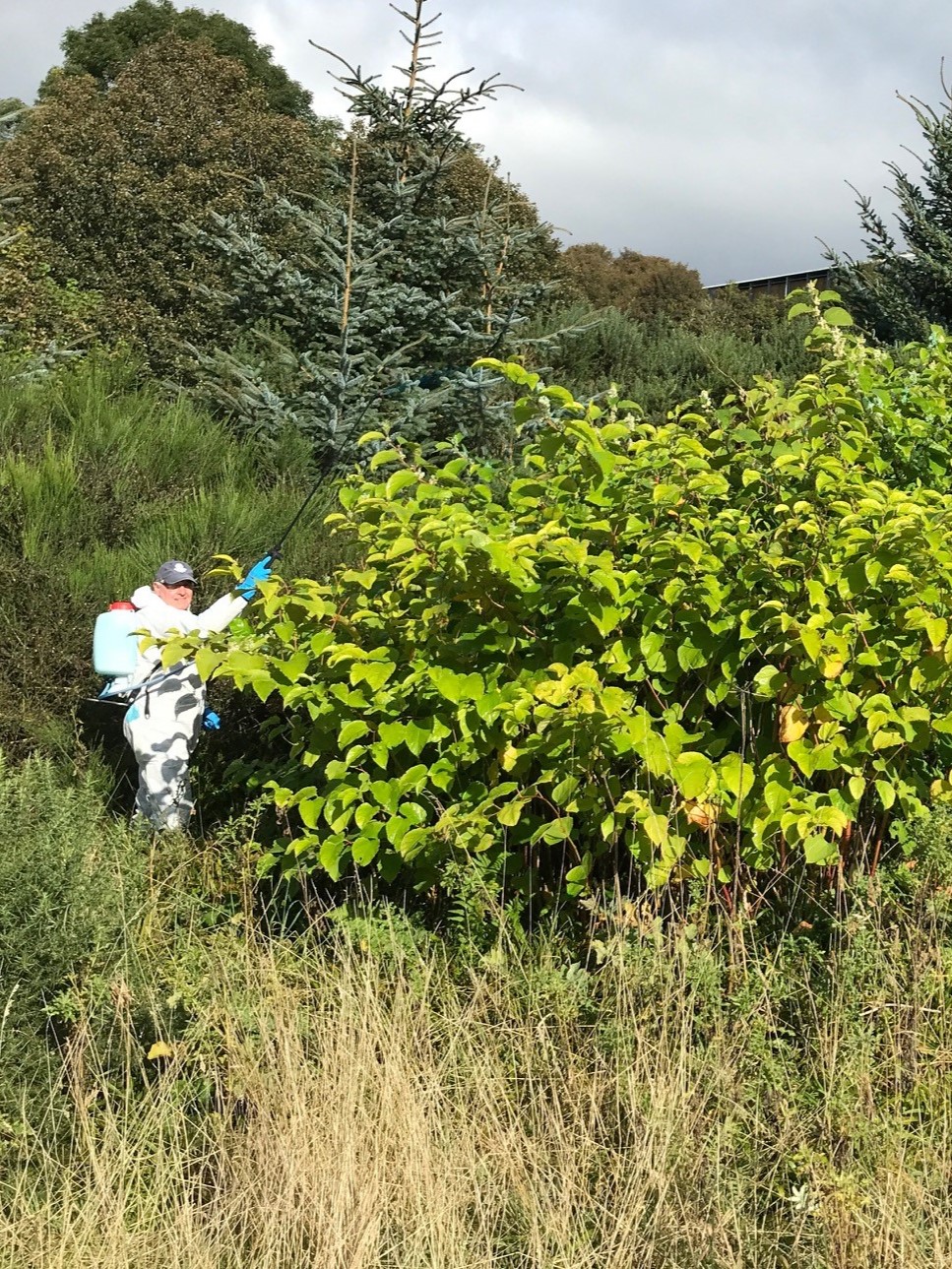
Japanese knotweed is an emerging problem on the Dee, the Don and the Cowie. It has not yet spread extensively along riverbanks but infestations can be found in patches.

On the Dee and the Don, we are currently controlling down to the outskirts of Aberdeen; as this is a relatively limited problem the majority of control work is undertaken by the project team.

On the Cowie Water, the local Angling Association carries out most of the control work. All infestations on the Cowie Water are under management.

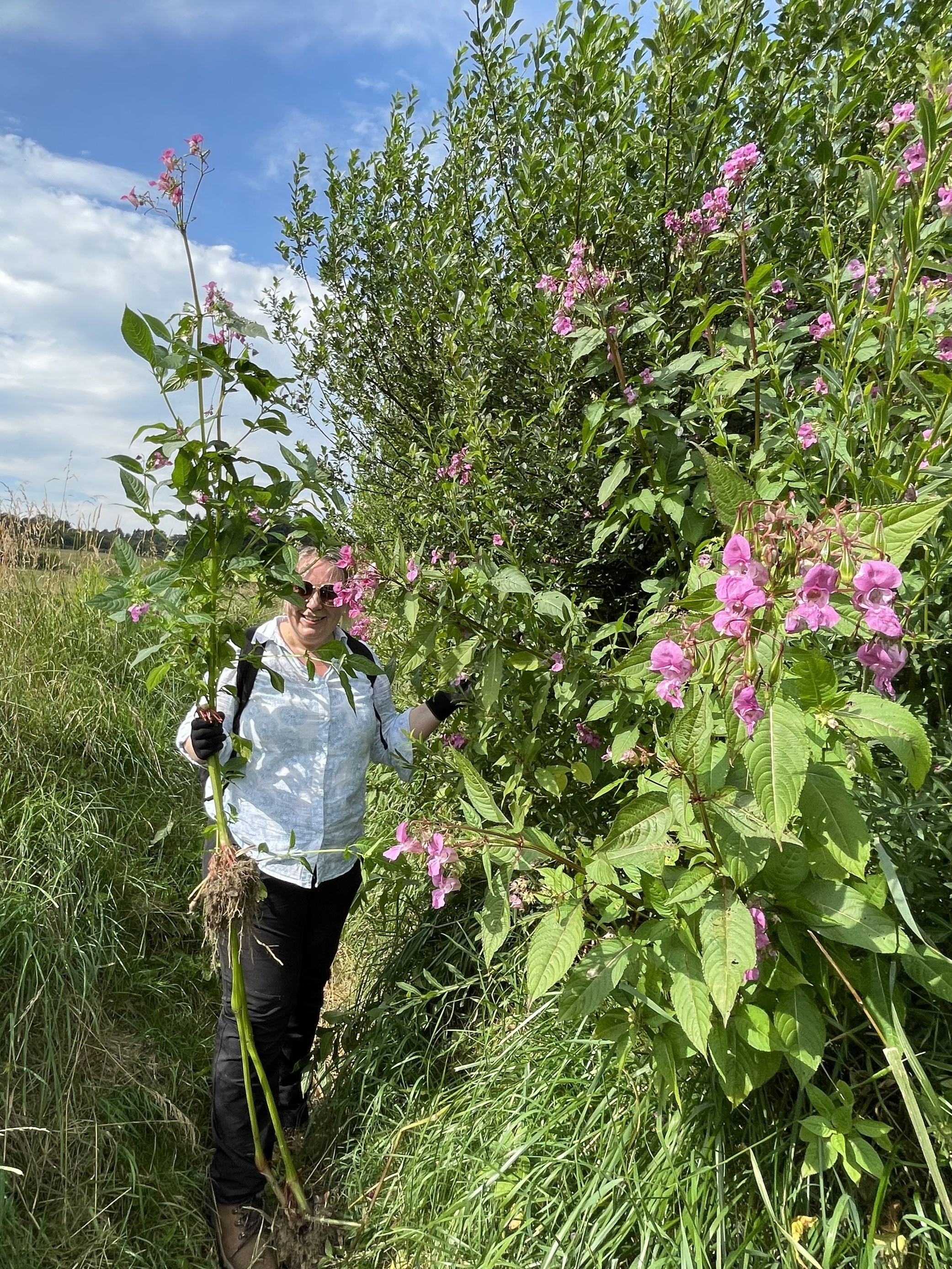
Himalayan balsam is an extensive problem and widespread throughout the Dee and Don system. We target select locations and work in collaboration with community groups, corporate volunteering groups, and project volunteers.

On the River Dee, Himalayan balsam can be found as far upstream at Dinnet, around the border of the Cairngorms National Park. On the River Don, the upstream source is in the middle of the catchment between Kemnay and Inverurie.

On the Cowie and Carron Water, Himalayan balsam is present around Stonehaven. It is tackled by the local Angling Association on their fishings. Community groups and project volunteers have carried out work in other areas.

Himalayan knotweed is a localised problem on the River Dee. We believe we are controlling the full extent of the infestation. Please notify us if you see this species anywhere in the Dee, Don, Cowie and Carron catchments.

American mink

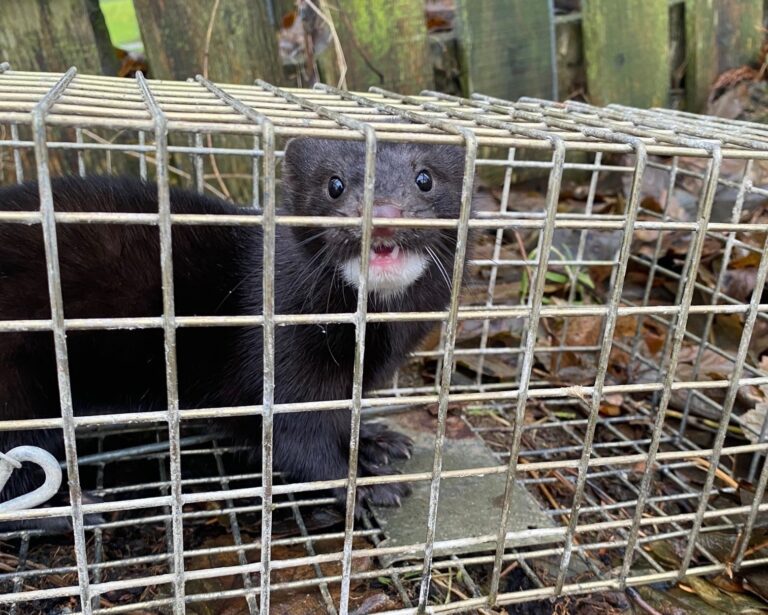
The Dee, Don, Cowie and Carron catchments are located in the east of our project area and present a mix of habitats and terrains for our mink control project. In the upper catchments of the Dee and the Don are largely open hills, moorland and forest, while the lower catchments, closer to Aberdeen, are predominantly arable farmland. The smaller rivers of the Cowie and the Carron have forested areas, agricultural land and a substantial coastline.

Currently (2025) we have 99 active mink rafts and traps monitored by a network of 80 dedicated volunteers, with additional traps operated by our local project officer. We aim to cover all rivers, tributaries and coastal areas.

Mink trapping has been ongoing for a long time in these areas. The Scottish Mink Initiative (SMI) covered these catchments and mink trapping was carried out for a number of years before this on the Dee and the Don.

Meet your local Project Officer

Jan Simpson

Jan first started as a volunteer with the River Dee Trust and then took on the position of Invasive Species Officer in 2019; a role that worked in partnership with the Scottish Invasive Species Initiative project. In 2023, Phase 2 of the Initiative, Jan took on the full time Project Officer role covering the Dee and Don catchments.

Jan co-ordinates plant control activities and oversees the mink trapping network across the Dee, Don, Cowie and Carron Rivers. If you are a landowner, land manager, community group or local organisation in this area and would like to get involved in the project, please get in touch.

Volunteering opportunities

Find out more about volunteering opportunities available in the Dee and Don catchments. You can also visit our Volunteering page to find out about opportunities available across the project and for further details on these activities.

Sign up to volunteer

If you are interested in volunteering please complete the online registration form. Your local contact will then be in touch.