Summary
The Inglesmaldie site is part of the larger Inglesmaldie fishing beat on the River North Esk. The beat has been divided into several sections to better facilitate the control of giant hogweed which is present throughout. This giant hogweed infestation has been identified as one of the uppermost in the catchment and so represents a key location in the wider control programme of the Scottish Invasive Species Initiative.
Little or no attempt had been made to control giant hogweed at the site previously – aside from flailing in a small area around the fishing hut which helped to provide angler access but made no impact on the overall problem. Working with the land manager, the Scottish Invasive Species Initiative has undertaken chemical control at the site from 2019 – 2025. Based on annual survey results and records of annual control effort and chemical volume applied, this control has successfully and substantially reduced the abundance of giant hogweed present.
Annual monitoring and control should continue at the site for a number of years to treat giant hogweed seedlings which are likely to emerge from the seedbank present in the soil. This will take several years but is now a more manageable task. As the site has improved considerably, discussions with the land manager will begin to seek to transfer responsibility for ongoing management.
1. Site description
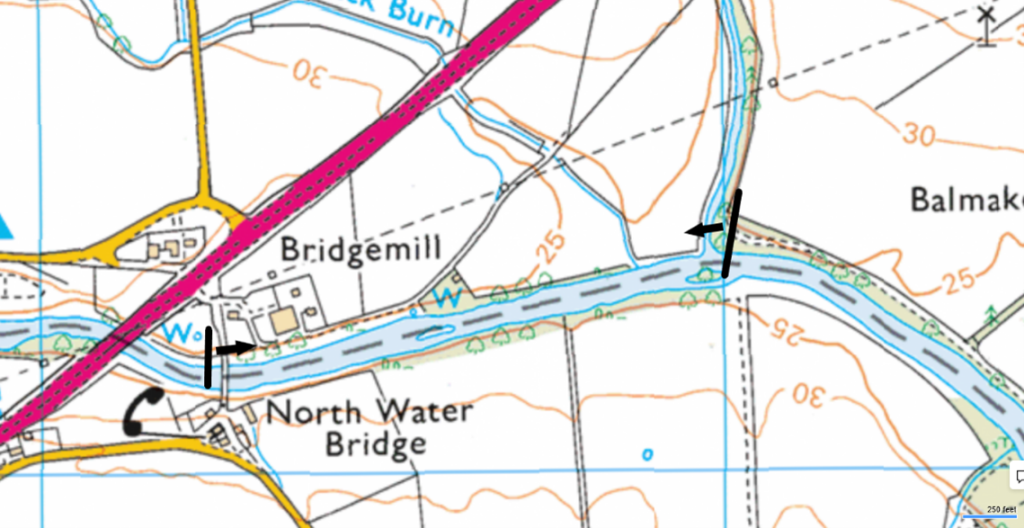
The Inglesmaldie 4 site (hereafter referred as Inglesmaldie) is a 700m section of left bank within the larger 2.6km Inglesmaldie fishing beat on the River North Esk near Marykirk in Angus (see Map 1 below). The section starts beside North Water Bridge (Grid ref. NO 65263 66162) and ends just below the confluence with the Luther Water (Grid ref. NO 65991 66330).
Inglesmaldie is privately owned and let for salmon and sea trout angling. Within the Scottish Invasive Species Initiative partnership the North Esk catchment is covered by the Esks District Salmon Fishery Board.
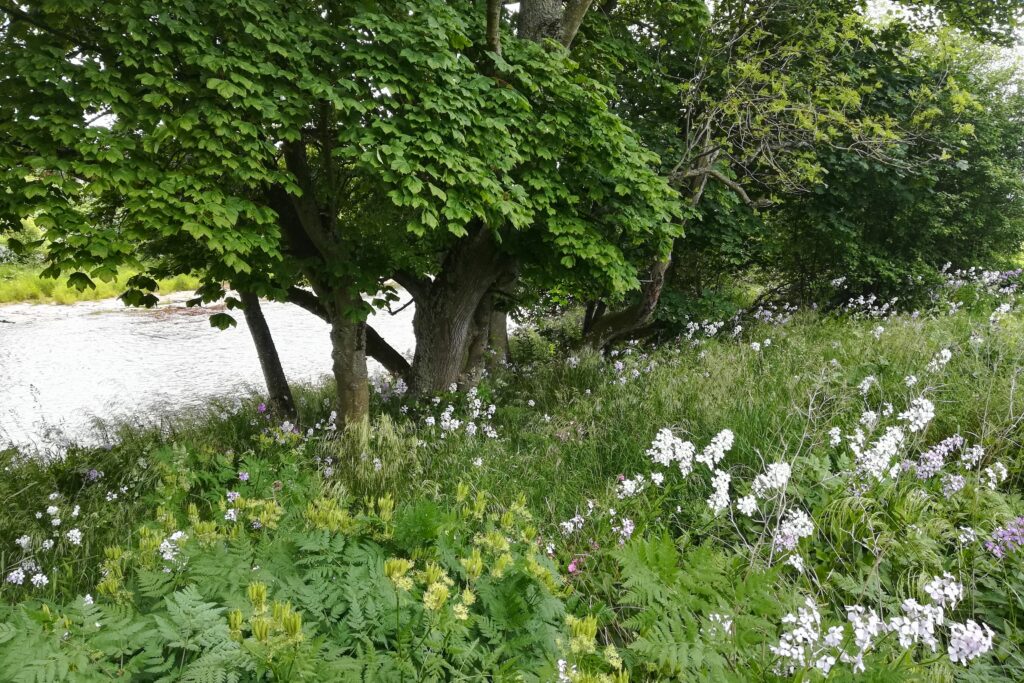
The site is one of gentle banks with mixed broadleaf trees running along the water’s edge which back on to arable farmland.
Map 1: Location of the Inglesmaldie 4 site on the River North Esk
2. Background
Giant hogweed has been present in the North Esk catchment for many decades with the Inglesmaldie site amongst the most upstream in the catchment where it occurs – therefore if control can be achieved here, re-infestation from above is unlikely. Control here would also help in the management of giant hogweed downstream by preventing the transfer of materials from this site to other locations.
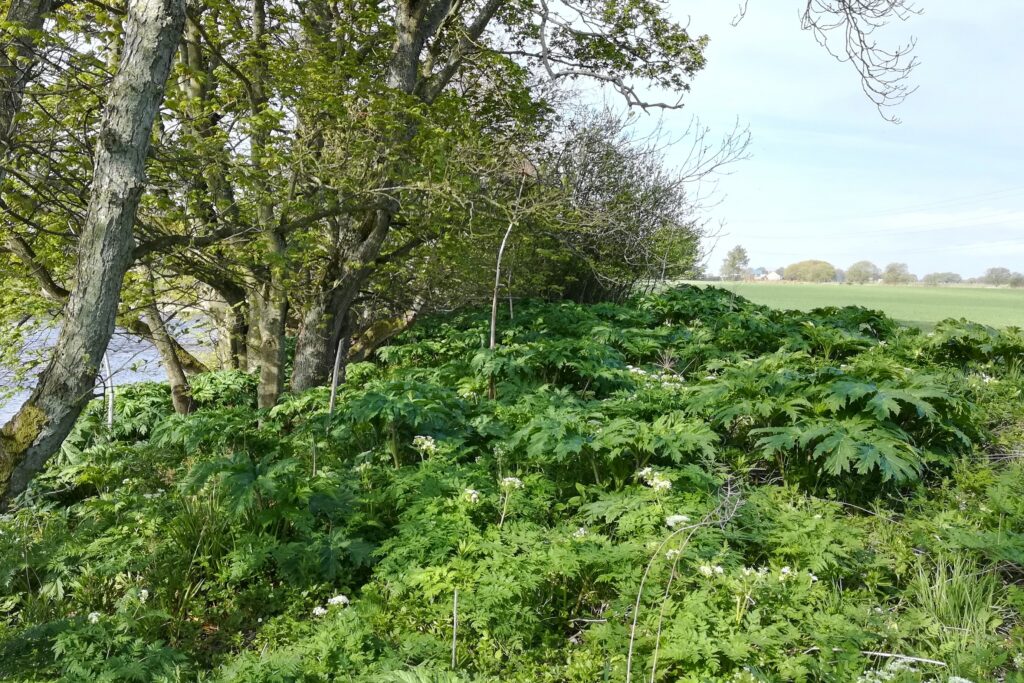
At Inglesmaldie, giant hogweed was growing in dense single species stands where it was outcompeting native flora and had become the dominant riparian plant on the lower beat. Giant hogweed also causes problems by restricting riverbank access for angling and presents a significant public health risk due to its phytotoxic sap which causes skin burns.
The giant hogweed had spread through the beat over time and by 2019, when the Scottish Invasive Species Initiative became involved, the infestation at Inglesmaldie was severe. After discussion with the landowner, it was decided that contractors would need be deployed initially to try to bring the situation to a manageable state.
3. Management works
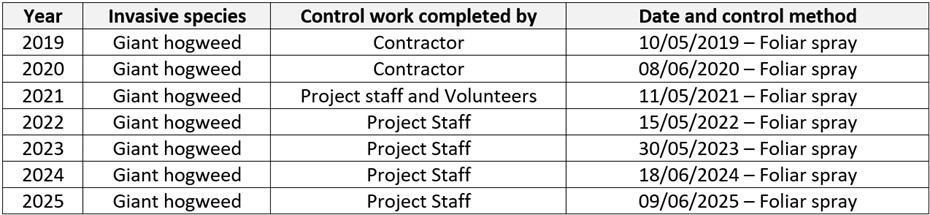
The giant hogweed at Inglesmaldie was treated for the first time in 2019 with control continued annually since then. Glyphosate (Round-up ProVantage) was applied by foliar spray (spraying directly onto the leaves of the plant) by backpack sprayer with a single application made in each year.
Due to the severity of the initial infestation spraying was undertaken by contractors in 2019 and 2020 with project staff and volunteers completing this work in 2021, when the abundance of giant hogweed had been reduced to a manageable level by the contractor work. Since 2021, the site has been controlled by project staff.
Table 1 below shows a summary of the control treatments.
Table 1 – Summary of control treatments
4. Results
4.1 Invasive species abundance
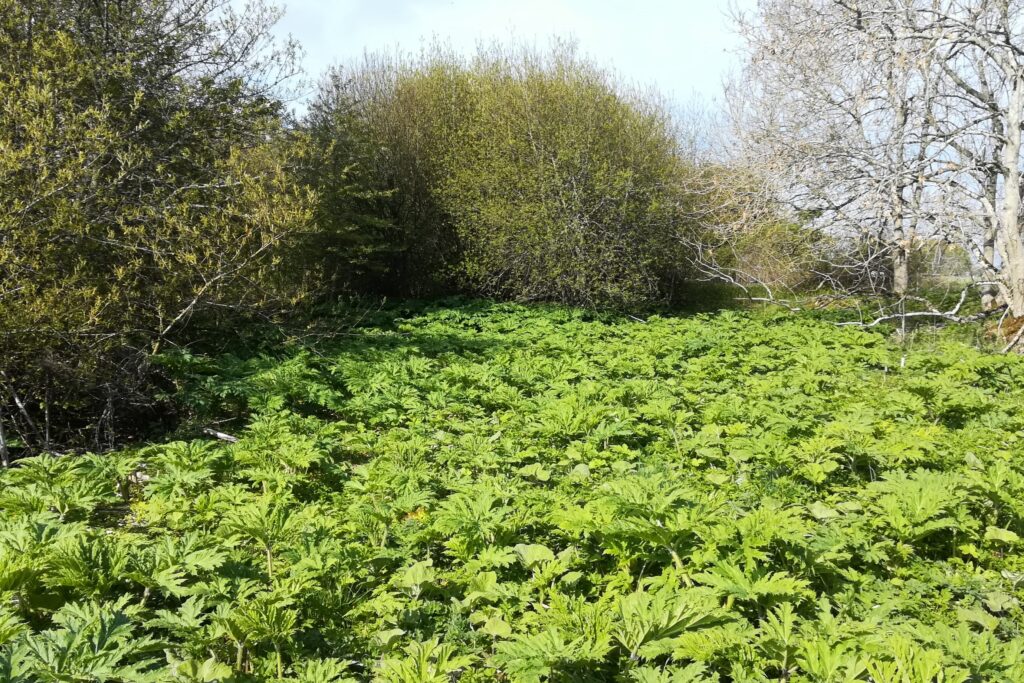
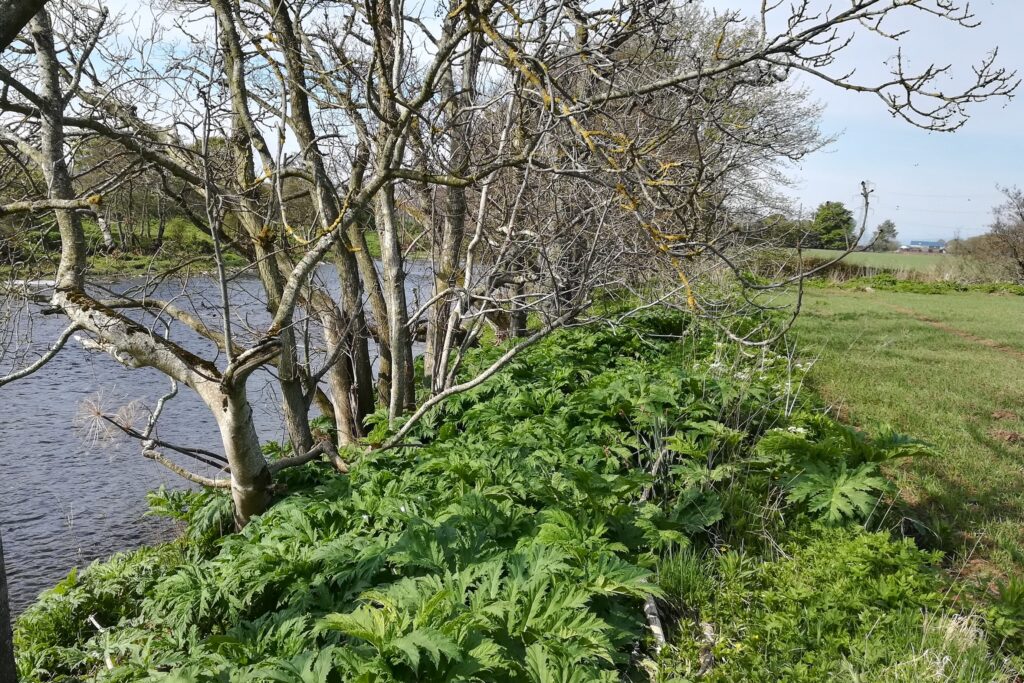
When work began at Inglesmaldie in 2019, giant hogweed was recorded as ‘dominant’ in abundance using the DAFOR scale at three representative monitoring points (see below Table 2 and Figure 1).
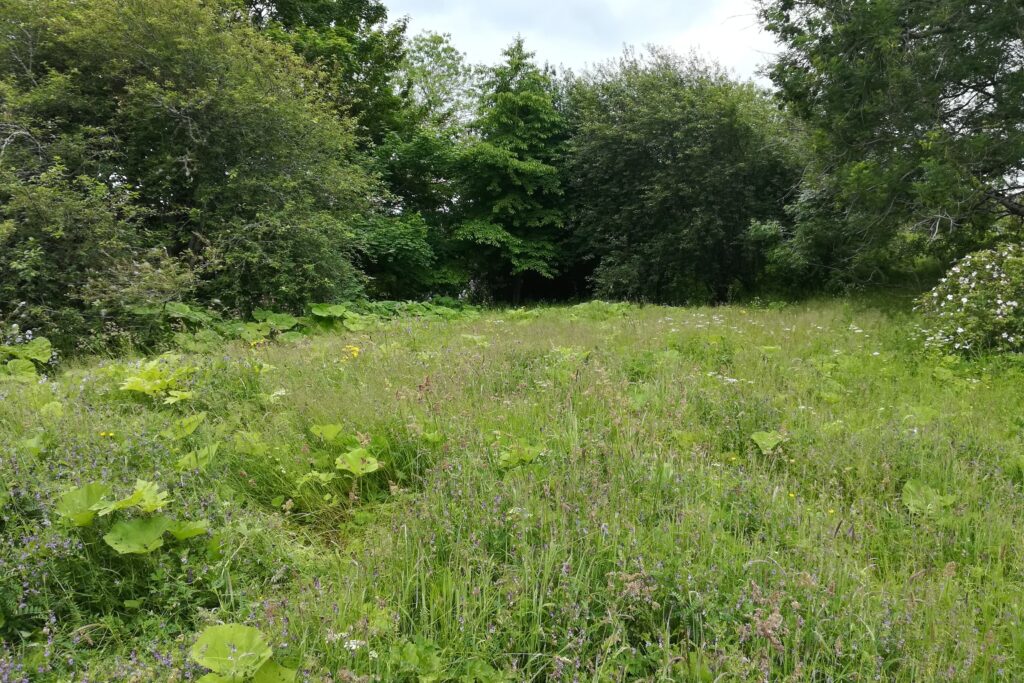
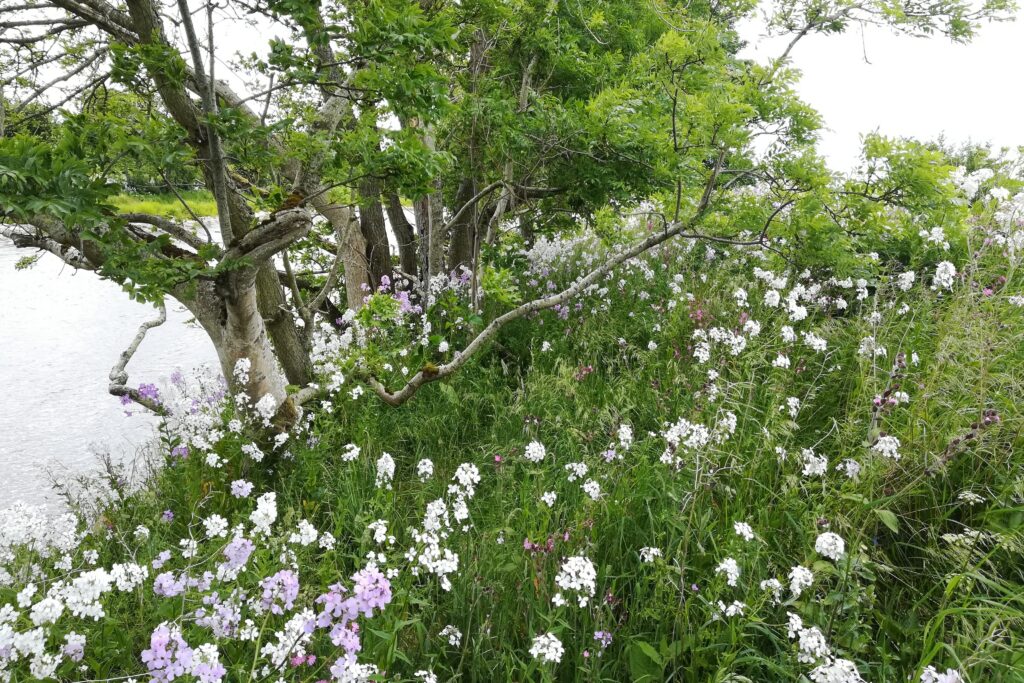
Following control in 2019, abundance reduced significantly at all monitoring points to ‘rare’ and ‘occasional’ in 2020 and has remained low since then. Over the years there have been some fluctuations, with abundance recorded as ‘frequent’ at one monitoring point in 2023 and ‘not present’ at monitoring points in 2022 and 2024. These minor fluctuations can be explained by natural variability in seed germination. By 2025, giant hogweed abundance was recorded as ‘rare’ at all monitoring points.
Table 2 – Annual Giant hogweed abundance from surveys (2019 – 2025) at Inglesmaldie

* – DAFOR Scale of abundance – D = Dominant (50 – 100% cover), A = Abundant (30 – 50% cover), F = Frequent (15 – 30% cover), O = Occasional (5 – 15 % cover), R = Rare (<5% cover)
Images before and after control
4.2 Chemical usage
In all years of treatment glyphosate was applied by backpack sprayer at concentration of 20ml per litre. The volume of glyphosate used per year is shown in Table 3 (below). The volume of chemical required to treat the entire site was highest in 2019, the first year of treatment, at 7.6 litres. Chemical volume reduced significantly in 2020 to 0.7 litres and has, in general, decreased steadily over the years. In 2021, many seedlings were present so these were not treated by foliar spray but left for the following year, resulting in lower chemical volume in 2021 and slightly higher in 2022 and 2023. By 2025, only 0.04 litres of chemical were required to treat the entire site.
Table 3 – Volume of glyphosate used to control giant hogweed (2019 – 2021) at Inglesmaldie

4.3 People effort
Control work on the site was undertaken by a combination of contractors and project staff and volunteers. In 2019, the first year of control, 20 hours were required to treat the entire site. The time required for control then reduced to 8 hours in 2020 but has since fluctuated – in 2021, many seedlings germinated which could not be treated that year and so only 1.5 hours were spent controlling the site. These plants matured and were treated in 2022 and 2023, leading to higher control hours in 2023 (8.5 hours) and 2024 (4.5 hours). By 2025, the time required to control the site had reduced to 1 hour.
Table 4 (below) shows the effort in terms of hours of control work spent on the site.
Table 4 – People hours used to control giant hogweed (2019 – 2021) at Inglesmaldie

5. Conclusions and Progress Made
Ongoing treatment of giant hogweed at Inglesmaldie since 2019 has significantly reduced the abundance of the plant at the site and the time and chemical volume required to complete annual control.
This is demonstrated by the change in abundance of the plant at monitoring points (see Figures 1, 2 and 3) which show large reductions in the extent of giant hogweed observed on site, with native vegetation regenerating in its place, and in the DAFOR scores recorded at these points which show abundance reduced from ‘dominant’ in 2019 to ‘rare’ in 2025. Progress is also seen in both the hours of work needed to treat the giant hogweed infestation and the chemical volume used in this treatment, which reduced by 95% and 99% respectively between 2019 and 2025.
Management at this site was particularly effective due to the employment of contractors to control the giant hogweed when it was present at high densities. This approach is consistent with the Scottish Invasive Species Initiative model of utilising contractor deployment at severe infestations before transitioning to control by staff, volunteers and land managers as plant infestations are brought under control and become more manageable.
Inglesmaldie is one of the uppermost giant hogweed sites on the North Esk. As such, controlling the plant here has reduced the spread of hogweed downstream – as no flowers have gone to seed and washed to new locations where they can become established. Equally, we can be confident that giant hogweed will not re-establish from materials brought to the site from upstream as infestations further upstream are under management.
Giant hogweed seedlings are likely to continue emerging at the site in coming years due to the persistent seed bank in the soil. As seeds remain viable for many years, consistent annual control will be required to make further progress and fully exhaust the seedbank.
6. Next Steps
Giant hogweed seedlings are likely to emerge at Inglesmaldie in 2026 and for a few years beyond this, as seeds are viable for many years.
The site will be controlled by project staff in 2026. Alongside control work, discussions with the land manager will begin to seek to transfer responsibility for ongoing management to them now that giant hogweed abundance has been reduced and annual control works are more manageable. Support will continue to be available from project staff as needed.
The site will be controlled until giant hogweed plants are no longer present, and then monitored for a number of years beyond this to confirm eradication.
Further information
Contact: sisi@nature.scot
Download this case study as a PDF
Additional Images
Figure 3 shows the change at monitoring point B from 2019 to 2022. The change in giant hogweed abundance is clearly visible, with native vegetation recolonising the site.