
Summary
The Moulin Burn is a small tributary of the River Tummel, running through the centre of Pitlochry town. In 2018, the burn was identified as the most upstream source of American skunk cabbage in the Tay catchment – the plant initially infested the burn from ornamental plantings in a private garden in the village of Moulin. There were also small stands of mature Japanese knotweed scattered along the burn.
American skunk cabbage was beginning to choke the burn, restrict water flow and outcompete native species. In addition, it represented a significant threat to the River Tummel as the upstream source of skunk cabbage in the catchment. Areas of infestation had already been found on the main stem of the Tummel which almost certainly originated from the Moulin Burn. The knotweed was also an upstream source in the wider Tay catchment and was potentially responsible for knotweed infestations on the Tummel. It is unclear where the Japanese knotweed originated from.
With the agreement of the landowners – Pitlochry Estate – control worked commenced in 2019. Contractors undertook the work in 2019 and 2020 with Scottish Invasive Species Initiative staff completing the work in 2021. In 2022, the gardener of Pitlochry Estate was trained to undertake spraying and has worked with project staff on site every year since. Based on annual survey results and records of annual control effort and chemical application, this control has successfully and substantially reduced the abundance of American skunk cabbage and Japanese knotweed present. The control area will now be moved to a biennial control cycle as there is now almost no regrowth of either knotweed or skunk cabbage. The owners of the garden containing the original skunk cabbage plants in the catchment have also prevented further spread from their land by cutting seedheads, and project staff were allowed to undertake herbicide control in 2024.
1. Site description
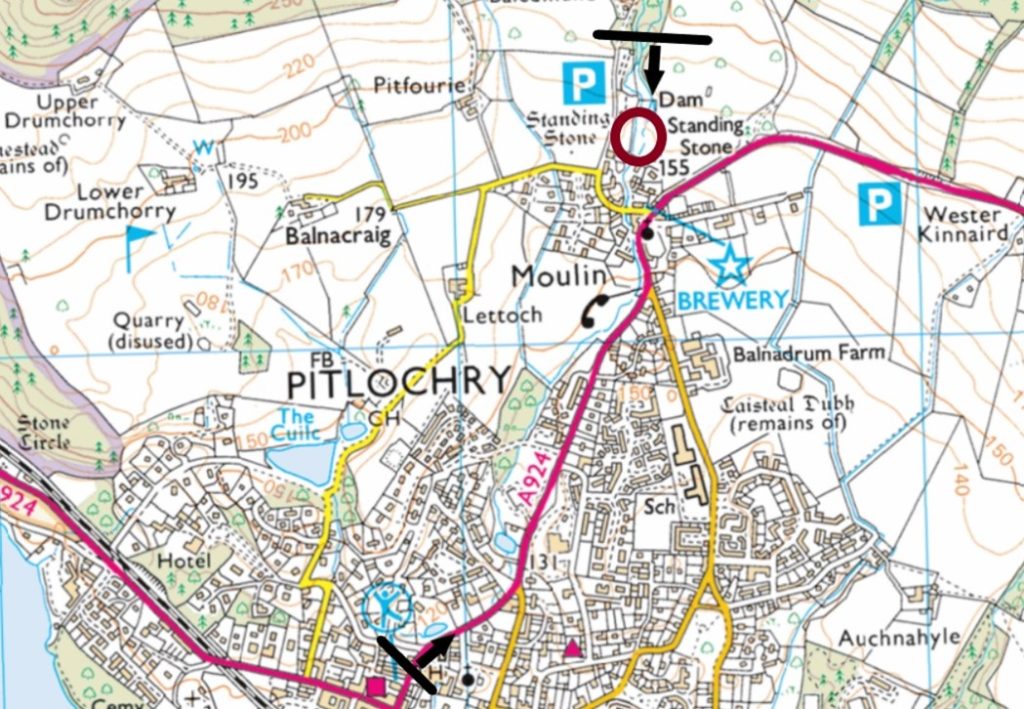
The Moulin Burn flows through the village of Moulin and the town of Pitlochry before joining the River Tummel below the power station dam at Loch Faskally. The control site is a 1.4km section starting above Moulin (upstream limit at grid reference NN 94432 59526) and extends through a central residential area of Pitlochry before ending where the burn is culverted under the town centre, at grid reference NN 93906 58362. The site location is shown in Map 1.
Large parts of the burn (including the most badly infested areas) are owned by Pitlochry Estate and managed on their behalf by Bidwells LLP Perth. Within the Scottish Invasive Species Initiative partnership, the Tay catchment is covered by the Tay District Salmon Fishery Board (TDSFB).
The Moulin Burn runs close to the A924 road above Pitlochry but is largely hidden behind gardens, aside from a small area where it runs through a playground. Within Pitlochry, the burn is heavily modified in sections and passes through areas of concrete and natural channel.
There is a large pond where American skunk cabbage has accumulated about two thirds of the way down the section at grid reference NN 9408 5857.
Map 1: Moulin Burn control site for American skunk cabbage and Japanese knotweed (original skunk cabbage source circled in red)
2. Background
The American skunk cabbage found along the Moulin Burn escaped and spread from an ornamental planting in a private garden in the village of Moulin. Exactly when the plant spread beyond the garden is unclear – but as the burn runs directly through the garden its escape is not surprising. The upstream extent of the Japanese knotweed was another private garden in the Moulin area; it is unclear if this is the original source and when it began to spread to downstream locations.
By 2018, American skunk cabbage growth dominated areas of the burn – particularly around the pond, located part way down the burn in Pitlochry. Areas of infestation have also been found on the main stem of the River Tummel and threatened to spread further downstream into the wider River Tay catchment. There was significant risk of the plant becoming more established in the Tay system unless this source population on the Moulin Burn was tackled. The knotweed, while not as widely distributed on the burn, had begun to dominate in certain areas and would have become an increasingly significant problem without intervention.
Skunk cabbage infestations on the Moulin Burn were already beginning to restrict water flow – locally increasing flood risk – and outcompeting native species present, particularly in the pond area.
After meeting with Bidwells, it was agreed that contractors would be deployed initially to try and quickly bring both species under control and prevent further spread downstream, with project and estate staff taking over management once the extent of the problem had been reduced to a more manageable size.
3. Management works
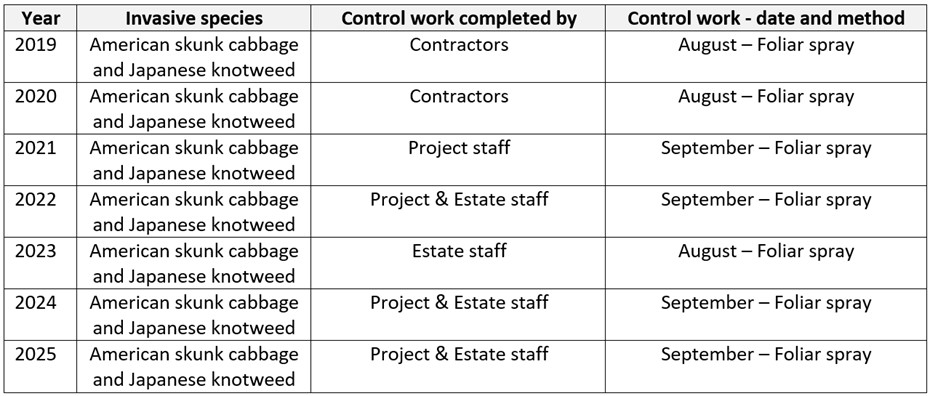
The American skunk cabbage and Japanese knotweed on the Moulin Burn was treated for the first time in 2019 with control continued annually in following seasons (see Table 1). Glyphosate (Round-up ProVantage) was applied by foliar spray (spraying directly onto the leaves of the plants) by backpack sprayer with a single application made in each year.
As agreed with the landowner’s agent, contractors were deployed in 2019 and 2020 to more rapidly bring the site under control. Project staff delivered control in 2021 to treat the reduced levels of regrowth, and the gardener of Pitlochry Estate was trained up to assist with follow up control from 2022 onwards.
Table 1 below shows a summary of the control treatments.
Table 1 – Summary of control treatments at Moulin Burn (2019 – 2025)
4. Results
4.1 Invasive species abundance
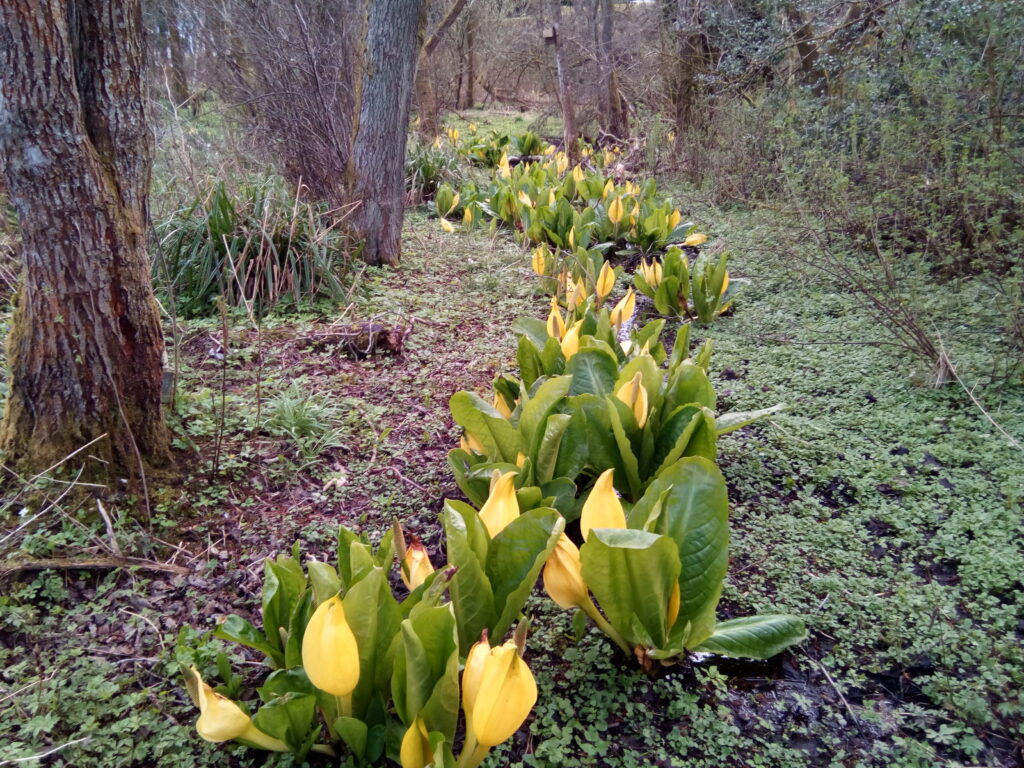
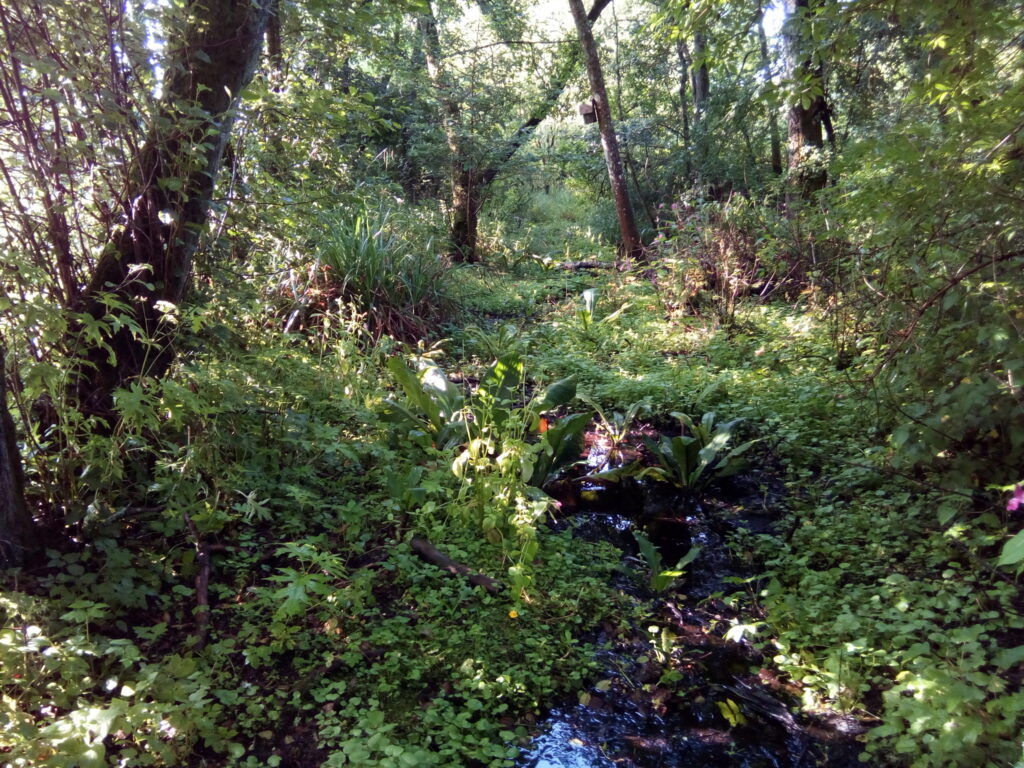
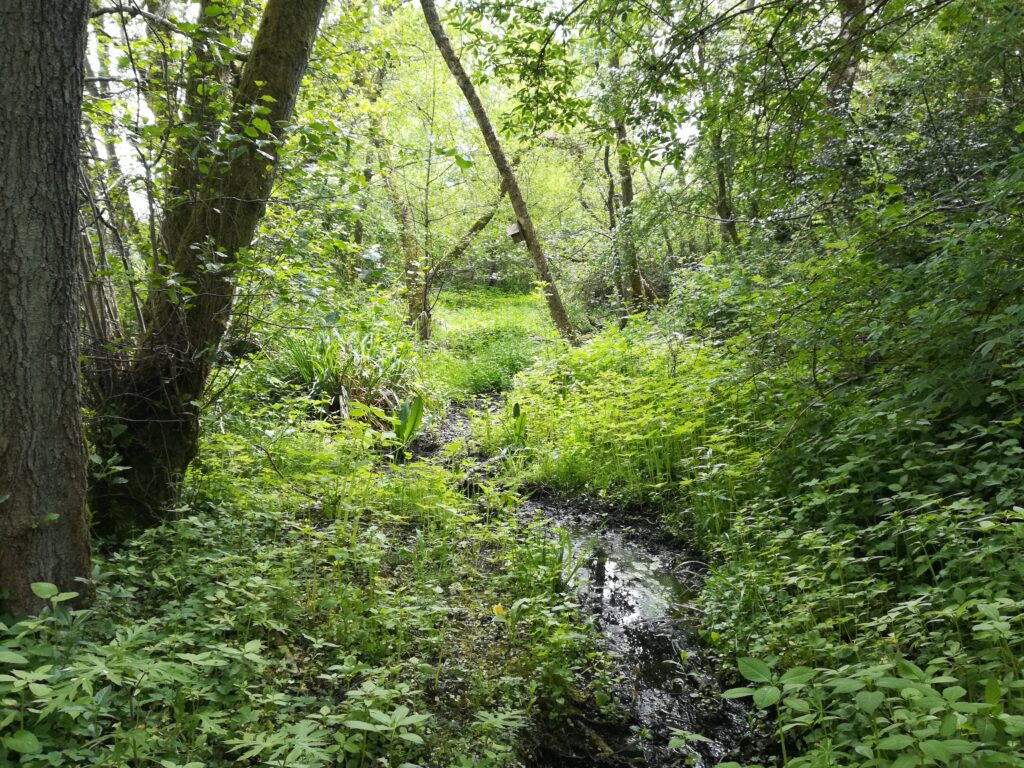
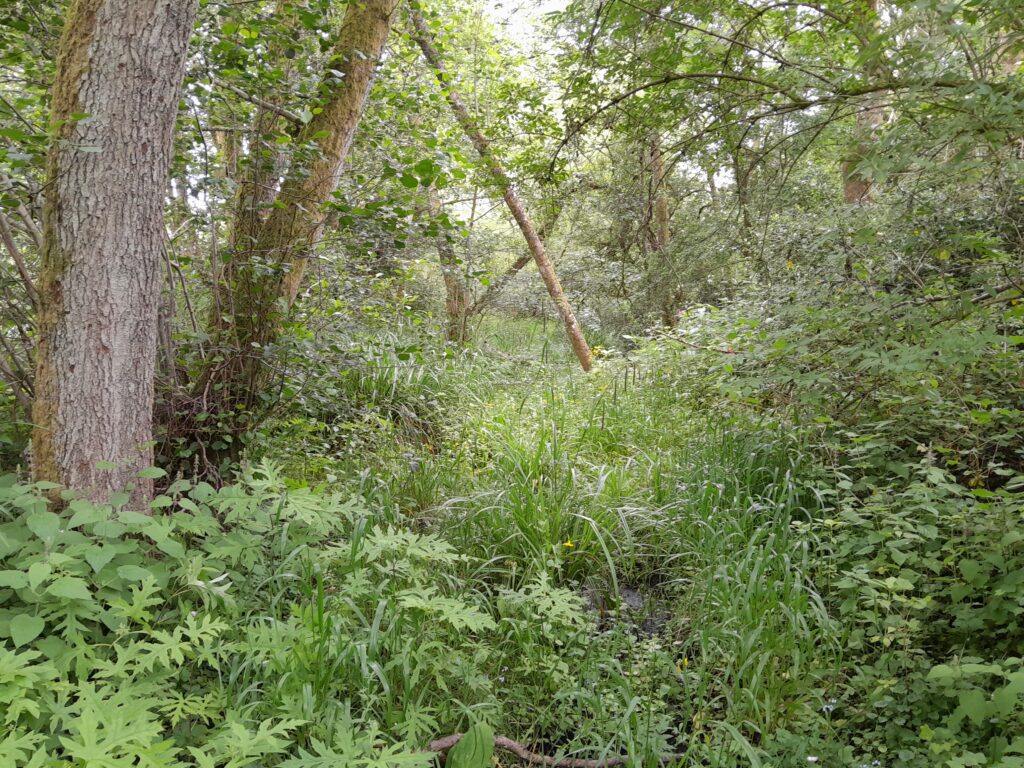
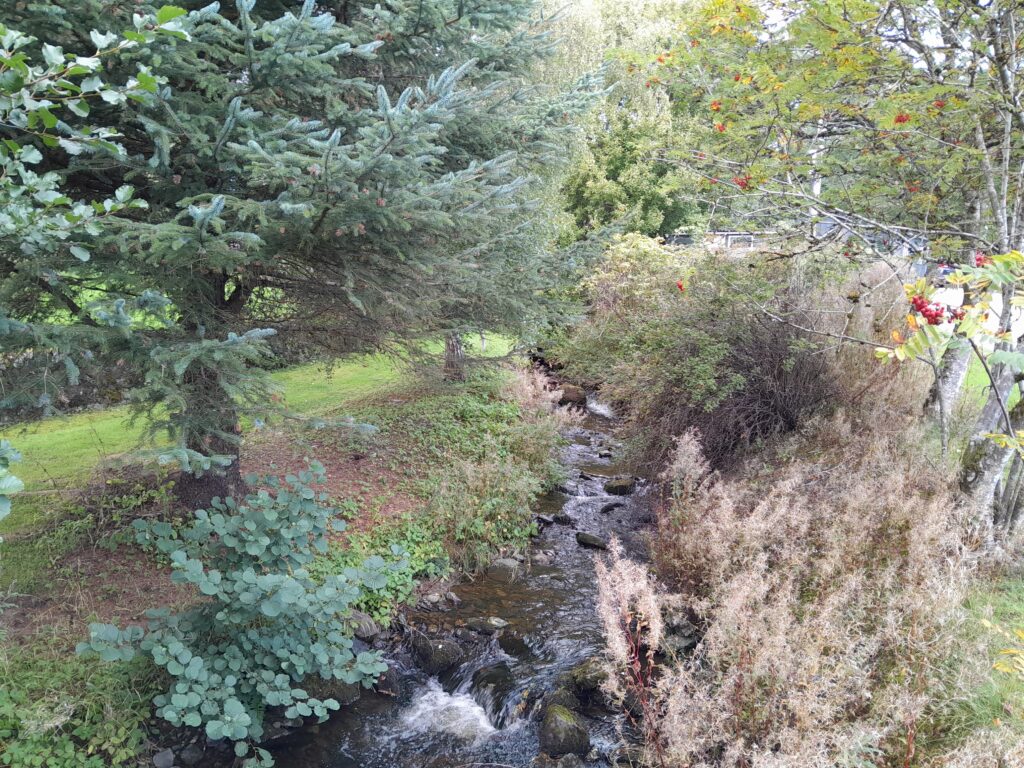
Monitoring of American skunk cabbage was carried out at one representative point in the site. When the plant was first observed by the Scottish Invasive Species Initiative on the Moulin Burn in 2018 (see Figure 1a) it was recorded as ‘dominant’ in abundance, using the DAFOR scale. Abundance was also recorded as ‘dominant’ in 2019 (see Table 2) prior to control work first taking place. Following control in 2019, abundance reduced to ‘occasional’ in 2020 and then to ‘rare’ from 2021 onwards (see Figures 1b-d).
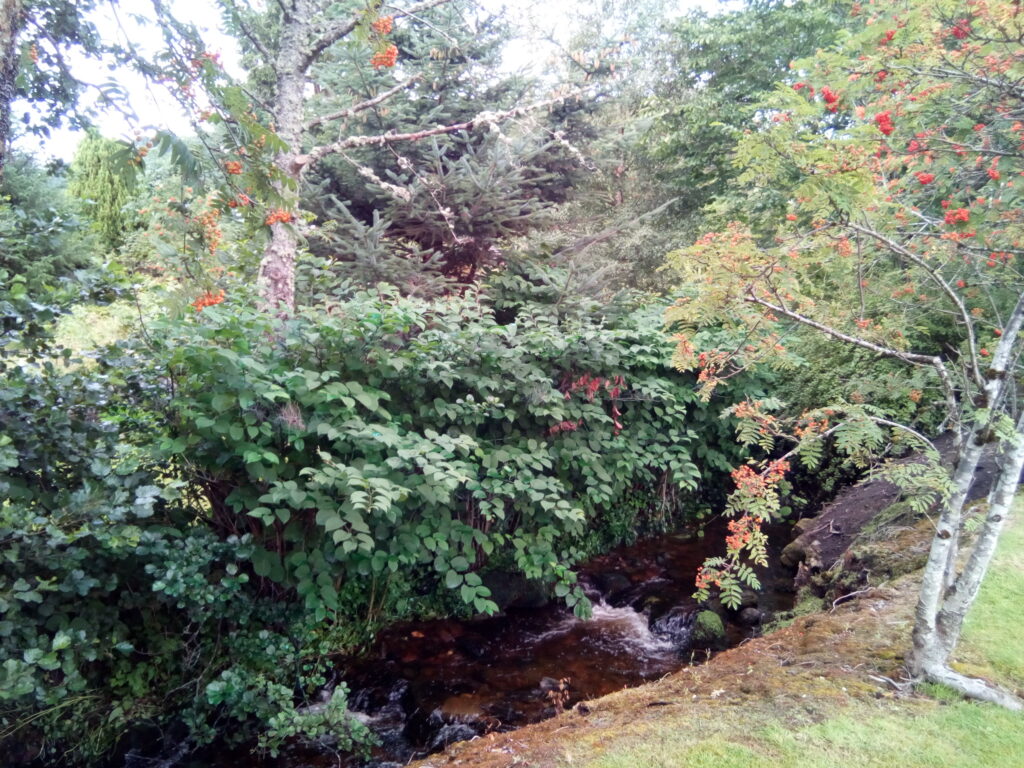
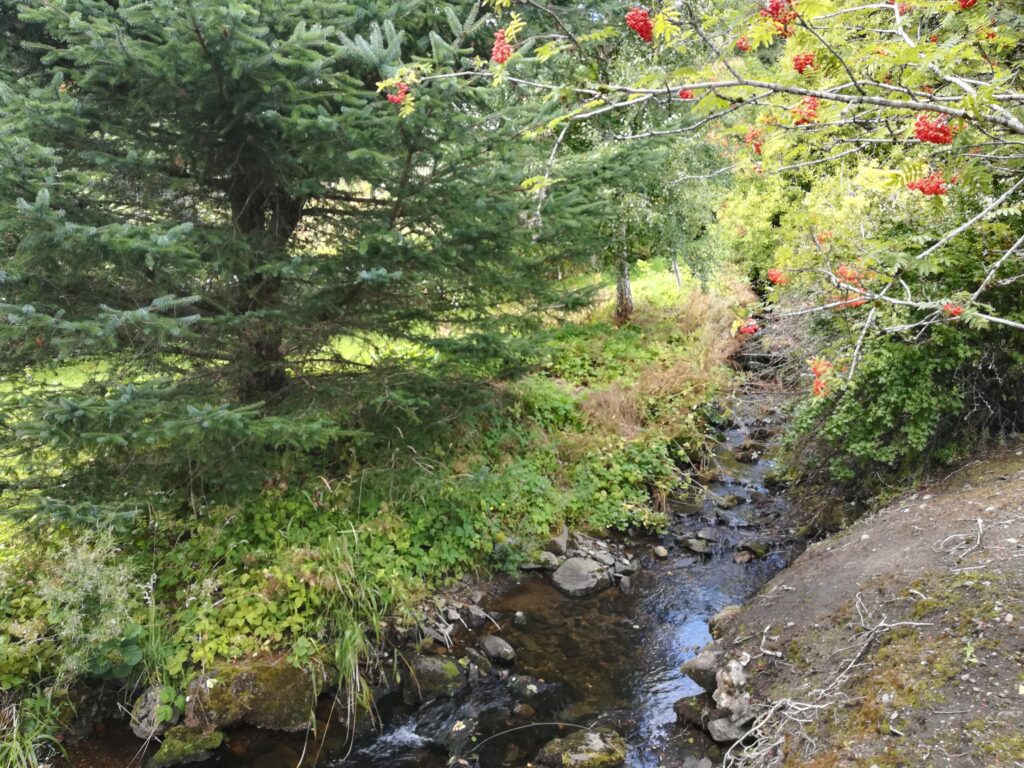
Monitoring of Japanese knotweed was carried out at three representative points within the site (referred to as points A, B and C in Table 3). Japanese knotweed was recorded as ‘abundant’ and ‘occasional’ in 2019, prior to control work. Japanese knotweed abundance reduced to ‘rare’ after the first season of control in 2019 (see Figure 2a-c) and annual surveys continued to record abundance as ‘rare’ in the following years.
The abundance of invasive species was measured using the DAFOR scale* in each year and is shown in Tables 2 and 3 below.
Table 2 – Annual American skunk cabbage abundance from surveys (2019 – 2025) at Moulin Burn

Table 3 – Annual Japanese knotweed abundance from surveys (2019 – 2025) at Moulin Burn

* DAFOR Scale of abundance – D = Dominant (50 – 100% cover), A = Abundant (30 – 50% cover), F = Frequent (15 – 30% cover), O = Occasional (5 – 15 % cover), R = Rare (<5% cover), N = Not Present
Images before and after control
American skunk cabbage
Japanese knotweed
4.2 Chemical usage
In all years of treatment, glyphosate was applied by backpack sprayer at concentration of 20ml per litre. The volume of glyphosate used per year is shown in Tables 4 and 5 (below). In later years an additional adjuvant (Topfilm) was added to help with adhesion of the chemical to the leaves – this is helpful for skunk cabbage and for small knotweed plants as the leaves are waxy.
Table 4 – Volume of glyphosate used to control American skunk cabbage (2019 – 2025) at Moulin Burn

Table 5 – Volume of glyphosate used to control Japanese knotweed (2019 – 2025) at Moulin Burn

4.3 People effort
Control work was undertaken by contractors in 2019 and 2020, with project staff and/or estate staff completing control work thereafter.
Tables 6 and 7 (below) shows the effort in terms of hours of control work spent on the site.
Table 6 – People hours used to control American skunk cabbage (2019 – 2025) at Moulin Burn

Table 7 – People hours used to control Japanese knotweed (2019 – 2025) at Moulin Burn

5. Conclusions and Progress Made
Work to control American skunk cabbage and Japanese knotweed on the Moulin Burn since 2019 has greatly reduced the abundance of both plants and significantly reduced the time and chemical volume required to complete control in subsequent years.
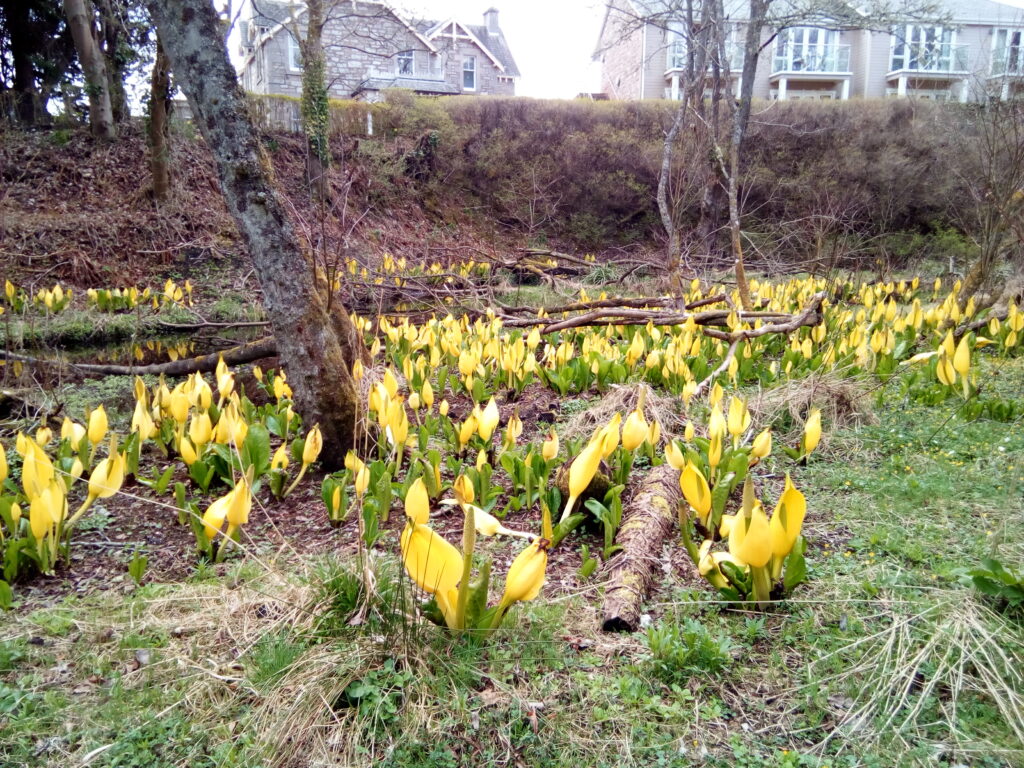
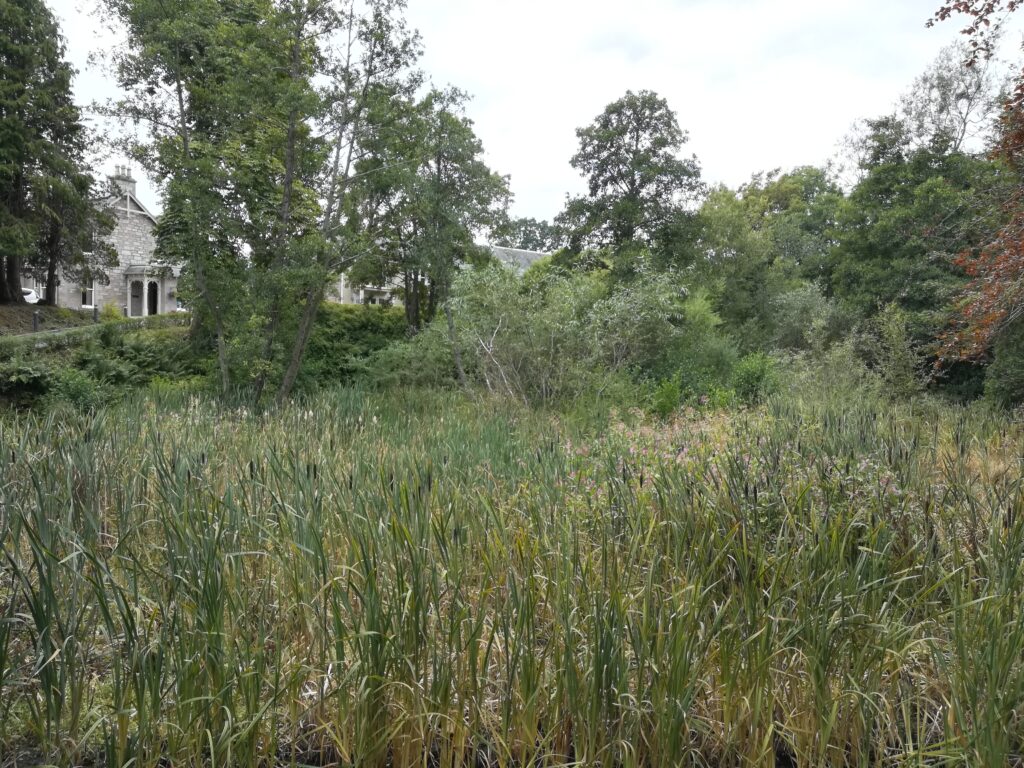
This is demonstrated by the change in abundance of the plant as observed by fixed-point photography (see Figures 1a-d, 2a-c, 3a-c) – which show large reductions in the extent of both species present – and in the DAFOR scores at monitoring points which recorded abundance of American skunk cabbage reducing from ‘dominant’ to ‘occasional’ and then ‘rare’, and Japanese knotweed from ‘abundant’ and ‘occasional’ to ‘rare’.
Progress is also shown in terms of both the hours of control work needed to treat both plants along the burn and the chemical volumes used in this treatment. Hours and chemical volume required to control American skunk cabbage reduced by 84% and 95% respectively between 2019 and 2025. Likewise, for Japanese knotweed, hours and chemical volume reduced by 95% and 99% respectively from 2019 to 2025.
Management at this site was particularly effective due to the employment of contractors initially, when knotweed and skunk cabbage were present in higher densities and when there was a greater risk of this location being the source of new infestations downstream on the River Tummel and Tay. By containing and working toward the eradication of the infestations on the Moulin Burn, and by treating areas of infestation on the Tummel, that risk is now much reduced.
Whilst the owners of the garden containing the original source population of American skunk cabbage have not agreed to allow chemical control in their garden, other than one control treatment in 2024, their undertaking of manual control to prevent further spread is significant and necessary. Engagement with the garden owners will continue to support their containing control work by whatever method they are comfortable with.
The approach adopted on the Moulin Burn is consistent with the Scottish Invasive Species Initiative model of utilising contractor deployment at severe infestations, before transitioning to control by staff, volunteers and land managers as plant infestations are brought under control and become manageable.
6. Next Steps
In 2022, a landowner control agreement was signed by Pitlochry Estate committing to control on the burn until the area is completely clear.
After working on site in 2025, it was agreed by project and estate staff that the burn would be moved to an biennial control programme for 2026 onwards as there was very little regrowth of either species and in many cases regrowth was too small to properly control. The site will continue to be monitored and controlled by both parties until complete eradication is achieved.
Additional Images
Figure 3 (a, b, and c) shows American skunk cabbage in the pond in 2018, 2022 and 2025. The site is much improved after control works began in 2019.

Further information
Contact: sisi@nature.scot